SCAD Generated $1.3 Billion for Georgia’s Economy Last Year. It Started as One Renovated Armory With 71 Students.
We may earn money or products from the companies mentioned in this post. This means if you click on the link and purchase the item, I will receive a small commission at no extra cost to you ... you're just helping re-supply our family's travel fund.
Savannah College of Art and Design opened in 1979 inside a single renovated armory building with 71 students. Today it enrolls tens of thousands across campuses in Savannah, Atlanta, Hong Kong, and Lacoste, France, and according to an independent economic impact study conducted by Tripp Umbach, it generated $1.3 billion in economic impact for the state of Georgia in fiscal year 2023 alone, a number that has climbed steadily from $386 million in 2013 and $603 million in 2017.
An Art School That Rebuilt a City’s Historic District
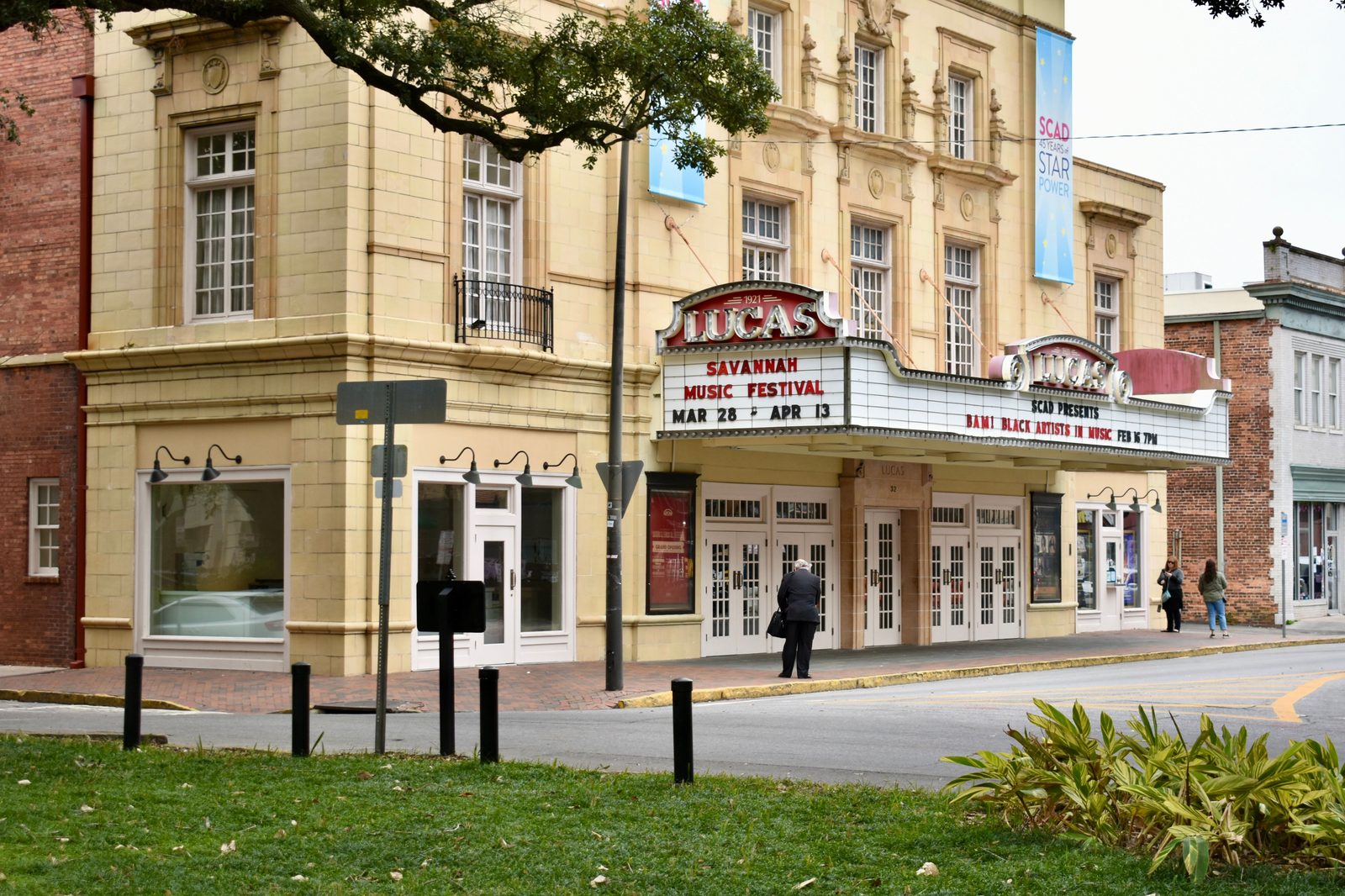
SCAD’s founding strategy was as much real estate as pedagogy. Rather than building a traditional campus, the school bought and restored dozens of historic downtown Savannah buildings that had fallen into disrepair, armories, department stores, a Gothic Revival church, an old railroad shed, converting them into classrooms, studios, and dorms while preserving their facades. That approach did two things simultaneously: it gave SCAD a genuinely distinctive campus woven into the city fabric, and it reversed decades of decline in Savannah’s historic district, which by the late 1970s had lost much of its economic base to suburban flight.
The school now employs more than 2,300 people directly and its presence supports over 12,000 jobs across Georgia when factoring in construction, hospitality, and retail spending tied to the university. SCAD’s own reporting claimed the school had generated over $3 billion cumulatively for Savannah and attracted 14.5 million visitors over its history, figures that, whatever their exact precision, describe an institution whose gravitational pull on the city’s economy is comparable to a major employer rather than a college.
Tourism the University Didn’t Plan For
SCAD’s cultural programming has become a tourism engine independent of the school’s academic mission. The SCAD Museum of Art, the Savannah Film Festival, and the school’s design showcases draw visitors who have no connection to the university at all, spending associated with SCAD events totaled more than $127.8 million in the state during fiscal year 2023, with $113.5 million of that landing directly in the Savannah region. The Savannah Film Festival alone brings actors, directors, and industry press to a city that otherwise competes for cultural attention with Charleston, Atlanta, and New Orleans.
What Changed in the City Itself
- Dozens of historically significant downtown buildings were restored rather than demolished, preserving Savannah’s National Historic Landmark District at a scale few other American cities managed
- A creative-class population of students, faculty, and graduates who stayed in Savannah after school shifted the city’s demographic profile younger than comparable Southern cities its size
- Retail and restaurant density downtown increased to support a year-round student population rather than a purely seasonal tourist one
The tradeoffs are real, and Savannah residents debate them the way any college town debates its dominant institution. Downtown housing costs have risen alongside SCAD’s growth, and some longtime residents argue the school’s aesthetic, polished, design-forward, camera-ready, has smoothed over some of the grittier, more idiosyncratic character Savannah had before SCAD’s expansion accelerated in the 1990s and 2000s. Property near the historic core, much of it now owned or leased by the university, has been steadily removed from the regular residential market.
SCAD’s model has attracted attention well beyond Savannah, and other cities with underused historic building stock have studied it as a potential template, an art or design school anchoring adaptive reuse at scale rather than waiting for private developers to take the risk piecemeal. Few have replicated it successfully, partly because SCAD’s founder built the institution with an unusually aggressive real estate acquisition strategy from day one, buying distressed properties well before Savannah’s historic district became fashionable again, and partly because most cities don’t have a design school with SCAD’s enrollment and tuition base to fund that kind of acquisition at scale.
The school’s Atlanta campus, opened in 2005 inside a former Sears distribution warehouse in the city’s Midtown neighborhood, represents a second version of the same real estate strategy applied to a different kind of building entirely, an industrial complex rather than antebellum row houses, showing that the underlying model, buy distressed architecturally significant buildings and convert them for design education, travels even when the specific building stock looks completely different.
SCAD’s degree programs themselves also shape Savannah’s cultural output in ways separate from the real estate story. Graduates in film, animation, and interactive design have gone on to work at major studios, and the school’s own SCADpro program partners directly with corporations on applied design projects, giving Savannah a genuine, if under-the-radar, pipeline of design and media talent that most cities its size do not have. The Savannah Film Festival in particular has grown from a student showcase into an event drawing recognizable names in the industry, a scale of cultural programming that a city of roughly 150,000 people would be extremely unlikely to support without a university actively subsidizing and organizing it.
Savannah’s own historic district, the one SCAD’s real estate strategy transformed building by building, remains under the oversight of the Historic Savannah Foundation and a strict local historic preservation ordinance, meaning SCAD’s renovations had to work within design guidelines governing everything from exterior paint colors to window replacement, a constraint that likely slowed the pace of acquisition and renovation but that also ensured the finished campus reads as continuous with the surrounding historic district rather than as an obviously institutional intrusion into it, a balance many university expansions in historic cities fail to strike as successfully.
The ripple effects extend to Savannah’s broader tourism identity too. Before SCAD’s expansion, Savannah’s visitor economy leaned almost entirely on its Civil War and antebellum history, ghost tours, and wedding photography backdrop appeal, a narrower pitch than the city makes today, which now layers in design, film, and contemporary art programming that draws a younger, less exclusively history-focused visitor alongside the traditional heritage tourist, broadening the seasonal and demographic base the local hospitality economy depends on.
Still, the counterfactual is not subtle. Savannah in 1978 was a city hemorrhaging population and losing its historic core to demolition and neglect, the same fate that hollowed out the downtowns of dozens of comparable Southern cities. SCAD’s founders, and the school’s continued expansion under its current leadership, changed that trajectory almost entirely through real estate restoration funded by tuition dollars, an outcome that has made SCAD not just a design school, but arguably the single most consequential economic actor in the city’s modern history.