People Who Move to New Orleans Either Never Leave or Wash Out Before Year Two. There’s a Reason It’s That Binary.
We may earn money or products from the companies mentioned in this post. This means if you click on the link and purchase the item, I will receive a small commission at no extra cost to you ... you're just helping re-supply our family's travel fund.
New Orleans has one of the most polarized relocation patterns of any American city. Ask around and you will hear the same story repeated with minor variations: someone moved for a job, a relationship, or just a feeling, and either they are still there fifteen years later insisting they will never leave, or they lasted eighteen months and left describing the city like an ex they still think about. Almost nobody reports a lukewarm experience. The reasons are specific, and they compound on each other in a way that makes the city genuinely binary as a place to build a life.
The Physical Reality Nobody Mentally Prepares For
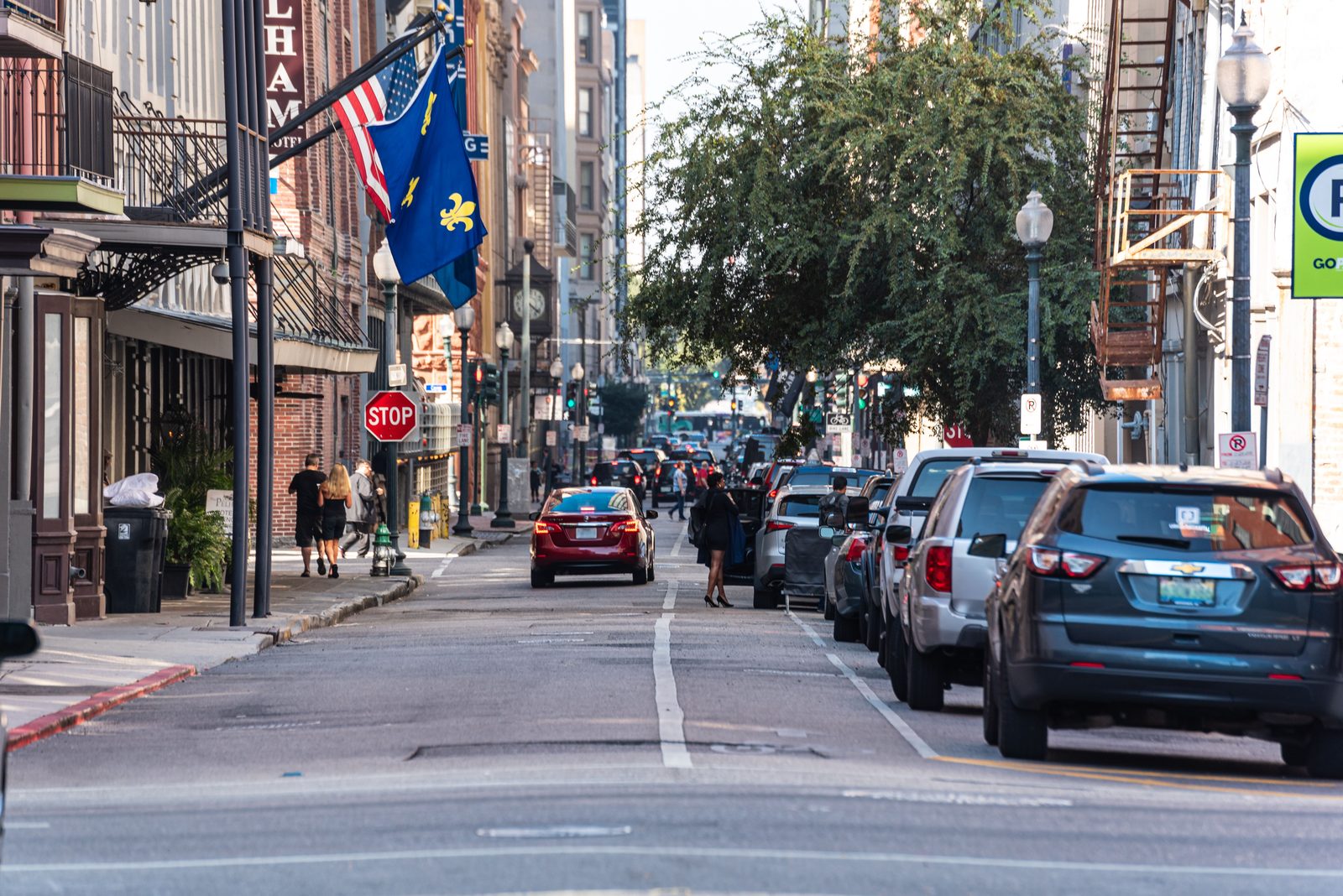
Louisiana’s relative humidity averages around 78 percent, and New Orleans sees roughly 80 inches of rain in a typical year against a national average closer to 30. It doesn’t rain more often than other humid cities, it rains harder, in short violent bursts that flood streets with no advance warning. Combine that with a city built below sea level and dependent on a pump system to keep water out, and even routine afternoons carry a low hum of infrastructural anxiety that most newcomers underestimate until they’ve lived through their first real storm season.
The cost side is a mixed bag that trips people up. Median home prices in New Orleans run below the national average, and property taxes are lower too, but the city carries one of the highest combined sales tax rates in the country, close to 9.55 percent, which steadily taxes every grocery run and hardware store trip. There’s no Costco in the city proper, and insurance costs, especially flood and wind coverage, have climbed sharply enough in recent years that some homeowners describe their annual premium as a second mortgage payment.
Why the Ones Who Stay, Stay Forever
The city’s culture is not a marketing layer on top of daily life, it is daily life. Second line parades happen on ordinary Sunday afternoons in ordinary neighborhoods with no tourists present. Neighborhood bars have live brass bands on a Tuesday. Food culture runs so deep that a corner grocery might have a red beans and rice recipe passed down four generations. For people wired to respond to that texture, nowhere else in America offers it at the same density, and once it becomes normal, most other cities start to feel sterile by comparison.
What Wears People Down
- Municipal services, from road maintenance to the pump system, are chronically underfunded relative to what a below-sea-level city actually requires
- Job markets outside hospitality, healthcare, energy, and the port are genuinely thin, pushing many career-track newcomers toward remote work or eventual relocation
- Hurricane season runs six months a year, and the mental load of tracking storms, even ones that ultimately miss, adds up over multiple seasons
The healthcare access question compounds both the humidity and the cost issues for people considering a permanent move. Louisiana ranks near the bottom of most national health outcome rankings, and New Orleans specifically has struggled with hospital capacity and insurance costs that run higher than the regional average, partly a legacy of Hurricane Katrina’s disruption to the city’s medical infrastructure in 2005, which permanently closed Charity Hospital, once the primary safety-net hospital for the region, and reshaped how the city delivers care to lower-income residents even two decades later.
Schools are the other quiet factor that pushes some transplant families toward the binary outcome faster than singles or childless couples experience it. New Orleans operates one of the most unusual public school systems in the country, an almost entirely charter-based model adopted after Katrina replaced the traditional public school district, and outcomes vary enormously school to school in a way that requires real research and often lottery-based enrollment rather than simply choosing a home based on a zoned school district the way most American cities work. Families who don’t sort that out before moving often find themselves scrambling in a way that adds to the general sense of logistical friction that either becomes background noise you accept or becomes the final straw.
None of this is meant to talk anyone out of moving to New Orleans, the people who make it past the two-year mark overwhelmingly describe it as the best decision they’ve made, and the city’s cultural gravity is real enough that it consistently pulls people from far wealthier, far more convenient cities who simply decide the tradeoff is worth it. But the binary outcome is not a myth or an exaggeration. It shows up in mover surveys, in local Facebook groups full of both love letters and warnings, and in the simple demographic fact that New Orleans has one of the highest rates of both long-term multigenerational residency and short-term transplant turnover of any mid-sized American city at the same time.
Food culture is one of the more reliable signals locals point to when explaining why New Orleans holds people who make it past the early adjustment period. The city’s restaurant scene operates on a scale and a level of institutional continuity, family-owned kitchens that have operated for three or four generations, that’s rare even among America’s other celebrated food cities, and residents who stay describe an almost physical relationship with the city’s food culture developing over time, a sense that leaving would mean losing access to something that can’t be replicated anywhere else in the country, which is a genuinely different kind of attachment than simple restaurant enthusiasm.
The people who wash out tend to be the ones who moved for the romance of the city without pricing in the logistics, then discover that romance doesn’t fix a flooded street or a job market that doesn’t have a lane for their skill set. The people who stay tend to describe a specific moment, often around the one-year mark, when the city stopped being a novelty and became simply where they live, humidity and all. There isn’t much middle ground between those two outcomes, and locals will tell you that’s by design. New Orleans has never tried to be easy. It has only ever tried to be itself, and it leaves the sorting process to time.