Door County, Wisconsin Is the Vacation Spot Wisconsin Residents Treat Like Their Private Peninsula. Outsiders Are Only Just Catching On
We may earn money or products from the companies mentioned in this post. This means if you click on the link and purchase the item, I will receive a small commission at no extra cost to you ... you're just helping re-supply our family's travel fund.
Door County occupies the narrow peninsula that separates Green Bay from Lake Michigan at the far tip of northeastern Wisconsin, and for generations it has functioned almost like a private summer retreat for Wisconsin and Illinois families, passed down through the same tradition of returning to the same town, the same cottage, the same cherry orchard every summer. It has never fully entered the national vacation conversation the way Cape Cod or the Outer Banks have, despite offering a genuinely comparable coastal small-town experience in the middle of the country.
Eleven Towns, Each With Its Own Personality
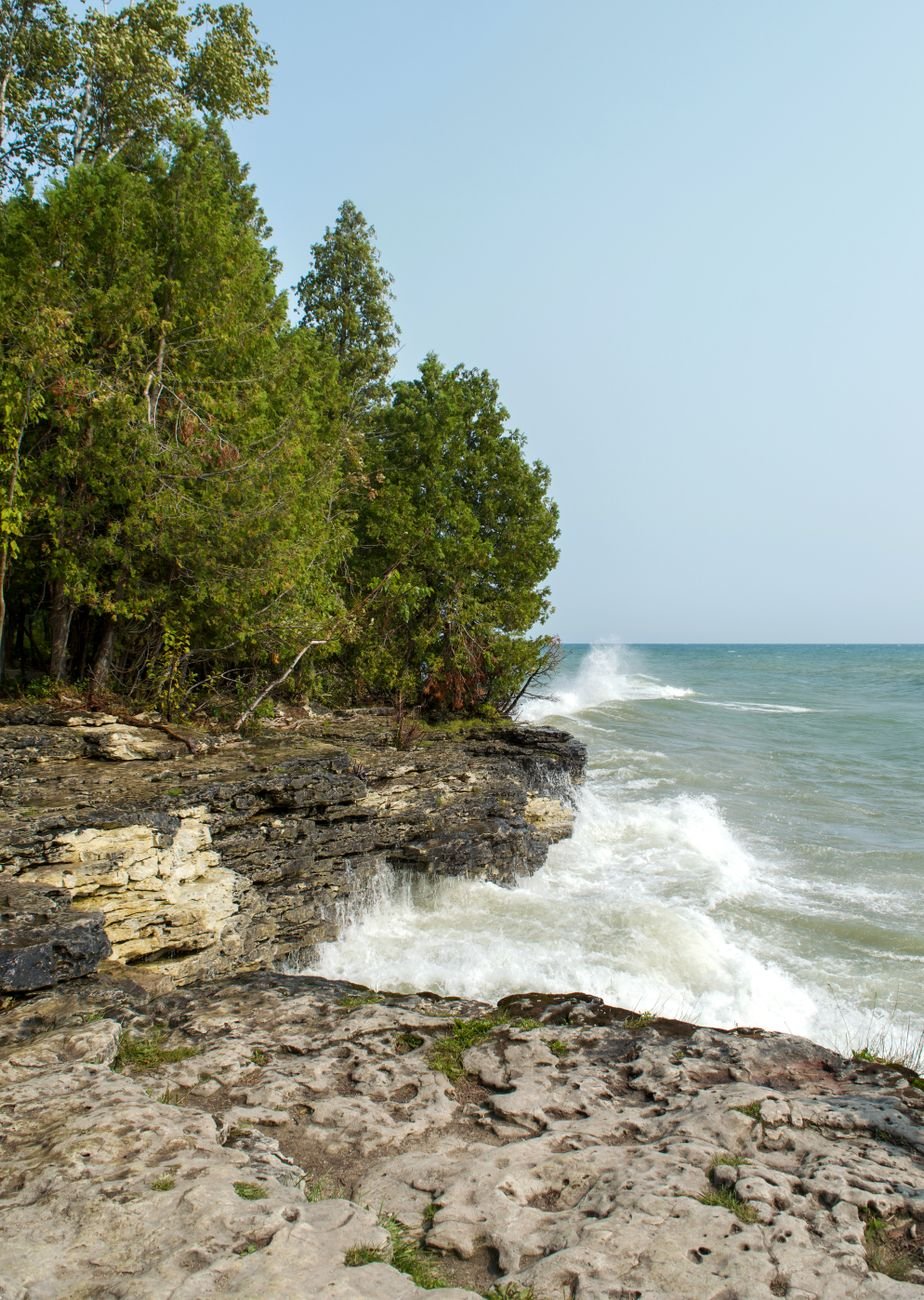
Door County is organized around a string of small towns along its roughly 300 miles of shoreline, each with a distinct identity that regular visitors take seriously. Sister Bay and Fish Creek anchor the more commercial, restaurant-and-gallery-driven side of tourism, while Ephraim maintains stricter zoning that has preserved a quieter, more historic feel, including a long-standing local restriction on alcohol sales that only recently loosened. Washington Island, accessible only by a ferry that runs from Northport Pier, offers an even more remote extension of the peninsula’s character, with its own small population and a slower pace even relative to the rest of Door County.
Sturgeon Bay, the county’s largest town and a working shipbuilding community, gives the peninsula an economic anchor that isn’t purely tourism-dependent, distinguishing it from many resort regions where the entire local economy rises and falls with the visitor season alone.
What a Peak-Season Trip Actually Costs
Door County’s peak season runs roughly Memorial Day through Labor Day, and prices climb accordingly. The Washington Island Ferry runs $16 round trip for an adult and $36 for a standard car as of 2026, according to regional travel data. A pontoon boat rental at South Shore Pier in Ephraim runs around $195 for two hours plus fuel, according to a New York Times feature on the region. Peninsula State Park, the county’s largest and most-visited park, charges a $10 day pass for Wisconsin plates or $13 for out-of-state vehicles, modest by national park standards but notable as one of the higher day-use fees among Wisconsin state parks specifically because of demand pressure.
- Sister Bay and Fish Creek: the commercial core, restaurants and galleries
- Ephraim: preserved, historically alcohol-restricted, quieter character
- Washington Island: ferry-only access, the most remote extension of the peninsula
- Sturgeon Bay: the working town, anchored by shipbuilding rather than tourism alone
Cherries Are Not a Gimmick Here Either
Door County shares Michigan’s Traverse City-style cherry identity, with its own significant tart cherry orchards concentrated around the peninsula’s base, and roadside stands and pick-your-own operations remain a genuine part of the local summer economy rather than a tourist-oriented afterthought. The peninsula’s limestone bluffs and unique microclimate, moderated by the surrounding water on both sides, support both the cherry orchards and a growing number of small wineries, giving visitors a food-and-drink identity that predates the recent wave of national attention by decades.
Why It Never Went Fully National
Door County’s relative anonymity outside the Upper Midwest comes down largely to geography and flight access: there’s no major airport on the peninsula itself, and the closest reasonable options, Green Bay or Appleton, require another hour or more of driving, which filters out casual fly-in tourism the way Cape Cod’s proximity to Boston never has. That inconvenience has functioned as a kind of accidental gatekeeping mechanism, keeping the peninsula’s visitor base concentrated among Midwesterners willing to drive, which is exactly how generations of Wisconsin and Chicago-area families have come to think of it as something closer to a regional secret than a national destination, even as the secret becomes gradually less well-kept every summer.
The Michigan Comparison Locals Reject
Door County is frequently compared to Michigan’s Traverse City region because of the shared cherry orchards and Great Lakes shoreline setting, but longtime Door County residents tend to push back on the comparison, pointing to differences in scale, development density, and the peninsula’s distinct string-of-small-towns structure versus Traverse City’s more centralized single-city model. Door County has deliberately maintained lower-density development and stricter local zoning in several of its towns, a choice residents credit for preserving the peninsula’s small-town character even as visitor numbers have grown substantially over the past two decades.
The Off-Season Tells a Different Story
Door County’s winter population and economy shrink dramatically once the summer crowds leave, and many seasonal businesses close entirely between late fall and early spring, leaving a much smaller, more insular year-round community that depends on Sturgeon Bay’s working economy to sustain itself through the off-season. This seasonal contraction is part of what keeps Door County from developing the kind of year-round luxury market seen in ski towns like Crested Butte or Aspen — without a winter tourism draw to match its summer popularity, the peninsula’s economy remains fundamentally tied to a roughly four-month window, which has so far limited how far real estate speculation has been able to push prices compared to year-round resort markets elsewhere in the country.
Door County’s continued appeal, even as it becomes gradually better known outside the Midwest, rests on that same seasonal, small-town rhythm that has defined it for generations — a rhythm that no amount of new national attention has yet managed to fundamentally disrupt.
Door County’s tourism board has begun grappling publicly with questions of visitor capacity that would have seemed unnecessary a generation ago, including discussions of peak-season parking limits near the most popular state park trailheads and a growing push to spread visitor traffic more evenly across the peninsula’s lesser-known towns rather than concentrating almost entirely on Fish Creek and Sister Bay, a shift that, if it takes hold, could meaningfully change which towns see the next wave of investment and price pressure.
Wisconsin’s own state tourism office has increasingly promoted Door County as a signature destination in national advertising campaigns, a strategic shift from decades of treating it primarily as a well-known regional secret, suggesting the peninsula’s next chapter may involve a more deliberate, state-backed push toward broader recognition rather than the organic, word-of-mouth growth that defined it for most of the twentieth century.