Why Traverse City’s Cherry Country Is More Than a Festival—and What Processing and Seasonality Mean for Visitors
We may earn money or products from the companies mentioned in this post. This means if you click on the link and purchase the item, I will receive a small commission at no extra cost to you ... you're just helping re-supply our family's travel fund.
Traverse City calls itself the Cherry Capital of the World, and every July the National Cherry Festival backs that up with parades, fireworks and a lakefront full of pie. But Traverse City cherry country is a working agricultural region, and the festival is the part you can see from the street. Behind it sit orchards, processing plants, a short harvest and a spring frost that can decide the whole year.
Understanding that makes a trip better. You will know when to come for blossoms, when to pick, what the cherries are really used for and why the fresh ones may be harder to find than you expect.
What Makes Traverse City Cherry Country More Than a Festival
The Grand Traverse region, which includes the Leelanau and Old Mission peninsulas, sits at about the 45th parallel with Lake Michigan moderating the climate. Cold water in spring delays blossoms until the worst frosts have passed, and warm water in fall prolongs the growing season. That lake effect is why cherries grow here at scale. Michigan produces the large majority of the nation’s tart cherries, with the Traverse City area at the center.
The National Cherry Festival began in 1926, and it has grown into a week-long event in early July with concerts, a parade, an air show and cherry-themed food. It is fun and crowded, with hotel rates at their peak. It is also a marketing event for an industry that has changed a lot since then.
Tart versus sweet
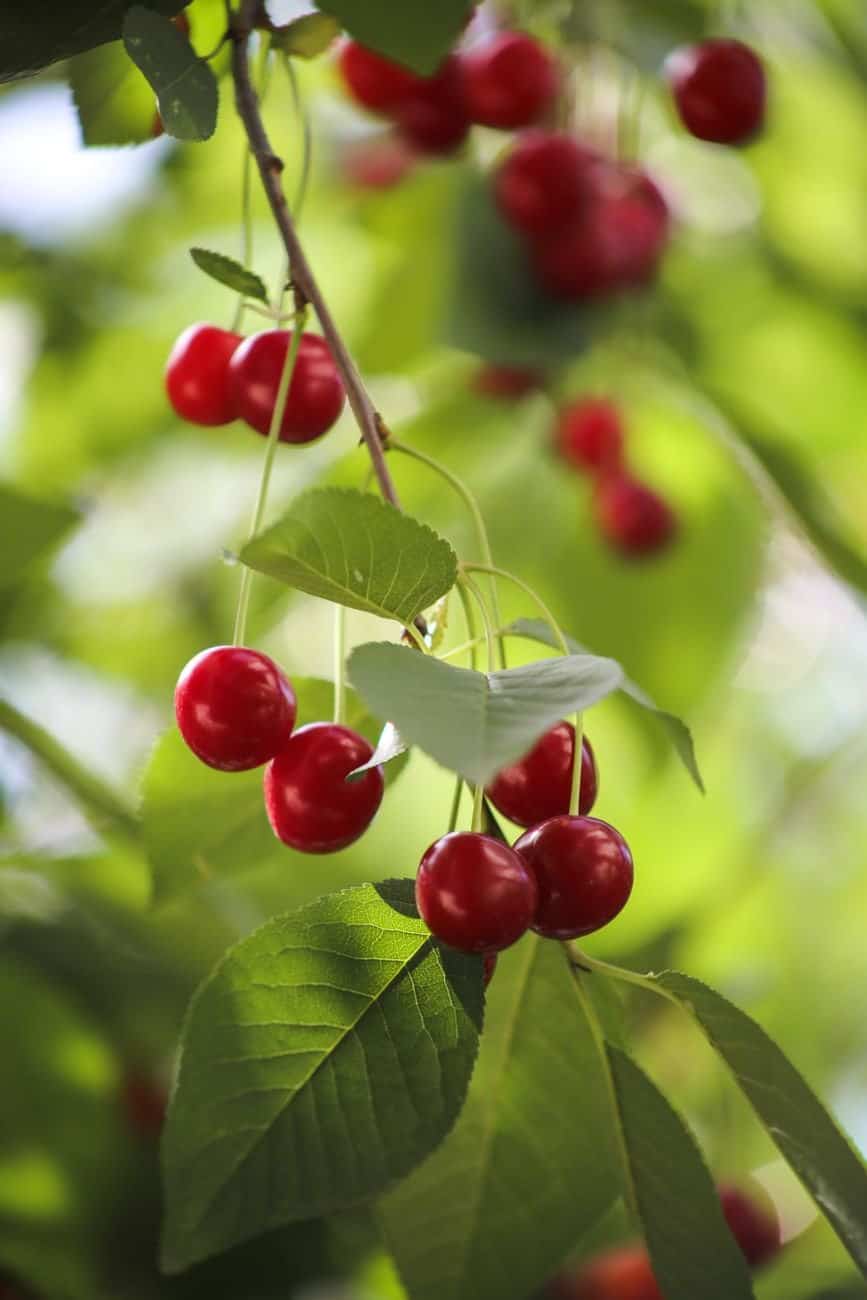
Most of the cherries grown here are Montmorency, a tart variety used in pies, juices and dried fruit. Sweet cherries, such as Napoleon and Emperor Francis, are eaten fresh and appear at farm stands in late July. Tart cherries are too sour to eat out of hand, so the great majority of them are processed rather than sold fresh. That fact surprises many visitors who expect to buy a pint at every roadside stand.
Processing: Where Most Cherries Go
After harvest, tart cherries move quickly, because they bruise and spoil fast. Mechanical shakers clamp the trunk and shake the fruit into catchers, which carry it to tanks of cold water. From there, the cherries are cooled, pitted and sorted at processing plants within hours.
Most are frozen or canned, and a growing share is dried, juiced or turned into concentrate. Dried cherries became a major product after growers looked for new uses in the 1990s, and tart cherry juice has found a market among people who believe it helps with muscle soreness and sleep, though the research on those claims is mixed. Pie filling, once the dominant use, is now one product among many.
Why that matters to visitors
Because the industry is built around processing, you will see more cherry products than fresh tart cherries. Farm markets sell dried cherries, jams, salsas, wines, cider and chocolate. Fresh sweet cherries are available for a short window. If you want to taste tart cherries fresh, ask a grower in late July, and be ready for a very sour bite.
Seasonality: A Calendar for Cherry Country
Timing is everything in this region, and the cherry calendar shapes crowds, prices and scenery.
- Mid-May: Blossoms cover the Old Mission and Leelanau hills. Peak bloom lasts roughly a week, and it is one of the best scenic drives in the Midwest. Hotels are still affordable.
- Late June to early July: The National Cherry Festival fills the town, and rooms can cost $250 to $450 a night in the center, with lower prices farther out.
- Mid-July to early August: Harvest peaks. Pick-your-own farms open, roadside stands sell sweet cherries, and orchards can be busy.
- September: Cherry harvest is over, grapes ripen and wineries fill. Apples appear, and crowds thin.
- October: Fall color arrives, and many seasonal businesses begin closing.
- Winter: Quiet, snowy and cheap. Ski areas operate, and many farm stands are closed.
The frost risk
The calendar can be upended by weather. In 2012, an unusually warm March pushed trees to blossom early, and a hard freeze in April destroyed the great majority of Michigan’s tart cherry crop. Farm stands had little to sell, and prices for processors surged. The episode showed how a few nights of cold can reshape a year, and it is why growers use wind machines and, in some cases, helicopters to move air during frosts.
If you plan a trip around a specific crop, build in flexibility. A frost or heat wave can move harvest by two weeks.
What a Cherry Trip Costs
Costs depend heavily on timing. A mid-range hotel in Traverse City might cost $120 to $200 a night in late spring or September and double or more in July. Cottages and vacation rentals on the peninsulas commonly run $200 to $450 a night in summer.
- Pick-your-own cherries: Typically $2 to $4 a pound, with farms setting their own rates and seasonal hours.
- Dried cherries and cherry products: Often $8 to $15 for a bag or jar at farm markets.
- Cherry pie: A slice usually costs $5 to $8, and a whole pie $20 to $30.
- Winery tastings: Commonly $10 to $25 per person on the Old Mission and Leelanau peninsulas.
- Parking: Free in most farm and winery locations, with paid lots and meters downtown.
Where to Go
Old Mission Peninsula is a narrow finger of land extending 19 miles into Grand Traverse Bay, with orchards, vineyards and a lighthouse at the tip. Leelanau Peninsula, to the west, has more wineries, small towns such as Suttons Bay and Leland and the Sleeping Bear Dunes National Lakeshore on its southern end.
In town, Front Street and the Open Space on the waterfront are the center of the festival and the farmers market, which runs on Wednesday and Saturday mornings in summer. Nearby, the Con Foy Hotel and local cherry shops sell products year-round, and Cherry Republic, based in Glen Arbor, offers a large selection of cherry foods and drinks.
Pick-your-own or farm stand
Pick-your-own is a good activity for families and offers a window into harvest. Bring a hat, water and closed shoes, and ask what varieties are ready. Farm stands are easier and may offer better variety. Check for crop updates before you go, since availability changes daily in season.
The Economics Behind the Orchards
Cherry farming is risky and expensive. Orchards take years to mature, frost and storms can wipe out a crop and prices swing with supply. Labor is a challenge, since harvest requires a short, intense burst of workers, many of them seasonal. Farms near Traverse City also face rising land prices as tourism and housing demand grow, and some orchards have been sold for houses and wineries.
Visitors affect that picture. Buying from farm stands, markets and local producers sends money directly to growers, while a vacation rental boom adds to land pressures. Neither is wrong, but it helps to know the trade-offs when you decide where to stay and what to buy.
Eating and Drinking Cherries
Cherry cuisine in the region goes well beyond pie. Restaurants serve cherry barbecue sauce on ribs, cherry salsa with whitefish, dried cherries in salads and cherry chutney with cheese. Local bakeries make cherry turnovers, scones and fritters, and some sell pies frozen so you can carry them home. At farm markets, you will find cherry cider, cherry wine and hard cider, and a few distilleries make cherry brandy.
The Old Mission Peninsula and Leelanau Peninsula wineries make Riesling, pinot noir and cool-climate whites, and several produce cherry wines. Tasting rooms often charge $10 to $25 for a flight, which is sometimes refunded with a purchase. Plan a designated driver or a tour, because the roads are winding and rural.
Souvenirs worth buying
Skip the cheapest gift-shop items and look for products made from local fruit. A bag of dried Montmorency cherries, a jar of preserves or a bottle of tart cherry concentrate travels well and costs $8 to $20. If you want something fresh, buy sweet cherries in the morning and refrigerate them, since they spoil quickly in a hot car.
When Not to Go
If your goal is quiet orchards and affordable lodging, avoid the first full week of July, when the festival fills hotels. Avoid weekends in August on Old Mission Peninsula if you dislike traffic, since the narrow main road backs up near popular wineries. And skip a mid-winter trip if cherries are the draw, since there is no fruit and many seasonal shops are closed. Winter has its own charms, including snowshoeing and cozy restaurants, but not cherries.
Climate and the Future of Cherries
Growers have noticed that spring weather is becoming more erratic. Warm spells in March and early April coax buds to open, then late freezes damage them. Michigan has had several poor crop years as a result, and orchards are experimenting with different varieties, tree training and frost protection. Some farms have diversified into wine grapes, apples and agritourism to spread risk.
For visitors, the takeaway is to treat a cherry trip like a visit to any farming region: stay flexible, check with growers and appreciate what is available. A short crop year is not a disappointment but part of the picture of what it takes to grow fruit on a cold lake.
Making the Most of a Visit
If you want the festival, book early and plan to go midweek, when crowds are smaller. If you want blossoms or quiet orchards, aim for mid-May or September. If you want to pick fruit, aim for mid-July to early August, and call ahead.
A good day in cherry country mixes a morning orchard visit, lunch at a farm market, a late-afternoon winery tasting and dinner in town. Add a swim at a Lake Michigan beach and you have the region at its best. The festival is a fine reason to come. The land behind it is a better one.