Take Out Your Camera at the Start of a Trip — Here’s What Changes in the First 5 Minutes
We may earn money or products from the companies mentioned in this post. This means if you click on the link and purchase the item, I will receive a small commission at no extra cost to you ... you're just helping re-supply our family's travel fund.
Pulling out a camera at the start of a trip is one of the simplest ways to change how you see a place. Within five minutes, most people slow down, look up and notice details they would have walked past. There is real research behind that, and it comes with a catch: how you use the camera matters as much as whether you do.
What Changes in the First 5 Minutes With Your Camera
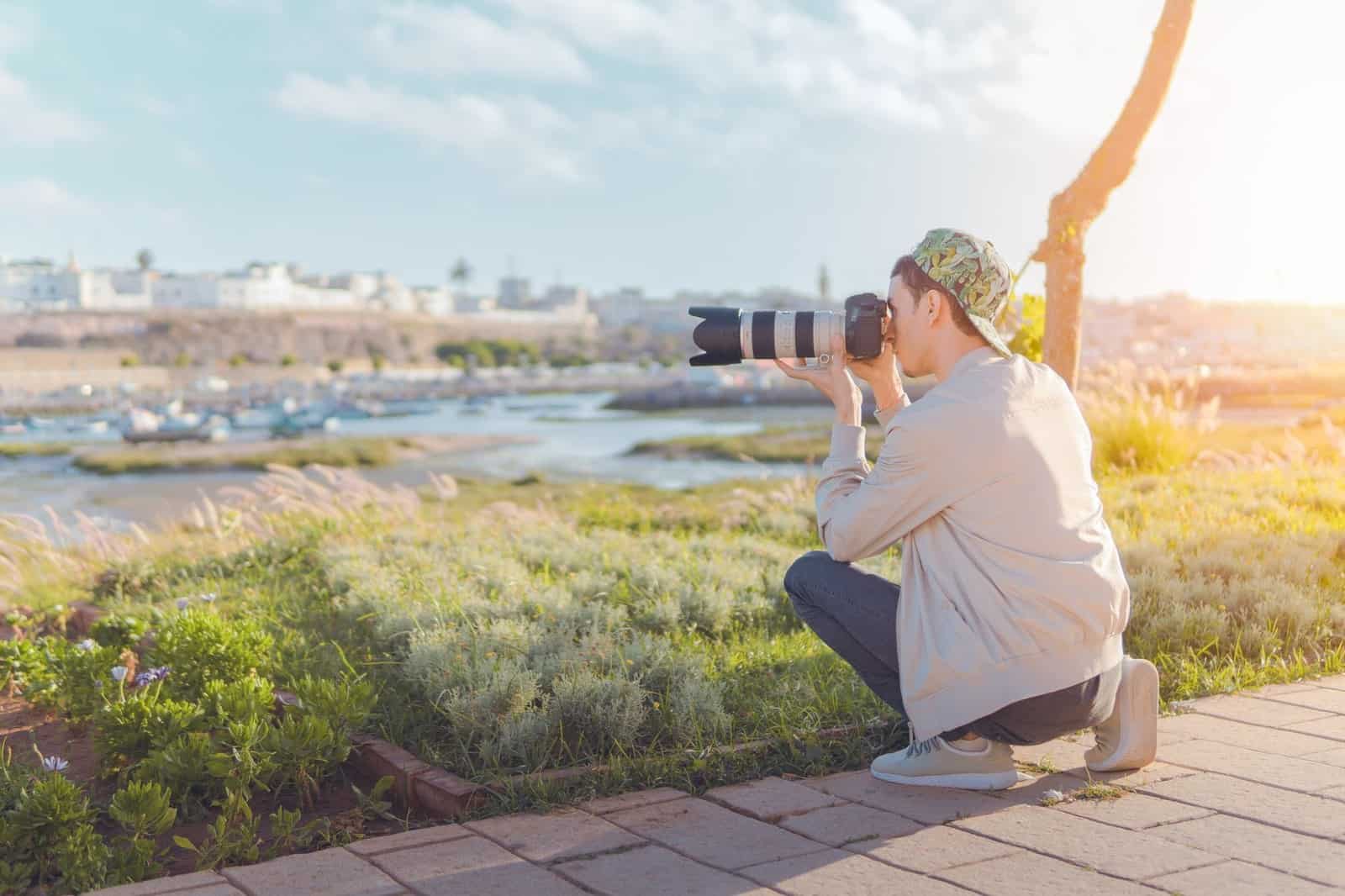
Here is the short answer. When you take a camera out in the first five minutes of arriving, you shift from passive to active. You stop scrolling and start scanning. You look for light, lines and people, and you start to treat the place as something worth paying attention to. That change in attention tends to carry through the rest of the trip.
A 2017 set of studies published in the Journal of Personality and Social Psychology by researchers including Kristin Diehl, Gal Zauberman and Alixandra Barasch found that people who took photos during an experience, such as a bus tour or a meal, reported more enjoyment than people who didn’t. The researchers linked the effect to greater engagement with the experience, not to the photos themselves. That is the heart of the idea: the camera is a tool for attention.
The Catch: Photos Can Also Weaken Memory
Another line of research points the other way. A 2014 study by psychologist Linda Henkel, published in Psychological Science, found that people who photographed objects in a museum remembered fewer details than people who simply observed them. She called it the photo-taking impairment effect. When people zoomed in on a specific part of an object, though, the memory penalty shrank.
Put together, the two findings suggest a rule. Taking photos can boost enjoyment and attention if you are engaged with what you shoot, and can reduce memory if you use the camera as a substitute for looking. The first five minutes are where you set that habit.
A Five-Minute Routine for Your Camera at the Start of a Trip
Here is the routine in order, one step per minute. You can do it with a phone or a dedicated camera, and it works in a city, a village or a trailhead parking lot. Treat it as a loose script and adjust to the place.
Minute One: Stop and Look Before You Shoot
Plant your feet before you lift the camera. Look around for ten seconds without your phone in hand. Find the thing that makes this place different from the airport, the hotel or your home street. It might be the color of the buildings, the smell of a bakery, the sound of a market or the angle of the light.
The point is not to find a perfect shot. It is to give your brain a moment to register that you have arrived.
Minute Two: Take One Wide Shot
Take a single wide photo that shows where you are. It acts as a visual anchor, and it timestamps the start of the trip. Don’t fuss over it. Shoot it level, include some sky or ceiling, and move on.
That one frame also helps later, when you organize photos. The first image in a set often tells you which city, which neighborhood and which day it was.
Minute Three: Find One Detail
Now zoom in with your feet or your lens. Pick a detail: a door handle, a tile pattern, a hand-painted sign, a bowl of fruit, a bicycle chained to a post. Details are where the character of a place lives, and they are the pictures people tend to love most later.
This is also where the Henkel finding is useful. Focusing on a specific detail forces you to look closely, which reduces the memory cost of photography.
Minute Four: Include a Person, With Respect
If there are people nearby, notice them. A street scene without people can feel empty. But do not point a lens at a stranger without thinking. In many places, photographing people without asking is rude, and in some it can lead to conflict. A good approach:
- Ask first, with a smile and a gesture. A nod is often enough.
- Shoot from behind or at a distance for street scenes, where that’s appropriate and legal.
- Avoid photographing children without a parent’s consent.
- Respect signs that forbid photos, especially in religious sites and some museums.
Many people are glad to be asked, and a short exchange can turn a photo into a small connection.
Minute Five: Put the Camera Away
The fifth minute matters most. Put the camera down. Look at the place again without a screen. Notice what you saw in the photo and what you didn’t. Listen for sounds. Smell the air. Check how it feels to be here.
This closing step is what keeps the camera from becoming a barrier. By the fifth minute, you have a wide shot, a detail and perhaps a person. You have also trained your eyes to scan. Now you can walk on with attention instead of a lens glued to your face.
What the Five Minutes Actually Change
If you try the routine, here is what many travelers report noticing:
- You walk more slowly, because you keep stopping to look.
- You notice small things, like the pattern of shutters or the way locals carry groceries.
- You feel less like a spectator, because you’re doing something.
- You pick a direction faster, because the camera makes you ask what looks interesting.
- You feel more relaxed, since the first minutes of a trip can feel hectic and the routine gives them a shape.
None of this is guaranteed, and results vary by person. But the research on engagement offers a plausible reason for the shift.
When the Camera Gets in the Way
Be honest about the downside. A camera can pull you out of the moment if you:
- Stay behind the screen for most of a sunset or performance.
- Spend a meal arranging plates instead of tasting them.
- Take 40 versions of the same shot and never review them.
- Argue with your travel partner about angles.
- Break the rules at a sacred site or a restricted area.
If you notice yourself doing any of these, set a limit. Take three shots, then put the device away. Some travelers allow themselves a photo hour in the morning and keep the rest of the day free of the lens.
Phone or Camera?
For most travelers, a phone is enough. It is always with you, quick to use and good in low light on recent models. A dedicated camera has advantages: better zoom, more control and a more deliberate feel. The slight friction of a real camera can make you more thoughtful, which is part of the point.
If you use a phone, turn off notifications while you shoot, because messages are the quickest way to lose the thread. Keep the lens clean, since pockets and bags leave smudges that spoil images. Charge the battery before arrival, and carry a small power bank.
Simple Settings That Help
You don’t need a lot of technical knowledge. A few basics make a difference:
- Turn on the grid lines so you can level horizons.
- Tap to set focus and adjust exposure on the part of the scene that matters.
- Shoot in good light when you can, which is usually early morning or late afternoon.
- Turn off flash for most scenes.
- Back up your photos each night, so you aren’t relying on a single device.
Why the Start of a Trip Is the Right Time
The first minutes in a new place are unusually rich in new information. Everything is unfamiliar, from signage to smells, and your brain is working hard to sort it out. Many travelers spend that moment checking messages, hunting for a map or dragging luggage, which means the sharpest impressions of the trip pass unnoticed.
Starting with the camera converts that window into a deliberate act of noticing. It also sets the tone for the days ahead. A traveler who begins by looking tends to keep looking, while one who begins by scrolling tends to keep scrolling.
There is a practical benefit as well. The first photos of a trip give you a baseline for the light, the weather and the feel of the place, so later you can compare. They are also useful as a record of where you left your car, which street your hotel is on or which door was yours.
A Quick Example Arrival
Picture stepping off a train in an unfamiliar town in late afternoon. You stop at the platform edge, look at the station clock and the hills beyond, and take one wide shot with the building in frame. You walk to the plaza and photograph the tile pattern around a fountain. A vendor is stacking oranges, so you ask with a smile whether you may take a picture, and she nods. Then you put the camera in your pocket and stand there for a minute, listening to the bells.
That is five minutes. You are no longer a person looking for the hotel. You are a person who has arrived.
Making It Part of Every Arrival
The five-minute routine works at any arrival: a train station, a hotel lobby, a trailhead or a market. It is a ritual that helps you land in a place. Over a long trip, it can become a pattern. You arrive in a new town, look for ten seconds, take a wide shot, find a detail, look for a person and put the camera away.
The photos you take will probably be better than random snapshots, because they come from looking first. Some travelers find they end up taking fewer pictures overall but remember more of them.
The Bottom Line
Take out your camera early, then use it with purpose. In the first five minutes, the camera can sharpen your attention, give you a few good frames and make the place feel like yours. Then put it away and keep looking. The research suggests that engagement drives enjoyment and that mindless shooting costs memory, so the habit that serves you best is to look before you shoot.