The Travel Items Frequent Flyers Always Buy — And the Ones They Threw Away After One Trip
We may earn money or products from the companies mentioned in this post. This means if you click on the link and purchase the item, I will receive a small commission at no extra cost to you ... you're just helping re-supply our family's travel fund.
Frequent flyers are not loyal to brands. They’re loyal to what works — and ruthless about abandoning what doesn’t.
After enough miles, you develop a very clear picture: the gear that earns its place in your bag on every trip, and the stuff that seemed like a great idea in a travel blog review and ended up in the donation pile after one use.
Here is both lists, with no promotional bias.
The Luggage That Actually Survives Real Travel

The luggage market is enormous and noisy. Most of it is mediocre. Here’s what holds up:
Away Carry-On
— The most-recommended carry-on among frequent travelers for a reason. The polycarbonate shell flexes without cracking, the spinner wheels are smooth, and the built-in TSA-approved lock is genuinely useful. The compression pad inside adds 20% more usable space. Around $295. The most common luggage at Priority boarding lines nationwide.Briggs and Riley Baseline
— The premium option and the best carry-on ever made for people who travel 50+ times a year. The CX expansion-compression system adds 2 inches of packing depth that compresses back down. The lifetime guarantee covers airline damage — no receipt required, no questions asked. $549. Worth it if you fly constantly.Osprey Farpoint 40
— For carry-on-only international travel where you’ll be walking cobblestones and climbing stairs, a soft-sided backpack beats a spinner every time. The Farpoint 40 fits in every overhead bin, has a lockable zipper system, and the harness is actually comfortable for a day of transit. $200.What to avoid
— Hardshell luggage from Amazon brands under $80. The wheels fail within 3 trips. The zippers split. The shells crack on airline conveyor belts. Buy once, buy correctly.
The Neck Pillow Lie and What Actually Helps You Sleep on Planes
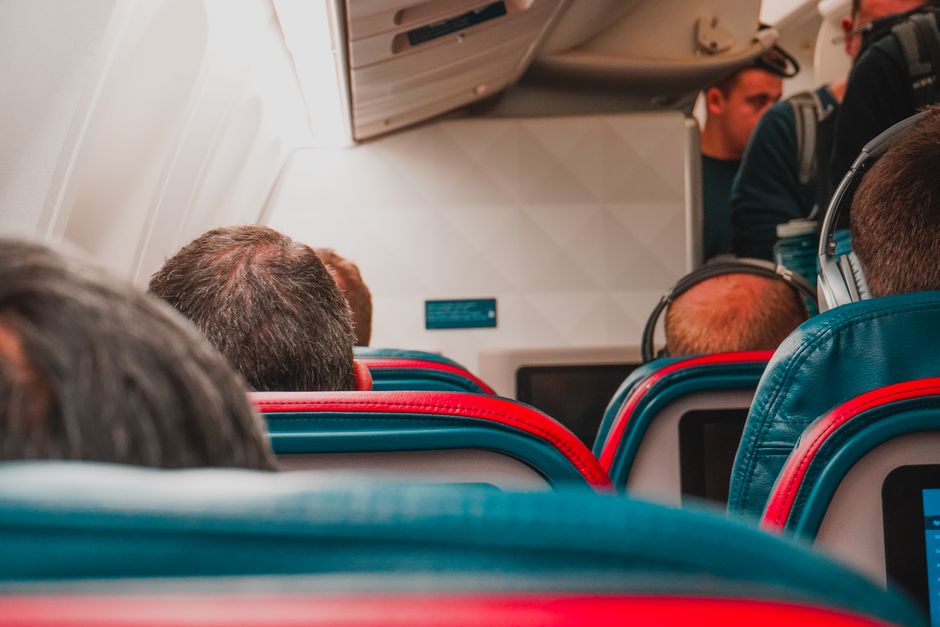
The U-shaped neck pillow is the most universally purchased and most universally useless travel product ever made.
Here’s the problem: it pushes your head forward, which makes sleeping upright worse, not better. Every frequent flyer who’s tried several options agrees on this.
What actually works:
Trtl Pillow
— A scarf-style wrap with an internal support rib that holds your head to the side rather than pushing it forward. Compact, washable, genuinely useful. Around $35. The single travel item most frequently mentioned by long-haul travelers.Cabeau Evolution S3
— If you insist on a traditional neck pillow, this is the best one. The memory foam is denser than competitors and the toggle at the front prevents the pillow from sliding sideways. $40.A quality eye mask
— The Alaska Airlines Luxury Sleep Kit eye mask has a molded interior so it doesn’t press on your eyelids. Manta Sleep Mask ($35) is the traveler favorite — the eye cups are individually adjustable.Melatonin
— Low-dose (0.5–1mg, not the 10mg you see at CVS) timed to your destination’s bedtime. The most evidence-backed sleep aid for jet lag.
Packing Cubes: The Travel Item That Actually Changed Everything

Packing cubes are the one gear category where the hype is 100% justified.
Frequent travelers who started using packing cubes describe their packing life as “before” and “after” — and nobody goes back.
Why they work
— Your clothes stay organized through multiple hotel moves. Security unpacking is faster. You can pull out exactly what you need without disturbing the rest of your bag. When a bag gets checked, the organization survives the handlers.Eagle Creek Pack-It Cubes
— The standard. The mesh top lets you see what’s inside. The double-zip compression version adds 30% more capacity. A set of three runs about $35.Compression packing cubes
— Roll your clothes, stuff them in, zip the compression zip. Genuinely reduces volume by 30–40% for soft items. Particularly useful for bulky items like sweaters and jeans.The system
— Most experienced travelers use one cube per category: tops, bottoms, underwear/socks. Some use one cube per outfit. The specific system matters less than having one.
Tech Gear Worth Packing and Tech Gear That Stays Home
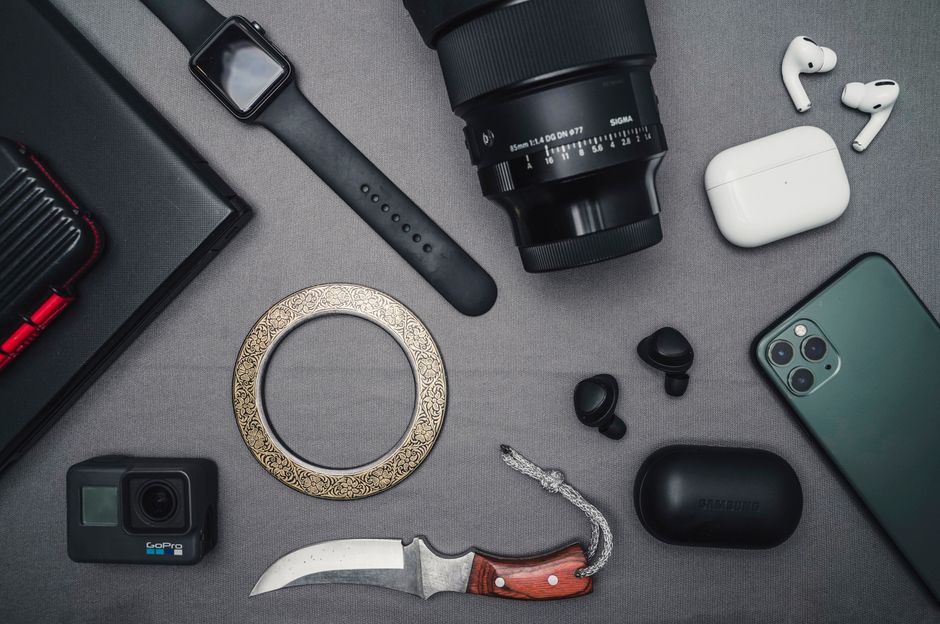
Travel tech has a high failure rate of “sounds great, never used it.”
What actually gets used on every trip:
Anker 65W USB-C charger (the small cube)
— Replaces your laptop brick and charges your phone and tablet simultaneously. Half the size and weight of a laptop charger. Around $25. Every frequent traveler has one.Universal travel adapter with USB ports
— The BESTEK or Epicka universal adapters with 4 USB ports built in mean you arrive anywhere in the world with one device. Under $25.Tile or Apple AirTag
— Covered extensively in the lost luggage piece. Non-negotiable for checked bags.Bose QuietComfort 45 or Sony WH-1000XM5 headphones
— Noise-canceling headphones on a long flight are transformative. The difference between arriving exhausted and arriving functional. Both run $280–$350. One of the highest ROI travel purchases you can make.A physical power bank (10,000–20,000 mAh)
— Airports are better about outlets than they used to be, but international airports, train stations, and touring days away from your hotel still drain phones. Anker PowerCore is the standard.
Tech that stays home:
Travel routers
— Sounded useful. Hotel WiFi is usually fine or unusable — a travel router doesn’t fix the unusable case.Portable laptop stands
— Heavy, awkward, barely used outside a consistent work-from-hotel setup.Smart luggage with built-in scales
— The scale is one more thing to fail. Buy a $10 luggage scale and put it in your toiletry bag.
The Toiletry Items That Frequent Flyers Never Leave Without

Frequent travelers have a ruthless edit to their toiletry bags after a few years.
Solid toiletries
— Solid shampoo, conditioner, and face wash eliminate liquid restrictions entirely and take up a fraction of the space. Lush and HiBar both make excellent versions.Cetaphil or CeraVe cleanser in a small decant bottle
— Air travel desiccates skin. A gentle hydrating cleanser is worth the ounce.Prescription medications in original bottles
— Or a doctor’s note. International border agents occasionally ask.Saline nasal spray
— Airplane cabins are pressurized to 6,000–8,000 feet and have very low humidity. A simple saline spray before and during a long flight reduces the respiratory infections that frequent flyers are prone to.A good lip balm with SPF
— The combination of altitude, dehydration, and often more sun exposure than usual at your destination makes this important.
The Health and Comfort Items That Earn Their Weight
Compression socks
— For flights over four hours, compression socks reduce leg swelling, lower DVT risk, and make you feel noticeably better upon arrival. Bombas and Comrad make good travel versions that look like normal socks.Electrolyte packets
— LMNT or Liquid IV. Dissolve in your water bottle after landing. Hydration after flying is more about electrolytes than water volume, and these help dramatically with jet lag symptoms.Hand sanitizer
— Tray tables have more bacteria than airplane toilets. This is not a germophobia thing — it is a documented fact. Use it before eating anything on a plane.Melatonin
— Already mentioned above. Worth repeating.Your own snacks
— Not because airplane food is always bad, but because having a protein bar and some nuts in your bag eliminates the hunger anxiety on delayed or long connections when the food options are terrible.
The Items That Sounded Good in Reviews and Were Terrible in Practice

This is the list that saves you money.
Inflatable foot rests for airplanes
— Reviewed extremely well. In practice, other passengers hate them, they deflate mid-flight, and flight attendants frequently ask you to put them away during takeoff and landing.Travel umbrellas smaller than your palm
— Too small to actually keep you dry in real rain. Buy a decent compact umbrella with a 42-inch canopy or accept you’ll be wet.Travel-size laundry detergent for sink washing
— Good in theory. In practice, most hotel rooms don’t have a flat surface to lay clothes flat to dry, and airline clothes don’t wash out in a sink easily. A laundromat every 5–7 days is a better strategy.The $200 “anti-pickpocket” backpack
— The wire mesh lining and hidden zippers add weight without meaningfully deterring a determined pickpocket. A normal awareness of your surroundings and a money belt accomplish the same thing for $20.TSA-approved padlocks for checked bags
— TSA will cut any lock they want to cut regardless of certification. The lock deters casual theft only. For actual valuables, use hard-shell luggage and don’t put anything irreplaceable in checked bags.Travel towels made from microfiber
— Fine for camping. For hotel travel, every hotel provides towels. Unnecessary weight.
The best travel gear is gear you forget you’re carrying because it never fails. Buy fewer, better things — and every trip gets lighter.