The Best State Fair in Every Region — And the Foods Worth the Drive
We may earn money or products from the companies mentioned in this post. This means if you click on the link and purchase the item, I will receive a small commission at no extra cost to you ... you're just helping re-supply our family's travel fund.
If you have not been to a great American state fair as an adult, you have not fully experienced this country.
I do not mean that as a cute travel observation. I mean it literally. State fairs are one of the last genuinely democratic public spaces in America — where a farmer, a politician, a teenager, and a retiree all stand in the same line for the same deep-fried thing on a stick, surrounded by prize-winning livestock and terrible carnival games and enough sugar to power a small city.
They’re also, increasingly, destinations worth planning a trip around.
Why State Fairs Are the Most Underrated Travel Experience in America

The state fair as a travel destination gets almost no respect from the travel media, which tends to cover luxury resorts, exotic destinations, and Michelin-starred restaurants.
This is a mistake.
- State fairs are time-limited — most run 10–18 days per year, making them genuinely special and seasonal
- They’re a complete cultural cross-section of a state in one location: agriculture, music, food, crafts, politics, and entertainment all happening simultaneously
- The food innovation is real — the Minnesota State Fair alone introduces 30–40 new foods every year, several of which end up as trends nationwide
- They’re affordable — most state fair admission runs $10–$20 per adult, and food is reasonably priced relative to festival standards
- The people-watching is extraordinary in a way that no other travel experience quite replicates
The Midwest: Where State Fairs Are a Religion
Minnesota State Fair
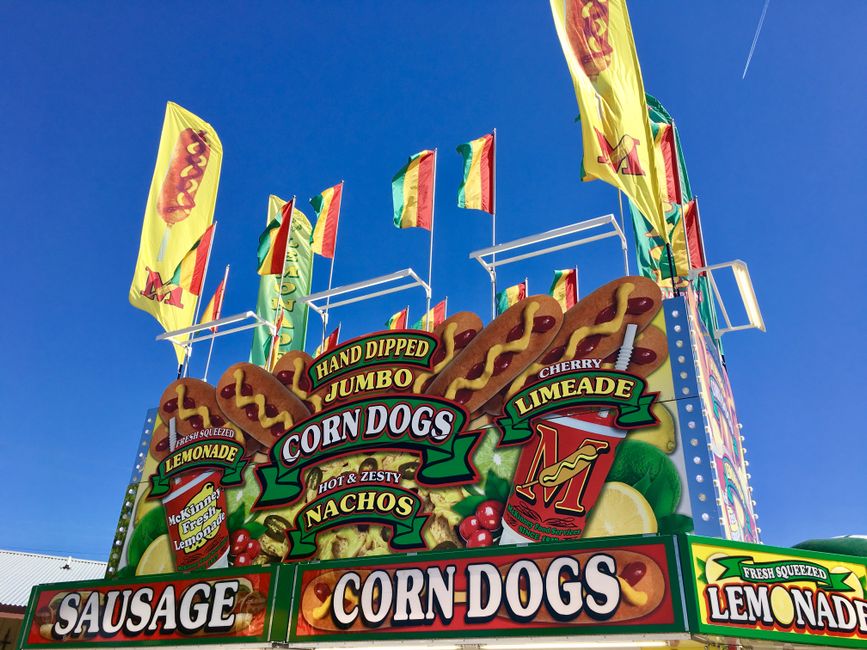
— The undisputed champion. Runs 12 days ending Labor Day. Nearly 2 million visitors. 500+ food items available on the fairgrounds. Sweet Martha’s Cookies (a bucket of fresh-baked chocolate chip cookies from the oven) has a line at all hours. The Pronto Pup (the fair’s signature corn dog) has been there since 1947. The Midway has the best carnival game density in any fair in America. Budget a full day and wear comfortable shoes.Iowa State Fair
— The original great state fair and the one that inspired the 1945 film of the same name. The butter cow — a full-size cow sculpted entirely in butter — has been here since 1911. The agricultural competitions are taken more seriously here than anywhere else. Pork belly sundaes, deep-fried Snickers, and the Iowa Pork Tent (pork chop on a stick for $5) are mandatory.Wisconsin State Fair
— Cream puffs. That’s the whole story. The Wisconsin State Fair Cream Puffs — a giant choux pastry filled with fresh whipped cream — sell over 300,000 units in 11 days. People pre-order them. People drive four hours for them. Go get one.Illinois State Fair
— Springfield, late August. The corn dogs are excellent. The butter cow has competition from a butter Abraham Lincoln. The horse racing and grandstand concerts are top tier.
The South: Where Fair Food Gets Serious
State Fair of Texas
— The largest state fair in the country by attendance (over 2 million visitors across 24 days) and arguably the most intense food competition. Big Tex — a 55-foot talking cowboy — has greeted visitors since 1952. The Big Tex Choice Awards for new fair foods every year are a genuine annual news event. Fried butter (yes), fried beer (yes), Fletcher’s Corny Dogs (a fair institution since 1942), and the funnel cake fries are essential. Go on a weekday — weekends are shoulder-to-shoulder.North Carolina State Fair
— Raleigh, October. Best livestock competition in the Southeast. The fried food scene punches above its weight — the Ribeye Steak Sandwich stand has a line from opening to close. Known for excellent live music on multiple stages throughout the day.Georgia National Fair
— Perry, October. A proper agricultural fair that hasn’t been swallowed entirely by the commercial midway. Peach ice cream, boiled peanuts, and a genuine sense that farming is still the point of the whole enterprise.
The Northeast: Old Fairs With New Energy
The Big E (Eastern States Exposition) — West Springfield, MA
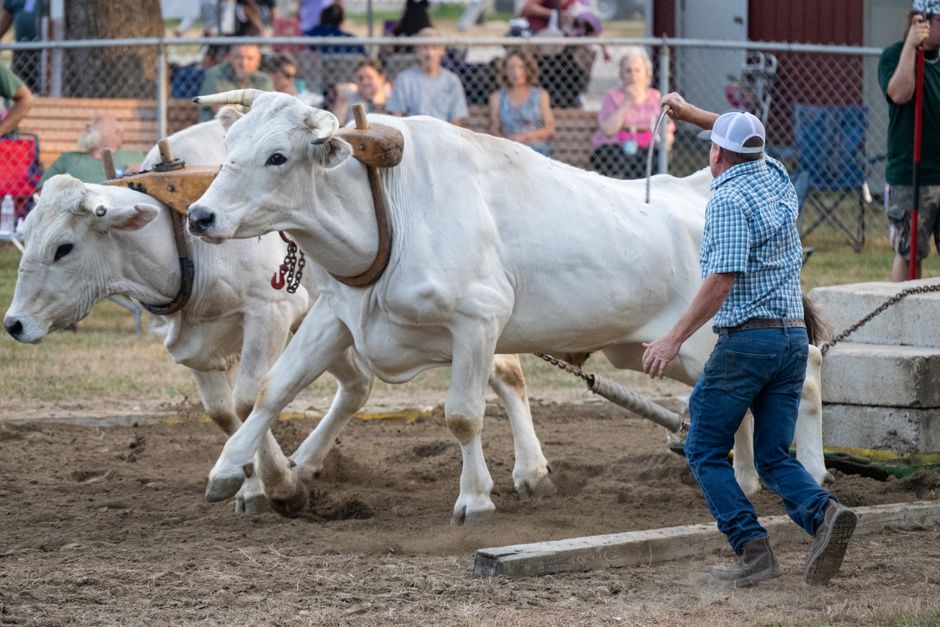
— The largest fair in the Northeast represents all six New England states simultaneously. Each state has its own building with regional food and products. The Big E Cream Puff, the Avenue of States, and the Storrowton Village Museum make this one of the most culturally rich fairs in the country. Runs 17 days in September.New York State Fair — Syracuse
— 13 days in August. One of the oldest continuously running state fairs in the country. The butter sculpture is a New York tradition. The food and entertainment lineup rivals Texas for sheer scale.Vermont State Fair — Rutland
— A proper old agricultural fair that still prioritizes farm animals, 4-H competitions, and local crafts over commercial entertainment. The apple cider donuts are mandatory.
The West: Fairs With Impossible Backdrops
California State Fair — Sacramento
— Mid-July. Farm-to-fair food sourced from California producers — craft beer, wine tasting, and produce competitions reflecting the state’s agricultural dominance. The backdrop: summer Sacramento heat that makes everything taste better in the shade with a cold drink.Colorado State Fair — Pueblo
— Late August into September. Rodeo is the centerpiece and it’s one of the best rodeos in the Rocky Mountain region. Green chile everything, because you’re in Pueblo and Pueblo takes its green chile very seriously.Washington State Fair — Puyallup
— One of the largest fairs in the country, running 21 days in September. The Puyallup Fair scones — the official scone of Washington State, served with raspberry jam since 1939 — have their own dedicated booth with lines starting at opening.
The Foods That Are Worth Every Calorie
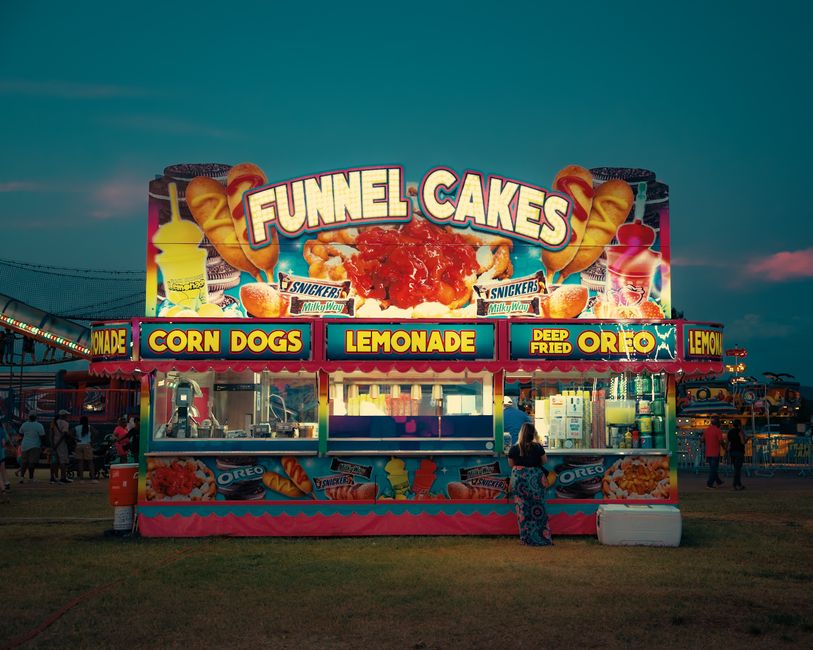
The state fair food canon includes genuine classics that have earned their reputations.
Corn dog
— Invented at the Texas State Fair in 1942 (Fletcher’s claims the original). The benchmark for all other corn dogs everywhere forever.Deep-fried Oreos
— Introduced at various fairs in the early 2000s and now ubiquitous. The best versions are light and crispy on the outside, molten on the inside.Funnel cake
— The original fair dessert. Powdered sugar is required. Fruit topping is optional but recommended.Sweet Martha’s Cookies (Minnesota)
— The bucket. You need the bucket. Share it or don’t — no judgment.Pork chop on a stick (Iowa)
— A bone-in pork chop grilled over charcoal and served on the bone as a handle. Simple, perfect, $5.Wisconsin Cream Puff
— Listed above. Non-negotiable if you’re in Wisconsin in August.Deep-fried butter (Texas)
— A frozen butter ball, battered and fried. It sounds like a heart attack and tastes like a revelation. Once per year, at a fair, is the correct consumption frequency.
How to Do a State Fair Without Destroying Yourself

State fair strategy is a real thing and people who don’t have one suffer.
- Go on a weekday — Thursday is the sweet spot at most fairs. Weekend crowds are often double or triple the weekday attendance.
- Arrive at opening — lines for the best food are a fraction of midday length at 9am. The animals are also more active in the morning.
- Wear your absolute most comfortable shoes. You will walk 8–12 miles.
- Share everything — state fair portions are enormous. Two people sharing means you eat four things instead of two.
- Budget $40–$60 per person for food — trying to limit yourself to $20 at a state fair creates stress and regret.
- The midway games are designed so you almost never win. Enjoy them for the experience, not the stuffed animal.
- Check the entertainment schedule before you go — most big fairs have free grandstand shows included with admission that are genuinely excellent.
State fairs are a once-a-year experience. Treat them accordingly.