Everyone Goes to the Gateway Arch in St. Louis. Locals Say You’re Missing the Actual City
We may earn money or products from the companies mentioned in this post. This means if you click on the link and purchase the item, I will receive a small commission at no extra cost to you ... you're just helping re-supply our family's travel fund.
Almost every first-time visitor to St. Louis heads straight for the Gateway Arch, and they should. At 630 feet, it is the tallest man-made monument in the United States, and the stainless-steel curve against the Mississippi River is worth the trip. But residents tend to treat the Gateway Arch in St. Louis as a landmark to show guests, not the center of daily life. The city they actually use is somewhere else.
Here is what St. Louisans typically do, which neighborhoods they point out-of-towners toward and how to build a visit that includes the Arch without ending there.
What St. Louis Locals Do Beyond the Arch
The Arch sits on the downtown riverfront in Gateway Arch National Park, which was renamed in 2018 from the Jefferson National Expansion Memorial. Designed by architect Eero Saarinen and finished in 1965, it marks the city’s role as the gateway to westward expansion. A tram carries visitors to the top, and an underground museum covers the history. Tram tickets cost extra, usually in the range of $15 to $20, and summer slots can sell out, so check the National Park Service site and reserve ahead.
Locals do not ignore it. They walk the grounds, run the paths along the river, watch fireworks on the Fourth of July and bring out-of-town guests. But on an ordinary weekend, they are far more likely to be in Forest Park, on a patio on The Hill or at a farmers market in Soulard. The visitor who sees only downtown sees a small slice of a city of neighborhoods, each with its own food, history and character.
The Arch itself: how to do it right
If you want to go up, book the first morning slot to avoid crowds and heat. The ride in the small pod-like cars takes about four minutes up, and the windows at the top are small, so it is not for everyone. The free museum underneath is well done and covers Lewis and Clark, the Dred Scott case and the building of the Arch. If you do not want to go up, walk the grounds, cross the river view from the Eads Bridge and then eat lunch in downtown or nearby Laclede’s Landing. Plan on two to three hours in total.
Forest Park: The City’s Living Room
Forest Park is the first place many residents mention. At 1,371 acres, it is larger than New York’s Central Park, and it hosted the 1904 World’s Fair and Olympic Games. Today it is the home of several free attractions: the Saint Louis Art Museum, the Saint Louis Zoo, the Missouri History Museum and the Saint Louis Science Center. Entry to the museums and the zoo is generally free, though special exhibits and some zoo attractions charge fees, so check before you go.
Beyond the museums, locals use the park for walking, biking, picnics, paddle boats on the lake, golf, ice skating in winter and outdoor theater at the Muny, a large open-air theater that stages musicals each summer. On a sunny Saturday, you will see runners, families and soccer games. A good way to see it is to rent a bike and ride the loop, which is about 6 miles, stopping at the art museum’s hill for the view.
The Hill and St. Louis Food
St. Louis has a distinct food culture, and the strongest examples live in neighborhoods.
The Hill
The Hill is the city’s historic Italian-American neighborhood, a few miles southwest of downtown, with tidy brick homes and fire hydrants painted in the colors of the Italian flag. Its small restaurants, bakeries and delis serve red-sauce dishes, and it is one of the places to try toasted ravioli, a St. Louis specialty of breaded and fried ravioli. Locals also eat St. Louis-style pizza, which has a thin, cracker-like crust and a processed cheese blend called Provel. Many people love it, and others are baffled, so try a slice to decide.
Other classic bites
- Frozen custard: Ted Drewes, on Chippewa Street along the old Route 66, has served concretes, thick custard that is served upside down, since 1929. Lines are long in summer, and locals consider it a ritual.
- Gooey butter cake: A dense, sweet pastry that bakeries around the city sell.
- Barbecue: St. Louis ribs are cut spare-rib style and served with a sweet sauce. Many casual joints have patios.
- Beer: Anheuser-Busch runs brewery tours in the Soulard area, and a growing number of craft breweries have opened in neighborhoods such as Cherokee Street and the Grove.
Soulard, the Farmers Market and Mardi Gras
South of downtown, Soulard is one of the city’s oldest neighborhoods, with 19th-century brick row houses, corner bars and a historic farmers market that has operated since the 1770s. The Soulard Farmers Market sells produce, meats, spices and baked goods from Wednesday through Saturday, and it is a popular weekend outing for locals. Check hours, since stalls vary.
Soulard also hosts one of the largest Mardi Gras celebrations in the United States, with a grand parade and street parties that draw hundreds of thousands in late winter. If you visit then, plan for crowds and check parade routes. In other seasons, Soulard offers calm streets, pubs and live music.
Tower Grove, the Loop and Cherokee Street
Tower Grove Park and the Botanical Garden
Tower Grove Park is a Victorian-era park with pavilions, gardens and a Saturday farmers market in season. Next to it, the Missouri Botanical Garden, founded in 1859, is one of the oldest botanical gardens in the country, with a Japanese garden, a Climatron geodesic dome and seasonal displays. Admission to the garden is charged, and residents often buy memberships. The surrounding neighborhoods of Tower Grove South and Shaw have independent restaurants, coffee shops and bakeries.
The Delmar Loop
The Loop, a strip along Delmar Boulevard near Washington University, has music venues, record shops, restaurants and the St. Louis Walk of Fame, with stars set in the sidewalk. Blueberry Hill, a restaurant and club with a game room, is where Chuck Berry performed monthly for years. The area is lively at night and popular with students.
Cherokee Street
Cherokee Street combines Mexican bakeries and restaurants on its west end with antique shops, galleries and bars toward the east. It is a good place to browse, eat tacos and see local art. Pair it with nearby Benton Park for a quiet walk.
Other Places Locals Love
- City Museum: A massive, quirky museum made from salvaged building materials, with tunnels, slides and rooftop structures, loved by adults as well as kids. It is a downtown attraction that locals visit repeatedly.
- Busch Stadium: Baseball is serious in St. Louis. A Cardinals game, especially with an evening sunset over the downtown skyline, is a classic outing.
- Cahokia Mounds: Across the river in Illinois, this UNESCO World Heritage Site preserves the remains of a large Native American city that thrived from about 1050 to 1350. Monks Mound is the largest earthen mound in the Americas north of Mexico. It is about 20 minutes from downtown.
- Grand Center: An arts district with the Fox Theatre, the Sheldon Concert Hall and several museums.
- Union Station: A historic railroad station turned hotel and attraction.
A Two-Day Plan
On day one, begin at the Arch in the morning, walk to the Old Courthouse and then take a short drive or ride to the Hill for lunch. After lunch, spend the afternoon in Forest Park at the art museum or zoo. Finish with frozen custard at Ted Drewes and dinner on Cherokee Street or in Tower Grove.
On day two, visit the Soulard Farmers Market if it is open, then City Museum. Continue to a Cardinals game or a late-afternoon walk in Tower Grove Park. If you have extra time, cross the river to Cahokia Mounds.
Getting Around
St. Louis is spread out, and a car or rideshare is the simplest way to cover several neighborhoods. MetroLink, the light-rail system, connects the airport, downtown, Forest Park and the Central West End, and it is useful for those spots. Parking at the Arch is available in nearby garages. Check events, since games and festivals affect traffic.
Seeing the Gateway Arch in St. Louis the Way Residents Do
Residents have a few unwritten rules for the Arch. Go early or late, when the light is good and crowds are thin. Sunrise and sunset are especially photogenic, and the grounds are open to walk even when the tram is closed. Walk across the Eads Bridge, a historic steel bridge from 1874 that carries pedestrians on its upper deck and MetroLink trains below, for one of the best views of the Arch with the river in front of it. Skip the paddle-wheel gift shops for a coffee from a local roaster in the nearby neighborhoods.
Pair the Arch with the Old Courthouse
Across the grounds from the Arch, the Old Courthouse is a free National Park Service site where the Dred Scott case was argued in the 1840s and 1850s. Its galleries cover the city’s early history, and its dome is a handsome piece of architecture. It takes about 30 minutes and offers context for the Arch’s story, including the tension of a city at the edge of slavery and freedom.
Eat downtown, then leave downtown
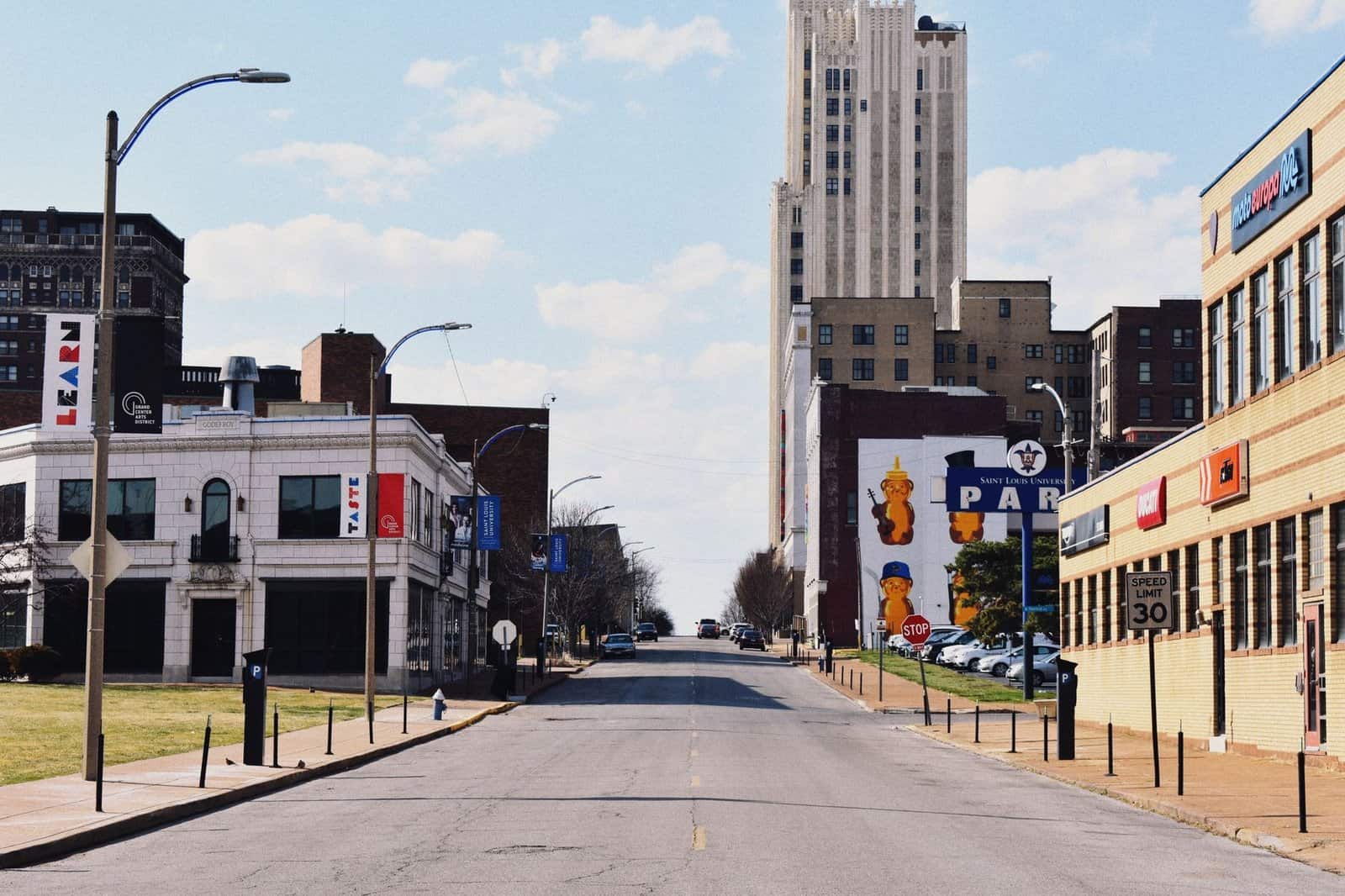
Downtown has good restaurants, but locals tend to treat it as a place to work or go to a game. After you see the Arch and have lunch, move on. Neighborhoods like the Central West End, the Grove, Maplewood and Tower Grove South have restaurants and bars where residents spend evenings, and most are a 10- to 15-minute ride from the riverfront.
Neighborhoods Worth a Longer Look
Central West End
The Central West End borders Forest Park and has tree-lined streets, large historic homes, bookstores, cafes and the St. Louis Cathedral Basilica, whose interior has one of the largest mosaic collections in the world. Maryland Plaza is a lively strip for dinner and people-watching, and the area connects by MetroLink to downtown.
The Grove and Midtown
The Grove, near Forest Park Parkway and Vandeventer, has bars, restaurants and murals, and it is one of the city’s gathering places for LGBTQ residents and young professionals. Midtown includes Grand Center, with the Fox Theatre and Powell Hall, home of the St. Louis Symphony, one of the country’s oldest orchestras.
South City
South of Interstate 44, neighborhoods such as Dutchtown, Bevo Mill and Carondelet have a working-class history rooted in German and Bosnian communities. The city is home to one of the largest Bosnian communities in the United States, and restaurants and bakeries along Gravois Avenue serve cevapi and burek. Those neighborhoods rarely appear in guidebooks, but they say a lot about how the city has grown.
The Takeaway
See the Gateway Arch in St. Louis, then follow the lead of the people who live there. Spend a day in Forest Park, eat on the Hill, walk through Soulard and order a concrete at Ted Drewes. The Arch is a great introduction, and the neighborhoods are where the city comes to life.