The Florida Keys Road Trip Most People Get Wrong — And the 5 Stops That Make it Worth the Drive
We may earn money or products from the companies mentioned in this post. This means if you click on the link and purchase the item, I will receive a small commission at no extra cost to you ... you're just helping re-supply our family's travel fund.
US-1 through the Florida Keys runs 113 miles from Florida City on the mainland to Key West over 42 bridges. It crosses 1,700 islands and connects a chain of ecosystems — mangroves, coral reefs, pine forests, and open Atlantic on one side and Gulf of Mexico on the other — that exist nowhere else in the continental United States. It’s one of America’s signature drives. It’s also frequently disappointing to people who didn’t know which part of it to pay attention to.
The Drive Itself: What You Actually See
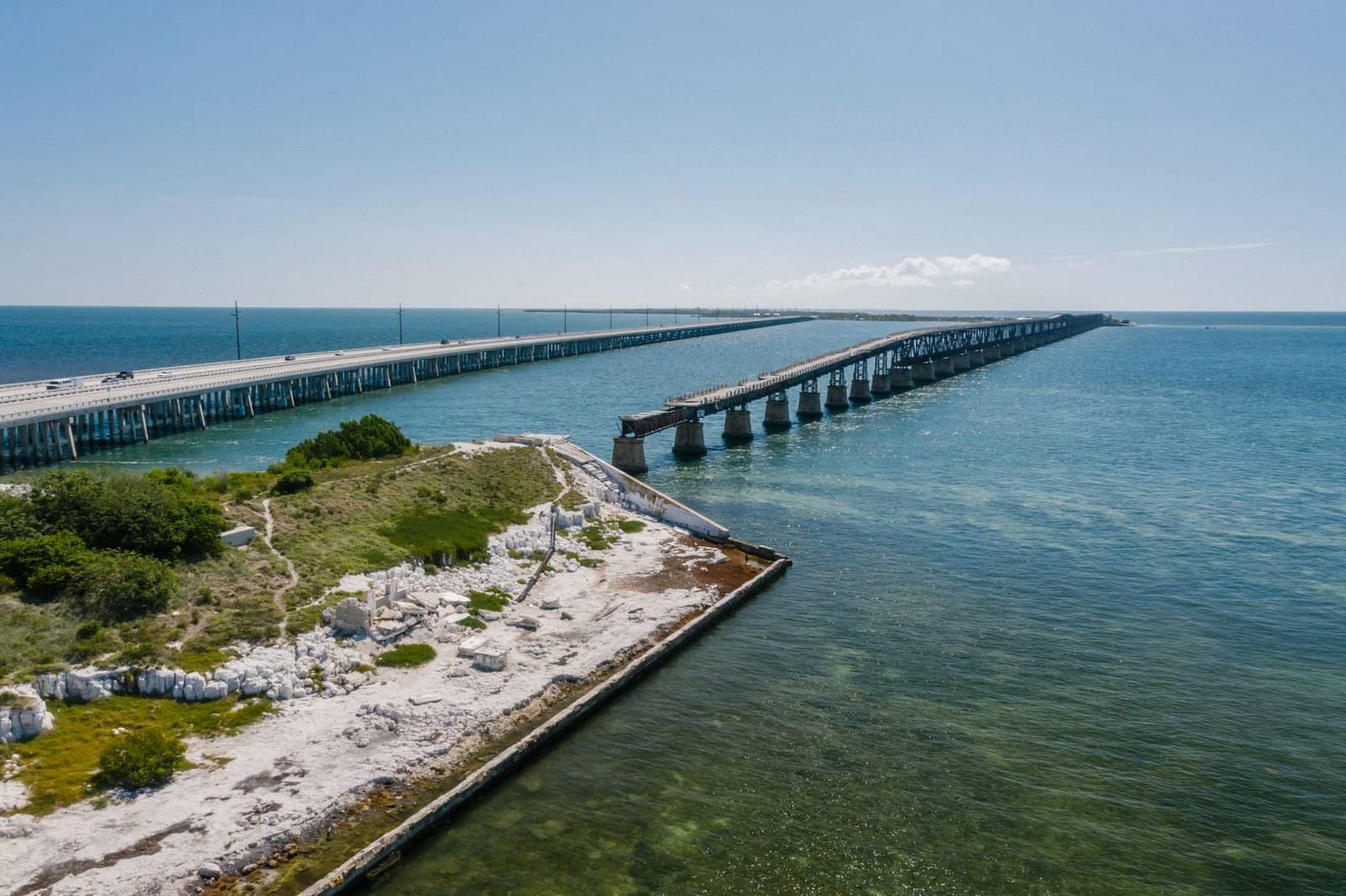
The Upper Keys (Key Largo to Islamorada) are heavily developed with strip mall infrastructure and tourist services that look like any Florida coastal commercial corridor. The drive through the Upper Keys doesn’t look different from US-1 anywhere else in South Florida — you’re in traffic, passing dive shops and gas stations. The visual transformation happens at the Seven Mile Bridge (between Marathon and Big Pine Key), which is the signature bridge of the Overseas Highway and the location where the drive becomes what the photos promised: open water on both sides, nothing else in the frame.
The 5 Stops That Make the Drive Worth It
1. John Pennekamp Coral Reef State Park (Key Largo)
The only living coral reef in the continental United States is accessible by snorkel or dive boat from John Pennekamp. Glass-bottom boat tours for non-swimmers show the reef without getting wet. This is not a tourist simulation — it’s the real reef system, with elkhorn coral, parrotfish, and sea turtles that require no editorial enhancement. Book snorkel excursions in advance; they fill on weekends.
2. Islamorada for fishing and a real Keys meal
Islamorada is the sportfishing capital of the world by reputation and by fishing charter density. If fishing is part of your trip, book here. If it isn’t, Islamorada has the best selection of genuine Keys-style waterfront restaurants in the Upper Keys — the fish sandwiches and stone crab at Robbie’s of Islamorada are worth the stop.
3. Bahia Honda State Park (between Marathon and Big Pine Key)
Bahia Honda has the best beaches in the Keys — a counterintuitive claim, since most of the Keys are not beach destinations. The sand here is white and the water is clear and turquoise. The park also crosses the old Flagler Railroad bridge that pre-dates the highway, providing walking access over the water to views that most road travelers miss entirely. Campsite reservations fill months in advance in peak season.
4. National Key Deer Refuge (Big Pine Key)
The Florida Key deer is the smallest whitetail deer subspecies in North America — adults weigh 45–75 pounds — and lives only in the Lower Keys. The refuge on Big Pine Key is where they’re most commonly seen, particularly in the morning and evening along the roadsides. This is a legitimate wildlife encounter with an animal you can see nowhere else on Earth.
5. Key West
Key West is overpriced, over-touristed, and worth seeing once. The Ernest Hemingway Home (with its famous six-toed cats), the Southernmost Point buoy, and the sunset celebration at Mallory Square are the clichés that persist because they’re actually worth experiencing. The bars on Duval Street are college spring break energy; the side streets of Old Town Key West, with their Conch-style wooden houses and bougainvillea, are genuinely charming. A single night’s stay is enough to see what Key West is. More time requires deciding you enjoy the party atmosphere it’s built its economy on.
The Florida Keys road trip works best as a 3–4 day commitment rather than a rush to Key West. The stops in between — particularly Pennekamp, Bahia Honda, and the Key Deer — are the parts that make the drive memorable rather than just scenic. Key West is the end point; the drive is the thing.
The Florida Keys Road Trip — Mile Marker Logistics
The Overseas Highway’s mile marker system runs from Mile Marker 127 at the mainland (Florida City) to Mile Marker 0 at Key West — the organizing principle of the entire 127-mile drive. Every address and landmark on the Keys is referenced by mile marker and whether it’s on the Gulf (bayside) or Atlantic (oceanside). Marathon, at Mile Marker 50, is the geographic and practical midpoint — the best base for a Keys road trip if you want a two-night structure with both Key West and the upper Keys accessible as day trips.
Bahia Honda State Park (Mile Marker 37) is consistently rated among the top ten beaches in the United States — a thin strip of barrier island with Caribbean-clear water and an old Overseas Railroad bridge visible in both directions. The park campground is one of the most in-demand in Florida’s state park system; reservations open 11 months in advance and the weekend spots fill within days. The Lower Keys between Bahia Honda and Key West have the most undeveloped stretches of the Overseas Highway, the best snorkeling in the National Key Deer Refuge, and the last opportunity to see Key deer — an endangered subspecies of white-tailed deer that averages 30 inches at the shoulder and lives only in the lower Keys.