The American Roadside Motel Should Have Died Decades Ago. Instead a Specific Kind of Owner Kept It Alive.
We may earn money or products from the companies mentioned in this post. This means if you click on the link and purchase the item, I will receive a small commission at no extra cost to you ... you're just helping re-supply our family's travel fund.
Interstate highways were supposed to kill the roadside motel. When the interstate system bypassed old two-lane highways like Route 66 starting in the 1950s and 60s, thousands of independent motels lost the through-traffic that had sustained them, and a huge share closed, decayed, or converted to other uses. The ones that survived did so through a specific, often accidental formula: a location that still made sense despite the bypass, an owner willing to run a low-margin business for decades rather than sell, and eventually, a nostalgia market that turned “outdated” into “vintage.”
Who actually owns these places now
A large share of independent American motels are run by families, often immigrant families, who bought in during the 1970s, 80s, and 90s when property values were depressed and banks were willing to finance small hospitality businesses that larger chains had no interest in. South Asian immigrant families in particular became disproportionately represented in the U.S. motel industry over that period, to the point that industry groups estimate immigrant-owned properties, many from Gujarat, India specifically, make up a substantial share of independent budget motels nationally. These are frequently multi-generational operations — a motel bought by a couple in the 1980s, now run by their adult children, sometimes the third generation involved in the same 20-room property.
The economics of running one of these properties are brutal in a way that outsiders rarely appreciate. Margins on a budget motel room are thin, competition from chain hotels and short-term rental platforms has intensified over the past fifteen years, and the physical buildings — many constructed in the 1950s and 60s — require constant, expensive maintenance that a larger hotel chain would offset with brand-wide capital reserves that an independent owner simply doesn’t have.
The path into motel ownership for many immigrant families followed a specific, well-documented pattern: an initial purchase using pooled family savings and financing arranged through community networks rather than traditional bank loans, followed by the entire extended family living on-site or nearby and working the property directly — cleaning rooms, managing the front desk, handling maintenance — to keep labor costs low enough that the thin margins could still support a household. That model, sometimes called “sweat equity” hospitality, allowed families to build ownership stakes in an industry that traditional financing and franchise structures had largely priced out of reach for anyone without generational wealth already in hand, and it remains the backbone of independent motel ownership across much of the rural and small-town United States today.
Who actually stays there
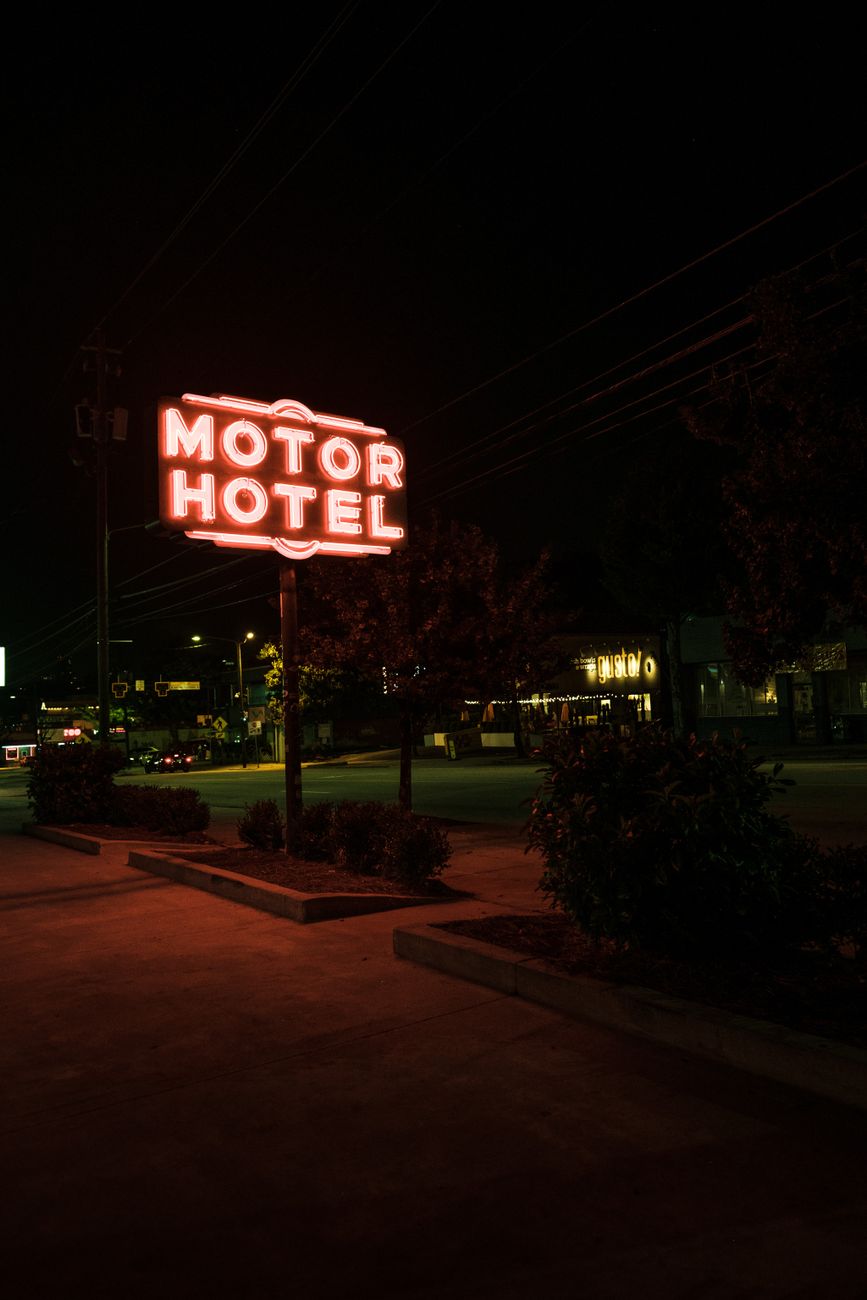
Roadside motel clientele splits into a few distinct groups that rarely overlap. There’s long-term extended-stay residents — people between housing situations, seasonal workers, families who’ve been priced out of apartments — who make up a meaningful and often invisible share of occupancy at budget motels nationally, paying weekly rates that function closer to informal low-income housing than traditional hospitality. There’s road-trippers who genuinely can’t or won’t pay chain hotel prices and are willing to trade amenities for a lower nightly rate. And increasingly, there’s a nostalgia tourism segment — travelers specifically seeking out vintage neon signs, mid-century architecture, and a version of American road travel that predates chain hotel standardization, often documenting the visit for social media in a way that would have been unthinkable to the motel’s original 1960s clientele.
The Route 66 preservation effort specifically
- The National Park Service’s Route 66 Corridor Preservation Program has funded restoration of several historic motels and their signage
- Neon sign restoration has become its own specialized craft, with a shrinking number of technicians able to service vintage gas-filled tubing
- Some owners have leaned fully into the nostalgia angle, restoring period-appropriate decor and marketing directly to Route 66 road-trippers
- Others have gradually modernized rooms while keeping vintage exteriors, betting correctly that the sign draws bookings more than the interior does
What it costs to stay in one today
Independent roadside motels typically run $60 to $120 a night depending on region and season, meaningfully cheaper than a comparable chain hotel room in the same market, though the gap has narrowed as budget chain brands have proliferated and independent motels have had to raise rates to cover rising insurance, utility, and maintenance costs. Weekly rates for long-term guests often work out to a steep discount over the nightly rate, which is part of why they remain a functional, if imperfect, housing option for people who can’t access traditional apartment leasing, which typically requires credit checks, deposits, and income verification that many motel long-termers can’t easily provide.
Insurance costs have become one of the single biggest threats to independent motel survival in the past several years, particularly in coastal and wildfire-exposed states where carriers have pulled back from covering older wood-frame commercial buildings entirely, forcing some owners into surplus lines coverage at premiums that can eat a third or more of annual revenue. A motel that cleared a modest but sustainable profit a decade ago can find itself operating at a loss purely because of a renewed insurance policy, regardless of occupancy or guest satisfaction. That single line item has pushed some multi-generational family owners to sell to developers who have no interest in preserving the original building, which is a quieter, less visible driver of roadside motel disappearance than the interstate bypasses that get most of the historical credit.
The honest picture of the American roadside motel today is neither pure nostalgia nor pure decline — it’s a genuinely bifurcated industry where a small, visible segment has been reborn as a design-forward tourism product, complete with restored signage and Instagram-ready rooms, while a much larger, less visible segment continues operating as low-margin, functional lodging and informal housing for people the traditional rental market doesn’t serve well. Both versions are real, they often exist in the same buildings depending on the decade you’re looking at, and neither would exist at all without the specific, stubborn owners who kept paying the bills through the decades when interstate bypasses should have finished the whole category off.