Taos Has Called Itself an Artist Colony Since 1915. The Artists Who Live There Now Can Barely Afford the Rent.
We may earn money or products from the companies mentioned in this post. This means if you click on the link and purchase the item, I will receive a small commission at no extra cost to you ... you're just helping re-supply our family's travel fund.
Taos, New Mexico’s identity as an art colony dates back to 1898, when painters Bert Geer Phillips and Ernest Blumenschein famously broke a wagon wheel on a trip through the area and, captivated by the light and landscape, decided to stay, eventually founding the Taos Society of Artists in 1915. That founding moment kicked off more than a century of continuous artistic identity, drawing figures like Georgia O’Keeffe, who spent extended time in the broader Taos and northern New Mexico region and cited its landscape as central to her work, and D.H. Lawrence, who lived on a ranch outside town in the 1920s. The irony that’s developed over the past two decades is stark: a town whose entire cultural brand rests on being an accessible haven for working artists has become a place where working artists increasingly cannot afford to live.
What made Taos different from other art colonies originally
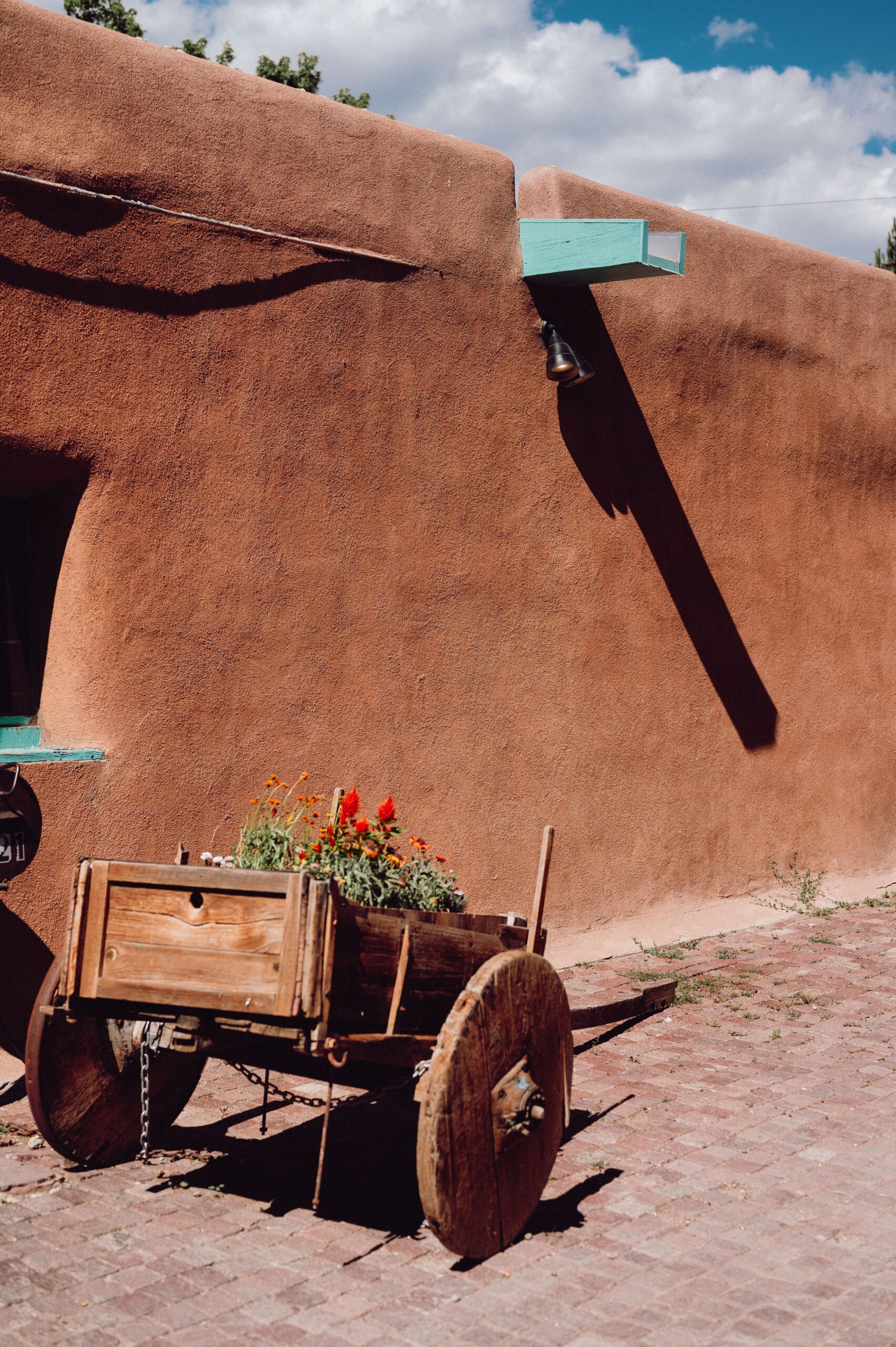
Taos wasn’t just a scenic backdrop that artists happened to settle in — the town sits adjacent to Taos Pueblo, a Native American community that has been continuously inhabited for roughly a thousand years and remains a living, functioning pueblo today, not a historical site. That combination of deep Indigenous culture, Spanish colonial history dating to the 1600s, and the specific quality of high-desert light at roughly 7,000 feet elevation gave early 20th-century Taos artists a subject matter and visual environment genuinely distinct from other American art colonies of the period, most of which clustered around more conventional East Coast or European-influenced landscapes. Wealthy patron Mabel Dodge Luhan, who moved to Taos in 1917 and married a Pueblo man, Tony Lujan, became one of the art colony’s central figures, using her connections and money to draw a remarkable roster of writers, artists, and intellectuals to visit or settle in the town over subsequent decades.
That century-plus of continuous artistic identity built genuine institutional infrastructure that most newer arts destinations lack — the Harwood Museum of Art, the Taos Art Museum, and dozens of galleries lining the historic plaza give the town a depth of cultural infrastructure disproportionate to its population of roughly 6,000 people.
Some working artists have responded by relocating to nearby, more affordable communities like Peñasco or Arroyo Seco while maintaining gallery representation or occasional studio space in Taos itself, effectively commuting into the art-colony identity rather than fully living inside it. That pattern mirrors a broader trend playing out across expensive American arts destinations, where the geographic center of an artistic community and the geographic center of where its actual working artists can afford to live have increasingly diverged, sometimes by significant distances, without the branding or public perception of the original arts destination changing to reflect that shift.
Why affordability has become the defining crisis of the identity
Taos real estate prices have climbed sharply over the past decade, driven by the same broader pattern reshaping mountain and high-desert towns across the West — remote workers and second-home buyers with coastal incomes bidding up a housing stock that local wages, still anchored heavily in tourism, hospitality, and a modest arts market, were never built to support. Working artists who might have supported themselves on gallery sales and part-time local jobs a generation ago increasingly find that math doesn’t work anymore, and younger artists specifically cite Taos’s cost of living as a reason they can visit or exhibit there but can’t actually relocate and build a working studio practice in town the way earlier generations did. The same dynamic has played out in other legacy arts destinations — Santa Fe, Sedona, parts of coastal Maine — where decades of art-colony branding eventually attracted wealth disconnected from the working artists whose presence originally created the town’s cultural cachet in the first place.
What’s actually still functioning despite the affordability squeeze
- The Taos historic plaza’s gallery district remains a genuine, active commercial art market, not purely a tourist backdrop
- Taos Pueblo continues functioning as a living community, with limited public visiting hours respecting its residents’ privacy
- Several artist residency and grant programs specifically target working artists priced out of the traditional gallery-and-studio model
- Taos Ski Valley, a short drive from town, has added a separate seasonal tourism economy layered on top of the arts identity
What visitors experience versus what residents live with
Taos Pueblo’s own relationship with the surrounding art economy adds another layer of complexity, since Pueblo artists have long produced and sold traditional pottery, jewelry, and other work that predates the 1898 art colony founding by centuries, meaning the “since 1915” framing that dominates most tourism marketing overlooks a far older, ongoing Indigenous artistic tradition that continues largely on its own terms, separate from the gallery-district economy built up around it by the town’s more recently arrived art colony identity.
A visitor walking the Taos plaza today sees exactly the art-colony identity the town has cultivated for over a century — adobe architecture, working galleries, a genuine concentration of visual art unusual for a town this size. What that same visitor doesn’t see is the substantial number of working artists who’ve had to leave town entirely, relocating to cheaper nearby communities and commuting in to sell work or teach classes, effectively priced out of full participation in the identity that put Taos on the map in the first place. That gap between the marketed identity and the lived economic reality has become the town’s most persistent and least resolved tension, a version of the same story playing out in nearly every American arts destination old enough to have built a real reputation before the cost of participating in that reputation climbed beyond what artists themselves could afford.