Rehoboth Beach Has 1,500 Year-Round Residents and Over a Million Summer Visitors—Here’s What That Means for Your Trip
We may earn money or products from the companies mentioned in this post. This means if you click on the link and purchase the item, I will receive a small commission at no extra cost to you ... you're just helping re-supply our family's travel fund.
Rehoboth Beach’s official year-round population sits at roughly 1,500 residents, a number that becomes almost meaningless during peak summer months when the town absorbs well over a million visitors across the season, drawn by its wide Atlantic beach, a mile-long boardwalk lined with amusements and classic seaside food stands, and a reputation as one of the mid-Atlantic’s most reliably crowded and commercially successful small beach towns.
This extreme seasonal population swing, driven substantially by proximity to the Washington D.C. and Baltimore metro areas just a few hours’ drive away, has shaped nearly every aspect of the town’s governance, economy, and infrastructure planning around managing a population that can be more than a hundred times its official resident count during the busiest summer weekends.
Why Rehoboth Draws So Disproportionately From the D.C. Metro Area
Rehoboth Beach’s status as the closest ocean beach to Washington D.C., reachable by a drive of roughly two and a half hours, has made it the default summer beach destination for generations of D.C.-area families, a geographic advantage that has shaped the town’s identity so completely that locals sometimes refer to it informally as the nation’s summer capital, a nod to how many federal government employees and D.C. area residents make up its seasonal population.
This concentrated visitor base from a single major metro area has given Rehoboth’s summer economy a level of predictability that beach towns drawing from a more geographically dispersed visitor base don’t always share, since D.C.-area vacation patterns, tied closely to the federal government’s own schedule and school calendars in Maryland and Virginia, create fairly consistent, forecastable seasonal demand patterns year after year.
How the Town’s Infrastructure Is Built Around Extreme Seasonal Swings
Rehoboth Beach’s municipal budget and staffing levels expand dramatically each summer to handle the population surge, with seasonal police, parking enforcement, and sanitation staff hired specifically to manage a townwide infrastructure load that would be wildly oversized for the town’s actual 1,500 year-round residents during the rest of the year.
Parking has become one of the most persistent points of local friction, with the town implementing an increasingly complex paid parking system covering much of the walkable downtown and beach-adjacent areas specifically to manage demand during peak summer weekends, a system locals describe as a necessary evil given how few alternatives exist for controlling vehicle congestion in a town with such a small physical footprint.
The Boardwalk Economy That Defines the Town’s Commercial Identity
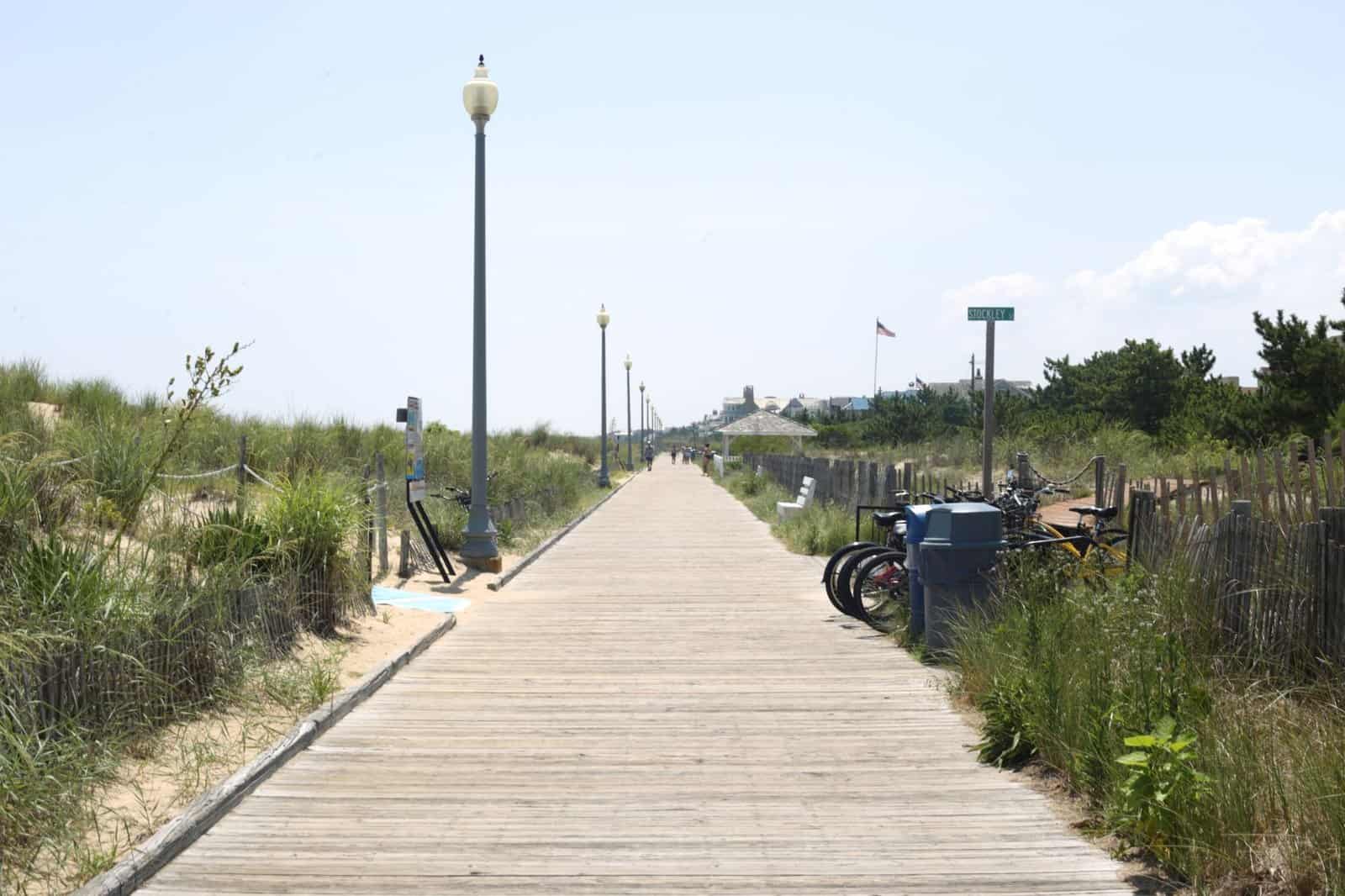
Rehoboth’s mile-long boardwalk, lined with classic seaside attractions including Funland, a small family-owned amusement park operating since the 1960s, and Dolle’s, a taffy and caramel corn shop that has become a genuine local institution, represents a deliberately preserved, old-fashioned boardwalk experience that the town has resisted redeveloping into more generic modern beachfront retail seen in many comparable East Coast beach towns.
This preservation of a specifically nostalgic boardwalk aesthetic has become central to Rehoboth’s brand identity, with multiple generations of the same families returning summer after summer specifically because the boardwalk experience has remained recognizably similar to what their parents or grandparents once experienced, a continuity increasingly rare among East Coast beach destinations that have modernized more aggressively.
How Rehoboth’s Housing Market Reflects Its Seasonal Extremes
Rehoboth’s housing stock skews heavily toward vacation rental and second-home ownership rather than the primary residences that make up most of a typical small town’s housing market, a pattern that has pushed home prices to levels dramatically disconnected from what the town’s small year-round workforce could actually afford, forcing many seasonal service workers to commute from considerably less expensive towns further inland.
This affordability gap has become a persistent local policy concern, with town officials exploring workforce housing initiatives specifically aimed at retaining the seasonal staff essential to running the town’s restaurants, hotels, and shops during the summer months when demand for labor far exceeds what the local year-round population alone could supply.
What This Extreme Seasonality Means for Visitors Today
Visitors who experience Rehoboth only during peak summer weekends often come away with an impression of relentless crowding that differs dramatically from the quieter, more manageable version of the town available during shoulder season weeks in late spring or early fall, when the same boardwalk and beach offer a noticeably calmer experience at a fraction of the peak-season cost.
Local tourism officials have increasingly promoted these shoulder-season windows directly, recognizing that the town’s extreme summer crowding, while economically essential, can actually deter some visitors who might otherwise return more frequently if they experienced Rehoboth outside its most intensely crowded weeks.
- Roughly 1,500 year-round residents absorbing over a million visitors each summer season
- A two-and-a-half-hour drive from Washington D.C. driving concentrated regional demand
- A deliberately preserved, old-fashioned boardwalk economy resisting modern redevelopment
- A housing market skewed heavily toward vacation rentals over primary residences