Sturgis Brings 500,000 Motorcycles to South Dakota for One Week. Rapid City Spends the Other 51 Being Something Completely Different
We may earn money or products from the companies mentioned in this post. This means if you click on the link and purchase the item, I will receive a small commission at no extra cost to you ... you're just helping re-supply our family's travel fund.
The Sturgis Motorcycle Rally draws several hundred thousand attendees to the Black Hills every August, a genuinely staggering number relative to South Dakota’s total population of under a million, and Rapid City, roughly 25 miles from Sturgis itself, absorbs a huge share of the rally’s overflow traffic, lodging demand, and general chaos for that single week. Mount Rushmore, meanwhile, draws roughly two million visitors annually, concentrated heavily in the summer months, meaning Rapid City’s identity as a tourism gateway is genuinely intense but also genuinely seasonal — for most of the year, it functions as a normal, mid-size regional city of about 75,000 people that has almost nothing to do with bikers or presidential monuments.
What Rapid City actually is outside of tourist season
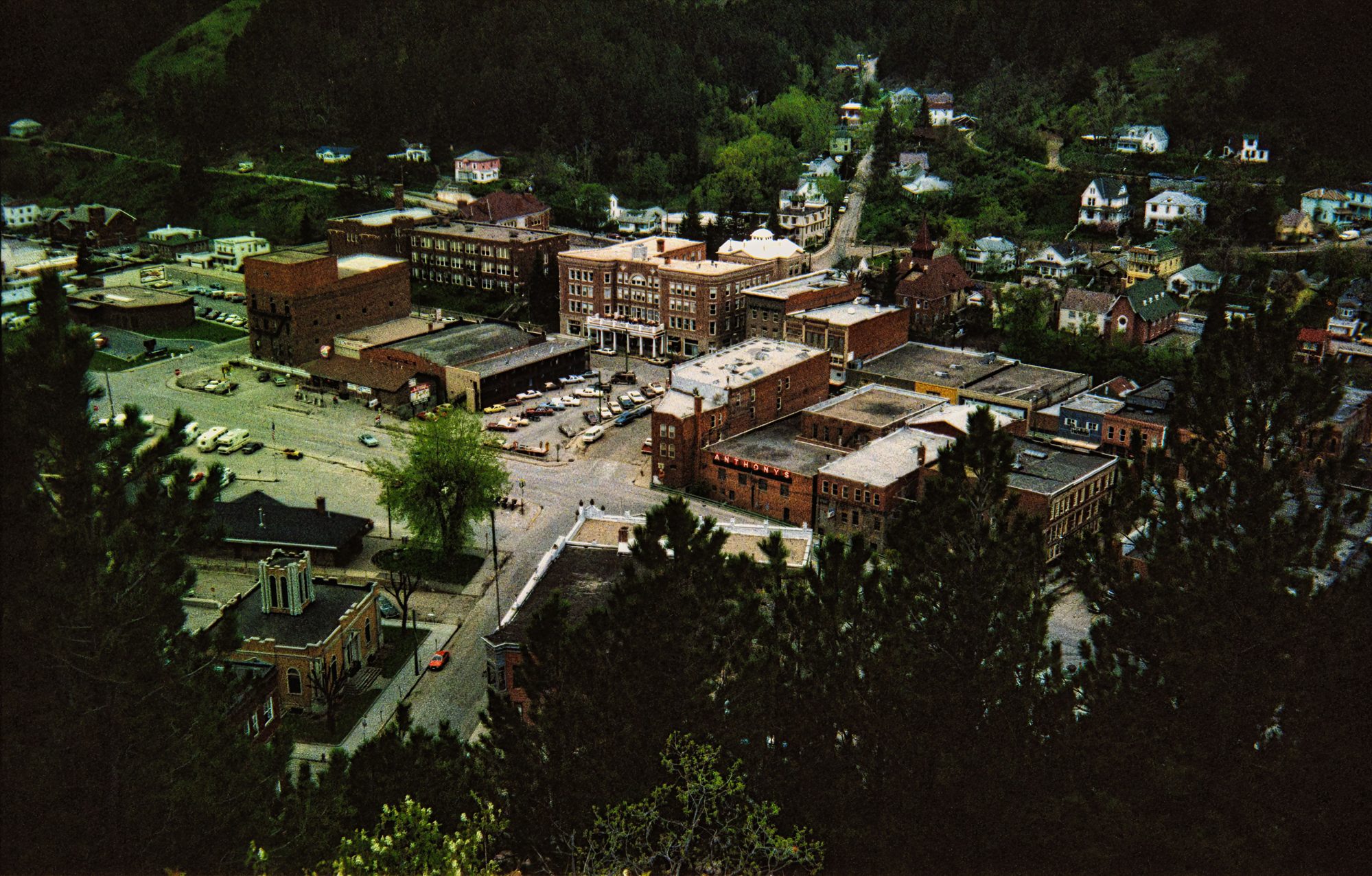
Rapid City functions as the primary regional hub for western South Dakota, serving healthcare, retail, and government functions for a genuinely vast, sparsely populated surrounding area that includes several Native American reservations, most significantly the Pine Ridge and Rosebud reservations, home to the Oglala Lakota and Rosebud Sioux tribes respectively. Ellsworth Air Force Base, just northeast of the city, anchors a significant portion of the local economy independent of tourism entirely, supporting a large military and civilian workforce tied to its B-21 bomber mission. Downtown Rapid City has developed a genuinely walkable core over the past two decades, anchored by a public art initiative featuring life-size bronze statues of every U.S. president displayed along downtown sidewalks, a project that’s become a modest attraction in its own right, distinct from the seasonal Rushmore and Sturgis crowds.
The city’s cost of living remains meaningfully below national averages, and South Dakota’s complete absence of state income tax has made Rapid City a genuine, if lower-profile, relocation target for retirees and remote workers seeking a lower tax burden without needing to move to a warmer climate, a niche that gets far less national attention than Florida or Texas but functions on the exact same tax logic.
Local law enforcement and emergency services scale up dramatically during rally week, with mutual aid agreements bringing in additional officers and medical staff from across the region specifically to handle the sharp increase in traffic accidents, medical emergencies, and general public safety demands that several hundred thousand additional visitors create in a short window. That temporary scaling requires the same kind of institutional flexibility that hospitality businesses build into their annual planning, treating the rally as a predictable, budgetable surge rather than an unexpected emergency, even though the sheer scale still strains resources built primarily for a much smaller year-round population.
How the tourism season actually reshapes the town
Hotel and short-term rental prices in Rapid City swing dramatically between rally week in August and the quieter shoulder seasons, and many hospitality workers structure their entire year’s income around the roughly four-month peak tourism window running from Memorial Day through Sturgis week, taking on second jobs or reduced hours the rest of the year to cover the gap. Local businesses, restaurants especially, plan renovation and staffing schedules around this same seasonal rhythm, with some establishments deliberately targeting the biker demographic specifically during rally week with themed merchandise and extended hours, then reverting to a completely different, calmer identity serving locals and Rushmore day-trippers the rest of the summer.
What the other 51 weeks actually look like
- Winters are genuinely cold and can include severe Black Hills snowstorms that shut down mountain roads for days
- The city functions as a regional medical and retail hub for a sparsely populated area spanning parts of three states
- Ellsworth Air Force Base provides a stable, tourism-independent economic anchor year-round
- The Black Hills’ Custer State Park and Badlands National Park, both nearby, draw a steadier, less concentrated visitor flow than Rushmore or Sturgis
Why visiting outside peak season is genuinely worth considering
The city’s relationship with the surrounding Native American reservations adds a dimension to Rapid City’s identity that the Sturgis and Rushmore tourism narratives rarely address directly, since the Black Hills themselves hold deep sacred significance to the Lakota people, and Mount Rushmore’s location on land taken from the Lakota following the 1868 Fort Laramie Treaty remains a genuine, unresolved point of historical grievance that some Native activists and organizations continue raising in connection with the monument’s ongoing tourism promotion.
Visitors who show up in late spring or early fall, avoiding both Sturgis week and the deepest summer Rushmore crowds, get a considerably calmer, cheaper version of the same landscape and attractions, with hotel rates dropping significantly and Mount Rushmore’s evening lighting ceremony, held nightly through the summer, drawing far smaller crowds during shoulder-season weeks. Rapid City’s dual identity — quiet regional hub for most of the year, chaotic tourism epicenter for a concentrated stretch of summer — makes it a genuinely useful case study in how small American cities absorb and manage extreme seasonal tourism spikes without losing their underlying, year-round function as an actual place where actual people live normal lives the other 90 percent of the time.
The Journey Museum and Learning Center in downtown Rapid City offers a year-round, tourism-independent cultural resource covering the region’s full geological and human history, from the Black Hills’ ancient formation through Lakota history to the area’s more recent settlement, giving residents and off-season visitors alike a substantive alternative to the more spectacle-driven Rushmore and Sturgis attractions that dominate peak-season visitor attention.
South Dakota’s overall tourism marketing leans heavily on the combined draw of Rushmore, Sturgis, and the Badlands functioning as a single regional itinerary, which has helped Rapid City build sustained visitor volume across a longer stretch of the year than either attraction could generate entirely on its own.