Stowe Gets the Postcards. Barre Gets the Paychecks. Vermont’s Two Economies Don’t Talk to Each Other
We may earn money or products from the companies mentioned in this post. This means if you click on the link and purchase the item, I will receive a small commission at no extra cost to you ... you're just helping re-supply our family's travel fund.
Stowe, Vermont has roughly 5,300 year-round residents and absorbs something like 750,000 visitors a year, mostly for foliage in late September and skiing from December through March. Waterbury, fifteen minutes down the road, has Ben & Jerry’s headquarters and a rebuilt downtown that survived Tropical Storm Irene. Barre, forty minutes east, has granite quarries that once supplied gravestones and monuments to half the country and a median household income that trails Stowe’s by tens of thousands of dollars. These are all Vermont towns within a short drive of each other, and they are living in almost entirely different economies.
The towns that need tourists to survive
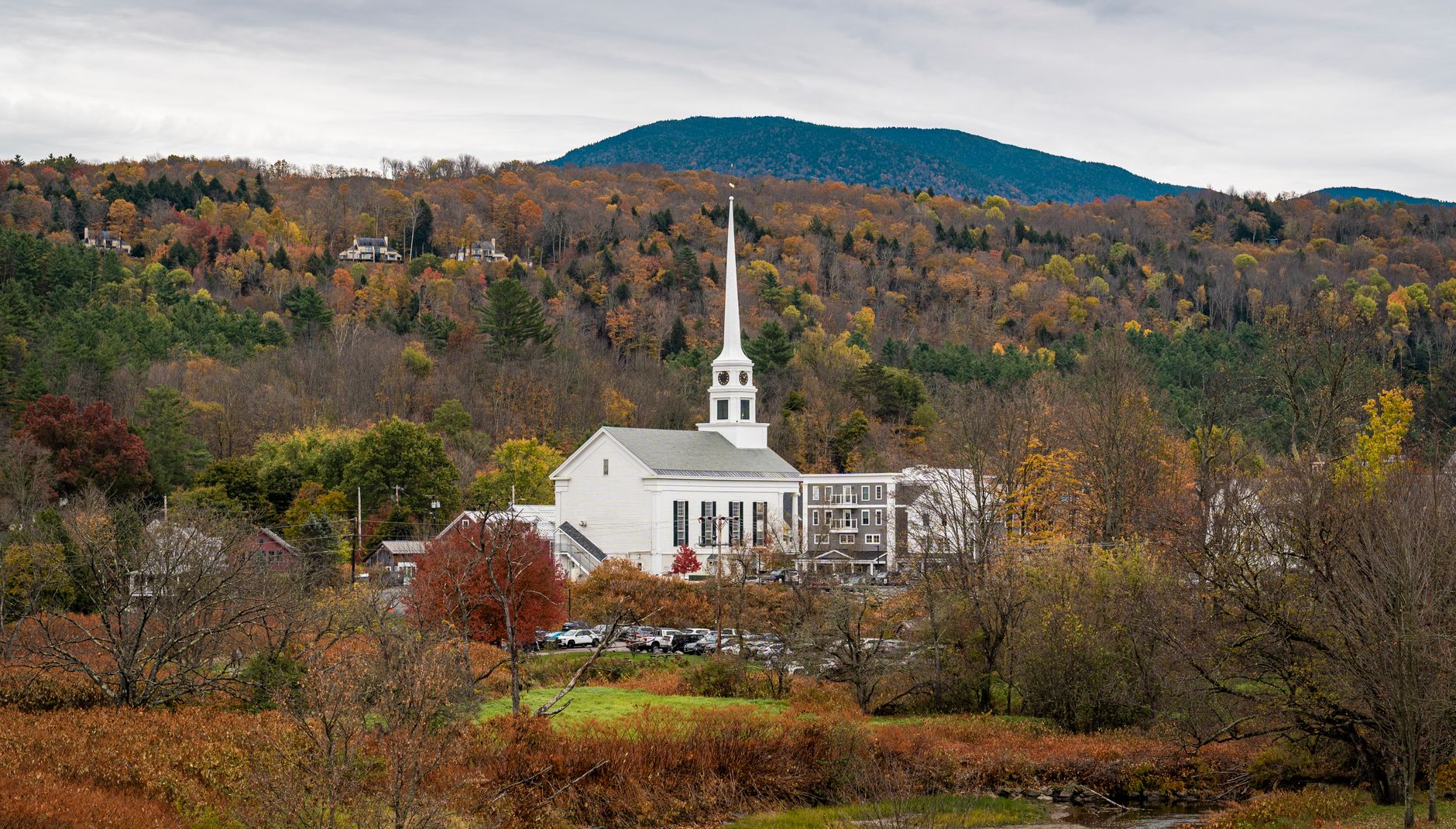
Stowe’s economy runs on a three-season calendar that would terrify most small businesses. Fall foliage, roughly the last week of September through mid-October, is the single most profitable stretch of the year, with hotel rates spiking into the $500-$600 range per night and shop owners telling Vermont Public that leaf peepers can account for 60 percent of annual revenue for a single storefront. Winter carries the town through February, historically the strongest ski month thanks to school vacation weeks. Summer fills in the gaps with hikers on the Stowe Recreation Path and day-trippers headed to Ben & Jerry’s in Waterbury. Then there’s “mud season” — April into May — when the town empties out, seasonal workers leave, and some restaurants simply close for six weeks because there’s no one to serve.
Towns built entirely around this cycle are wealthy in aggregate and precarious in practice. A bad snow year, a wet foliage season, a recession that clips discretionary ski trips — any of these can gut a Stowe hotel’s annual revenue in a way that a diversified regional economy would never feel. It’s the reason nearby towns like Ludlow and Waitsfield, which run the same seasonal playbook at a smaller scale, post average trip costs of roughly $2,000 for a solo week — expensive, but a third less than Stowe, because they’re competing for overflow rather than commanding demand.
Burlington and Barre are playing a different game
Burlington, Vermont’s largest city at around 44,000 people, doesn’t depend on leaf peepers nearly as much because it has the University of Vermont, a UVM Medical Center campus that employs thousands, and a lakefront economy tied to Lake Champlain that runs on more than scenery. It has tech companies, a functioning downtown grid, and a housing market that’s expensive for entirely different reasons than Stowe’s — actual year-round demand from people who work there, not just people who visit.
Barre and Montpelier occupy the opposite end. Montpelier, the state capital, has government jobs that don’t evaporate in mud season — but it’s also one of the smallest state capitals in the country, with under 8,000 residents, and its downtown was devastated by catastrophic flooding in July 2023 that damaged or destroyed dozens of businesses. Barre still has working granite operations, though nothing like the scale of a century ago when it called itself the “Granite Center of the World” and quarried stone for the Hancock Tower and countless war memorials. Rock of Ages still runs tours of an active quarry there, but the industry employs a fraction of what it once did, and the town’s median income and home values sit well below Stowe’s and Burlington’s.
Why this matters if you’re visiting
- Stowe in mud season (April-May) means genuinely reduced services — call ahead before assuming a restaurant is open
- Barre and Montpelier are 30-40 minutes from Stowe and cost a fraction as much for lodging
- Burlington’s Church Street Marketplace runs year-round because locals, not tourists, sustain it
- Waitsfield and the Mad River Valley offer Stowe-adjacent skiing and hiking without Stowe’s peak pricing
None of this means Stowe is fake or that Barre is somehow more authentic — both are real Vermont, just running on different fuel. But it explains a tension that shows up in town meetings across the state: the places that photograph the best are often the places most dependent on people who don’t live there, while the places with actual working economies rarely make anyone’s foliage bucket list.
The math tourists never see
A shop owner on Stowe’s Mountain Road isn’t setting prices based on Stowe’s cost of living — they’re setting prices based on what a Boston family on a five-day ski trip is willing to pay, because that family is subsidizing eleven other months. That’s a fine business model until the year a warm winter or a recession makes that family stay home, and then the whole equation breaks at once. Vermont’s rural towns without a seasonal tourist economy don’t have that whiplash risk, but they also don’t have Stowe’s median home price, which has climbed well past a million dollars in parts of town even as year-round household incomes for people who actually work there haven’t kept pace.
What the seasonal economy does to the people who live there
The seasonal whiplash isn’t just a business risk — it shapes who can actually build a life in Stowe year-round. Restaurant and hotel workers often piece together a living by working brutal hours during foliage and ski season and either leaving town or picking up unrelated work during mud season. Some commute from Morrisville or Hyde Park, towns close enough for a short drive but cheap enough to actually rent an apartment. Stowe’s own workforce housing task force has studied the problem for years, and the same conversation is happening in mountain towns from Jackson Hole to Telluride: the industry that makes a town famous is often the industry that can least afford to house its own employees inside town limits.
Vermont as a whole has leaned into second-home ownership as a real estate strategy for decades, and Stowe is simply the most extreme expression of a statewide pattern. Second homes make up a meaningful share of the housing stock in ski towns across the Green Mountains, sitting empty for much of the year while local workers compete for a shrinking pool of year-round rentals. The state legislature has debated everything from short-term rental registries to targeted property tax surcharges on non-resident owners, with mixed results and predictable pushback from the tourism industry that depends on exactly the ownership pattern lawmakers are trying to regulate.
Compare that to a town like Bennington in southern Vermont, which never became a ski-industry name and instead built its economy around Bennington College, a scattering of light manufacturing, and a slower flow of visitors headed toward the Vermont covered bridges nearby. Bennington’s median home prices sit dramatically lower than Stowe’s, and its Main Street doesn’t empty out in April, because it was never full of ski tourists to begin with. The contrast between these two towns, an hour and a half apart in the same small state, is really a contrast between two different economic models: one built to maximize revenue from visitors during a narrow window, the other built to sustain a smaller, steadier population year-round. Neither model is inherently better, but they produce dramatically different towns to actually live in.
The honest way to think about visiting Vermont is that you are choosing between two different states wearing the same license plate. One is optimized for your experience and prices accordingly. The other is optimized for the people who live there year-round, and it will treat you like a welcome bonus rather than the entire point.