Duluth Lost the Steel Mills and the Shipping Boom. It Never Told Anyone It Was Fine
We may earn money or products from the companies mentioned in this post. This means if you click on the link and purchase the item, I will receive a small commission at no extra cost to you ... you're just helping re-supply our family's travel fund.
Duluth, Minnesota built its entire 20th-century identity on being the busiest inland port in the world, moving iron ore, coal, and grain out of Lake Superior’s westernmost harbor. When steel demand collapsed in the 1970s and ’80s and shipping volumes never fully recovered, plenty of American cities in that position spiraled — think Youngstown, think Gary. Duluth didn’t. Today it pulls in roughly 3.5 million visitors a year contributing more than $400 million to the local economy, and it keeps showing up on best-places-to-live lists that have nothing to do with its industrial past.
What actually replaced the mills
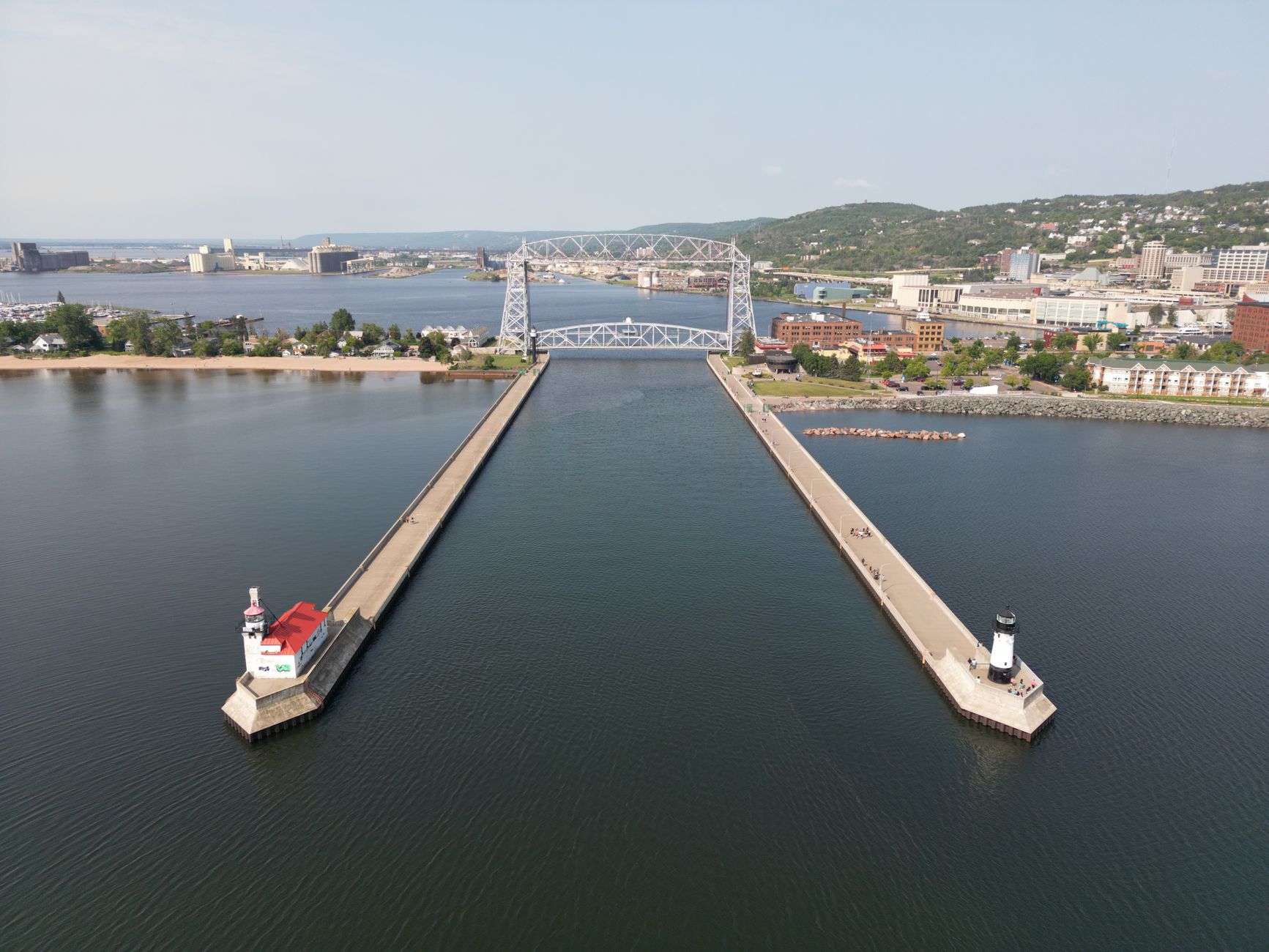
Duluth didn’t find a single new industry to replace shipping and steel — it found four smaller ones that add up. It became a regional hub for healthcare and higher education, anchored by Essentia Health and St. Luke’s, both of which now rank among the city’s largest employers, alongside the University of Minnesota Duluth. It kept enough of the transshipment business — coal, taconite, grain, limestone — that the Port of Duluth-Superior is still the largest by tonnage on the Great Lakes, just running with a fraction of the workforce automation used to require. And it leaned hard into being a genuinely dramatic place to visit: Lake Superior on one side, the Sawtooth Mountains starting just up the shore, and a downtown built into a hillside steep enough that some streets require a low gear.
The tourism number is real but it’s not the whole story, because a city that only had tourism would look like Stowe — seasonal, fragile, priced for visitors rather than residents. Duluth’s healthcare and education base means the city has a baseline of stable, decent-paying jobs that don’t disappear in mud season. That combination — enough industry to survive without tourists, enough scenery to attract them anyway — is unusual, and it’s the actual explanation for why outlets keep naming Duluth to “best places to live” lists rather than just “best weekend trips.”
The parts of the pitch nobody puts in headlines
Duluth’s winters are not a minor inconvenience. Average January highs sit in the low 20s Fahrenheit, and lake-effect snow off Superior can dump a foot in a night. The city’s population has hovered around 86,000 for decades — it isn’t booming the way a Boise or a Bentonville is, and part of the reason is that a meaningful percentage of people who move there for the lake decide, after one real winter, that the lake wasn’t worth it. That’s not a knock on the city; it’s a filter. The people who stay tend to actually want the seasons, the skiing at Spirit Mountain, the ice fishing, and Canal Park’s Lift Bridge raising for ore boats even in the cold months.
What’s actually worth doing there
- Canal Park and the Aerial Lift Bridge, especially when a laker is coming through
- The Lakewalk, a paved path tracing the Lake Superior shoreline for several miles
- Glensheen Mansion, the Congdon family’s 1908 lakeside estate, now a museum
- Skiing or mountain biking at Spirit Mountain on the city’s edge
- The drive up Highway 61 toward Two Harbors and the North Shore, which starts feeling remote within twenty minutes
What Duluth demonstrates, more than any single attraction, is that a Rust Belt-adjacent city doesn’t have to choose between “industrial ghost” and “gentrified tourist trap.” It kept enough of its working economy to stay real, added enough hospitality and healthcare infrastructure to stay solvent, and never needed to invent a brand — Lake Superior did that decades ago. The city’s median home price remains well below coastal comparables with similar scenery, which is either an opportunity or a warning sign depending on how fast word spreads.
Why it keeps landing on livability rankings now
The Great Lakes shipping season nobody outside the region thinks about
Duluth’s harbor doesn’t run twelve months a year. Lake Superior freezes enough that the Soo Locks connecting Superior to Lake Huron typically close from mid-January through late March, which means the entire Great Lakes shipping season compresses into roughly nine months. That seasonal shutdown used to be catastrophic for a one-industry port town; today it barely registers because tourism, healthcare, and education carry the local economy through the exact months when the harbor goes quiet. It’s a rare example of a former industrial city finding a second economic engine precisely timed to cover the gaps the first one always had.
The city’s downtown also benefits from a skywalk system connecting many buildings above street level, built specifically to survive winters that make outdoor walking genuinely unpleasant for months at a stretch. That kind of unglamorous infrastructure investment — nobody puts a skywalk system on a postcard — is part of why Duluth functions as a real city rather than a seasonal attraction masquerading as one. Visitors who show up expecting a quainter, smaller version of a lakefront town are often surprised by how much genuine urban infrastructure exists once you get a few blocks off Canal Park.
Duluth’s transformation offers a useful contrast to nearby Iron Range towns like Hibbing and Virginia, Minnesota, which depended almost entirely on iron ore mining and never developed Duluth’s tourism or healthcare diversification. Those towns have continued to shrink as automation reduced mining employment even as extraction volumes held steady, and they lack Duluth’s lakefront draw or its university presence to cushion the decline. The difference illustrates that it wasn’t simply proximity to Lake Superior that saved Duluth — Two Harbors and other small lake towns nearby haven’t scaled the way Duluth has — but rather the specific combination of a large enough population base to support a real hospital system and university, paired with just enough scenic draw to build a genuine tourism sector on top of it.
Livability rankings tend to reward exactly the mix Duluth has: affordable relative to comparable scenery, walkable downtown core, real employers rather than a single tourist industry, and outdoor access that doesn’t require a car trip. Four Minnesota cities have made national best-places-to-live lists in recent years, and Duluth is a repeat name on those lists specifically because it never overcorrected in either direction — it didn’t collapse when the mills left, and it didn’t get so popular that it priced out the healthcare workers and university staff who actually keep it running. That’s a narrower path than it sounds, and most former industrial port cities never found it.