Why Trips Packed With New Places Feel Longer Than They Were — Your Memory Is Tracking More Than the Clock
We may earn money or products from the companies mentioned in this post. This means if you click on the link and purchase the item, I will receive a small commission at no extra cost to you ... you're just helping re-supply our family's travel fund.
Trips feel longer when they are packed with new places because your memory measures time by the number of distinct moments it stored, not by the clock. A week of commuting, meetings and repeated meals compresses into a blur. A week of unfamiliar streets, new foods and constant small decisions leaves a dense trail, and when you look back, the trip seems to have lasted much longer than seven days.
That is the short version. The longer version involves attention, novelty and a quirk psychologists sometimes call the holiday paradox: a vacation can fly by while you are in it and still feel long when you remember it. Understanding the pattern also gives you a practical way to get more out of a short trip.
Why Trips Packed With New Places Feel Longer

Time perception has two layers. The first is time in the moment, which is how fast or slow the minutes seem to pass right now. The second is time in retrospect, which is how long a period seems when you look back on it. The two often disagree.
In the moment, being absorbed in a pleasant activity makes time move quickly. That is why a day at a museum can vanish. In retrospect, the opposite tends to happen. Researchers who study memory have long suggested that we judge past durations partly by how many distinct events we can recall. A period full of different experiences yields many memory markers, so it feels extended. A period of repeated routines yields few, so it feels shorter than it was.
A trip loaded with new places is close to a perfect example. Each unfamiliar neighborhood, restaurant and train line is a separate episode, and each one gets stored as its own memory rather than as another copy of a familiar pattern.
The role of novelty
The brain pays more attention to what is unfamiliar. Neuroscientists have found that new experiences engage regions involved in learning and memory, and that novel situations tend to be encoded more strongly than repeated ones. At home you can walk to the same coffee shop on autopilot. In a foreign city, you read signs, check maps, translate menus and decide which way to cross the street. That extra processing leaves a richer record.
Routine does the reverse. Because the brain predicts what comes next, it stores very little of the details of a familiar commute. A month of identical mornings is remembered as something like one morning with a duration attached.
Why the Last Week of a Trip Feels Different From the Last Week at Home
Consider two weeks in your own life. In the first, you work Monday through Friday, make the same meals, watch a few episodes of a show and see the same people. In the second, you fly to a city you have never visited, sleep in a different bed each time you switch cities, and make dozens of small decisions about where to eat and how to get around.
Ask yourself later what you remember from each week. The first will likely come back as a handful of scenes, if that. The second will yield dozens: the market on the second morning, the wrong train, the stairs up to the apartment, a conversation with a stranger on a bench. Because those scenes are separable, the week is easier to count, and it feels longer.
This also explains why the first few days of a trip often feel disproportionately long. Everything is new, so your brain is encoding constantly. By day six or seven, the neighborhood has become familiar, the hotel routine is automatic, and the memory density drops. That is one reason many people feel that the first half of a trip takes up more space in their memory than the second half.
Seven Ways to Make a Trip Feel Longer
If distinct memories stretch time, you can design for them. None of these requires spending more money.
- Change the base partway through. Splitting a six-day trip between two neighborhoods or two towns creates a clear before-and-after in memory.
- Take a different route each time. Walk home by another street, or ride a different bus line, so familiar trips do not collapse into one.
- Try one unscheduled hour a day. Wandering without a plan forces decisions and discoveries that structured tours remove.
- Eat somewhere you cannot easily read the menu. A little friction creates a lasting memory, and it tends to be a pleasant one.
- Use all your senses. Notice sounds, smells and textures, which are strongly tied to memory, instead of seeing the trip only through your phone screen.
- Write down three details at the end of each day. Naming specific moments reinforces them, and the notes give you something to reread.
- Take fewer photos and look longer at what you are photographing. Constant capture can pull attention away from the moment you want to remember.
Why Some Trips Feel Longer Than Others
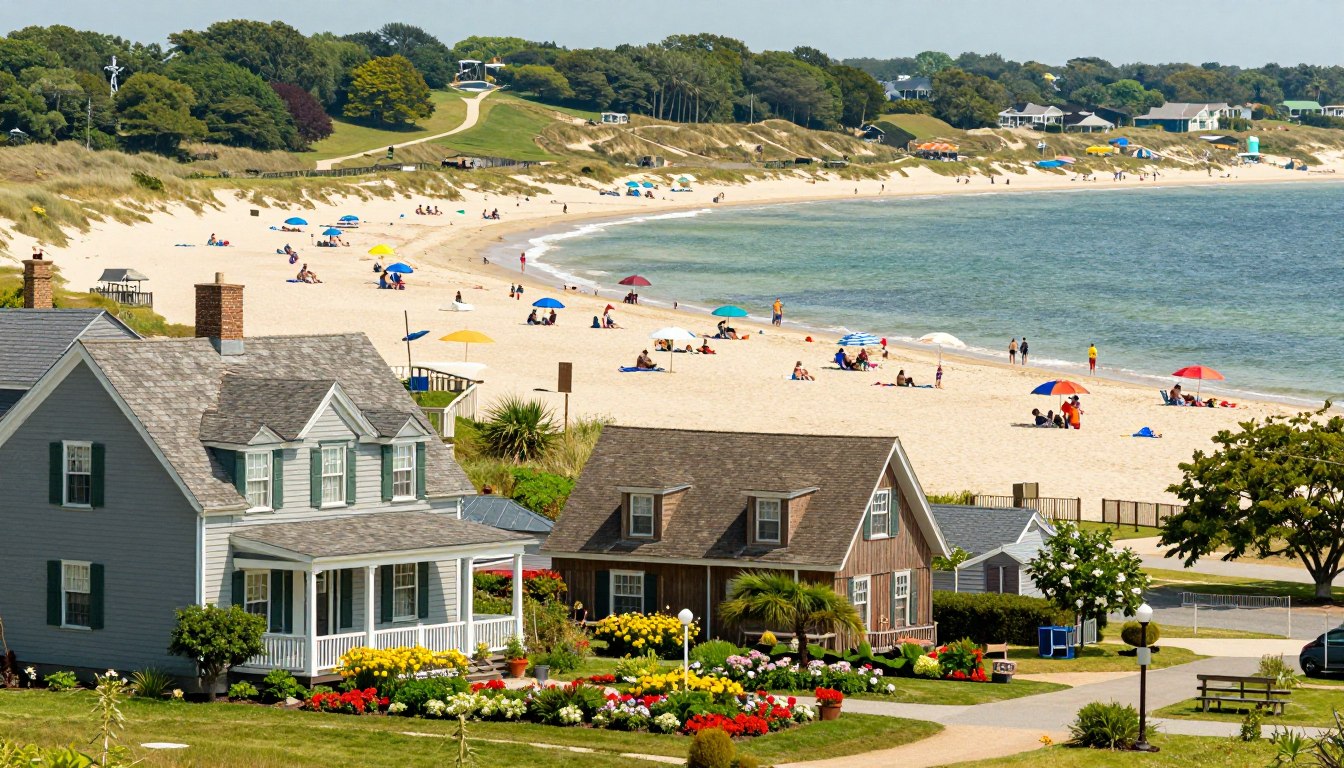
Compare two itineraries of equal length. In the first, you spend four days in a single beach town, walking the same strip to the same café. In the second, you spend a day each in a port city, a mountain village, a lake town and a capital. The second trip involves more packing and more transit, but it generates four separate sets of memories, and the total feels longer. The first feels restful, and shorter, even though the calendar says the same.
This is also why a week at an all-inclusive resort can blur together. Resorts are designed to remove decisions, and decisions are what make memories. The same buffet, the same pool and the same lounge chair make for relaxing days and a thin memory trail. That is not a flaw. A restful trip may be exactly what you need, and it does not have to feel long to be valuable.
The fix for travelers who want both is simple: anchor a restful base, then add one new outing per day, such as a village market, a ferry ride or a neighborhood you have not seen. One new thing a day is often enough to turn a seven-day blur into seven distinguishable days.
Think about how this plays out on a real itinerary. A traveler who arrives in Lisbon, rides the 28 tram, climbs to a viewpoint, eats a custard tart standing up, and then takes a train to Sintra the next morning has already stacked up a dozen separate scenes in two days. A traveler who spends the same two days in the same hotel lounge has stacked up two. When both look back, the first will feel as if a week has gone by.
Neither approach is wrong, but they serve different goals. If you want to feel rested, repetition helps, because the brain relaxes when it can predict what comes next. If you want to feel as though you got the most from limited vacation days, variety is the more dependable tool. The best trips often mix the two: a restful anchor with a handful of new outings.
The Limits of the Idea
It is worth being honest about what this explanation can and cannot claim. Time perception is complex, and researchers do not agree on a single mechanism. Attention, emotion, age and stress all affect how long an interval seems. Some studies suggest that the effect of novelty on remembered duration is real but modest, and individual differences are large.
Travel can also feel long for less pleasant reasons. A trip with delays, illness or stress can feel interminable because each hour is vivid for the wrong reasons. And a very busy itinerary can backfire if the days become so crowded that the memories blur together. The aim is distinct moments, not the highest possible count.
Age plays a part too. Many people report that years seem to speed up as they get older, and one common explanation is that adult life contains fewer first-time experiences, so there are fewer new memories to mark the passage of time. Travel is one of the easiest ways to reverse that. A single week in a country you have never visited can leave a deeper memory record than a month of ordinary weeks. That is part of why people who travel to new places often describe a trip from years ago as if it happened last summer, with a level of detail that ordinary months never get.
What to Take Away
If your last trip felt longer than the calendar says, you are not imagining it. Your brain stored more separate episodes and, looking back, counted them as time. The same principle explains why childhood summers seemed endless and why adult years speed up when routines settle in.
To use it, build a trip around contrast. Pick a mix of places that feel different from each other, leave room for wandering, and keep the routine light enough that every day has a few moments worth keeping. A five-day trip with a new setting each day will usually be remembered as longer, and more vividly, than a ten-day trip that repeats itself.