What Long-Haul Flights Actually Do to Your Body — and the Science on How to Recover Faster
We may earn money or products from the companies mentioned in this post. This means if you click on the link and purchase the item, I will receive a small commission at no extra cost to you ... you're just helping re-supply our family's travel fund.
This article contains affiliate links. We may earn a commission if you book through our links, at no extra cost to you.
Most travel health advice is anecdotal, recycled, and occasionally the opposite of what the physiology suggests. Drink more water (true). Avoid alcohol (complicated). Get up and walk around (true, but for reasons different from what you’ve been told). Take melatonin (effective for some things, ineffective for others).
The biology of what actually happens to a human body in a pressurized aluminum tube at 35,000 feet for twelve hours is well-documented in aviation medicine literature, and some of it is surprising. Understanding the mechanisms — not just the recommendations — makes the advice more useful and helps you apply it to your specific situation.
Cabin Pressure and Why It Matters More Than You Think
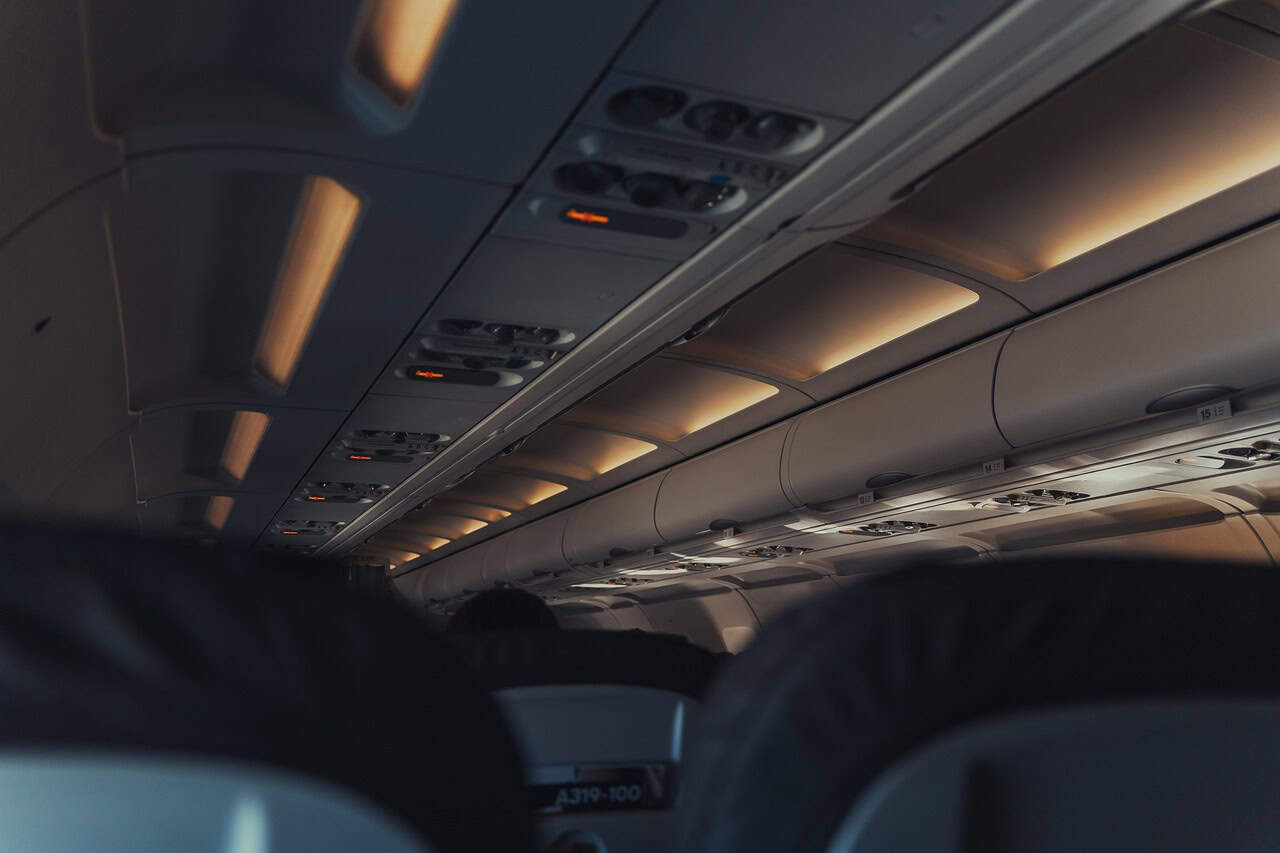
Commercial aircraft cabins are pressurized to an equivalent altitude of approximately 6,000 to 8,000 feet above sea level — not to sea level pressure, which would be mechanically prohibitive for the aircraft structure. Most modern wide-body jets (the 787 and A350 in particular) are pressurized to closer to 6,000 feet; older designs like the 777 run closer to 8,000 feet.
This matters because reduced atmospheric pressure affects blood oxygen saturation. At sea level, healthy adults typically maintain blood oxygen saturation of 95 to 99 percent. At simulated 8,000-foot cabin altitude, this can drop to 90 to 93 percent — levels that are clinically normal for a healthy adult at altitude but that have documented physiological effects during prolonged exposure.
The effects include cognitive slowing (reaction times increase, complex reasoning slows modestly), fatigue onset, and, importantly, accelerated dehydration. The lower the atmospheric pressure, the drier the air your respiratory system processes, and the faster you lose water through breathing.
Passengers on 787s (pressurized at lower equivalent altitude with higher humidity) consistently report feeling better on arrival than passengers on older aircraft flying equivalent distances. This is not marketing. It is physiology. The aircraft matters.
Dehydration: The Numbers Are Worse Than You’ve Heard
Aircraft cabin humidity is typically between 10 and 20 percent — significantly lower than the 30 to 60 percent that is considered comfortable for human habitation, and dramatically lower than the 80 to 90 percent humidity some people encounter in their home climates.
At these humidity levels, the respiratory system loses water at an elevated rate. Aviation medicine research has estimated that passengers can lose more than a liter of water per hour of flight through respiration alone under low-humidity conditions. Over a twelve-hour flight, this represents a substantial fluid deficit — one that the standard advice of “drink more water” meaningfully underaddresses.
The dehydration is compounded by several factors. Many passengers avoid drinking water because they want to minimize trips to the lavatory, particularly in window and middle seats. Alcohol consumption further accelerates water loss. Coffee and tea have mild diuretic effects.
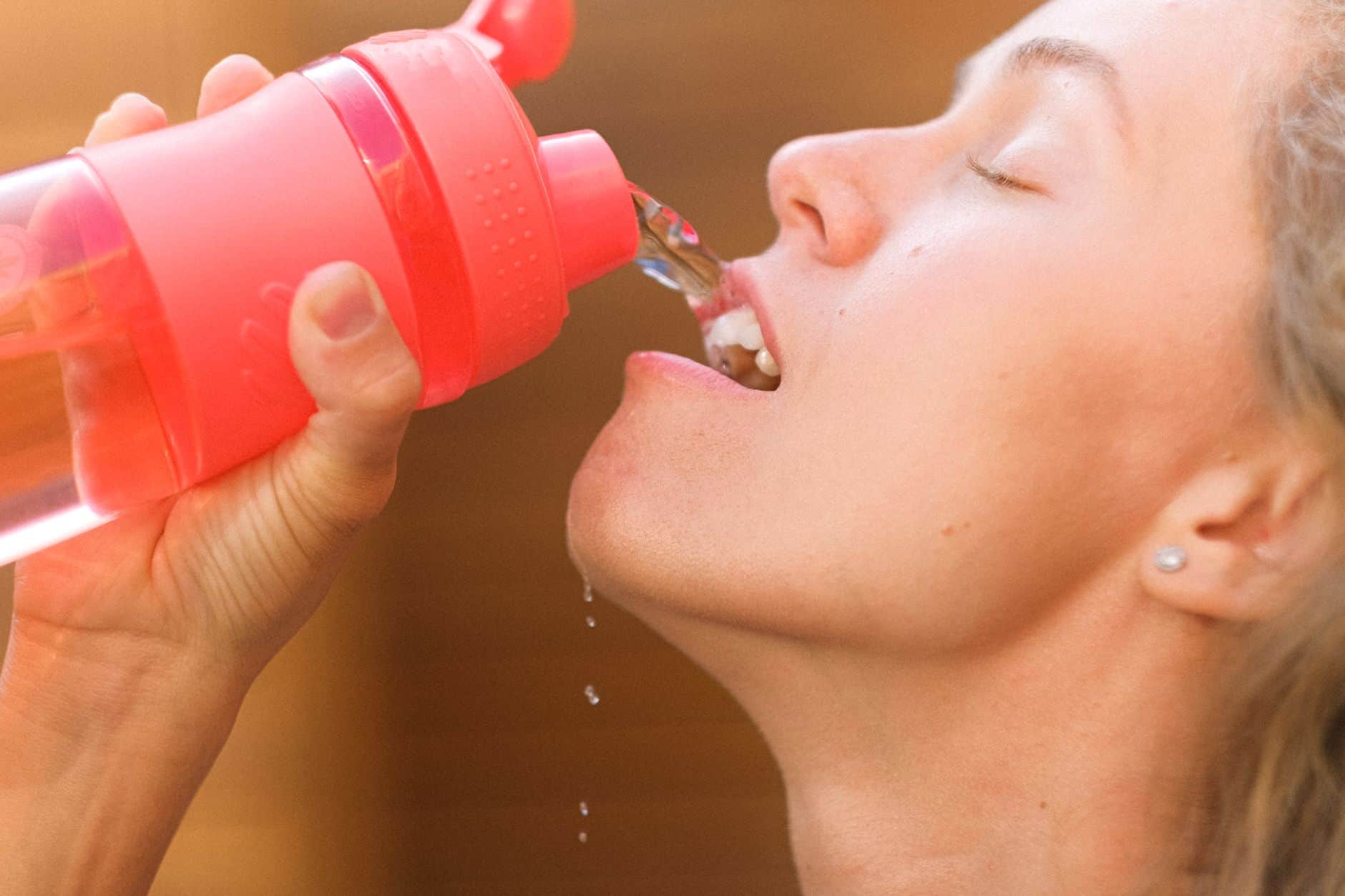
The practical recommendation from aviation medicine is not simply “drink water” but to actively calculate a hydration target: approximately 8 ounces of water for every hour of flight, in addition to normal consumption. On a twelve-hour flight, this means drinking at least 96 ounces — 12 cups — specifically for flight hydration, on top of regular consumption. Most passengers drink nowhere near this volume.
The symptom most people attribute to jet lag — the headache, the cognitive fog, the general feeling of being unwell on arrival — is substantially a dehydration effect and is substantially reversible with aggressive rehydration in the 24 hours following a long flight.
What Immobility Does Over 12 Hours
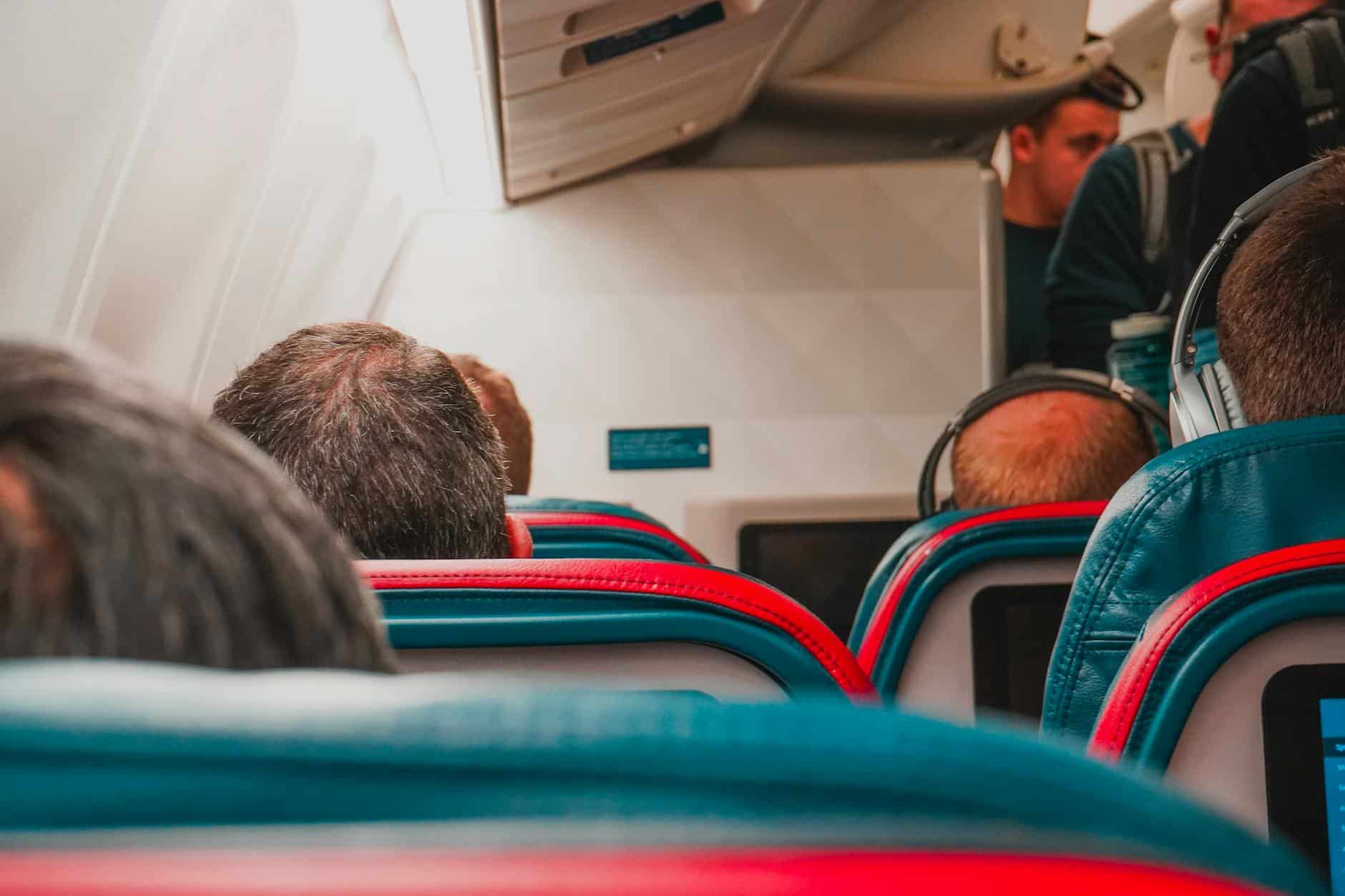
The standard advice to walk around the cabin during long flights is correct, but the underlying mechanism is more specific than “it’s good to move.”
Prolonged sitting in a fixed position reduces blood flow velocity in the lower extremities, particularly in the calf veins. Under normal conditions, the calf muscles act as a pump when you walk, helping return blood from the legs to the heart. When the calf muscles are inactive for extended periods, blood pools in the lower leg veins.
The clinical concern is deep vein thrombosis (DVT) — clot formation in the deep veins, typically of the calf — which can travel to the lungs and become a pulmonary embolism. The risk of DVT is elevated on long flights for multiple reasons: immobility, dehydration (which increases blood viscosity), cabin pressure, and the seated posture that slightly compresses the back of the knee.
For healthy young travelers, the absolute risk on any individual flight is low. The risk elevation is meaningful for travelers who have other risk factors: recent surgery, clotting disorders, pregnancy, obesity, or a history of DVT.
The evidence-based interventions are specific: calf exercises while seated (pointing and flexing the feet, lifting the heels), walking in the aisle for two to three minutes every two hours (not just standing), and compression socks, which have reasonable evidence for reducing lower-leg swelling and modest evidence for DVT risk reduction.
The Science of Jet Lag — Why Your Body Doesn’t Just Adjust
Jet lag is a circadian rhythm disruption — a misalignment between your internal biological clock and the external light-dark cycle of the destination time zone. The mechanism is specific and worth understanding.
The human circadian clock is governed primarily by a small region of the hypothalamus called the suprachiasmatic nucleus (SCN), which responds to light. The SCN uses light signals — specifically blue-spectrum light entering through the retina — to calibrate the timing of nearly every biological process in the body: sleep and wakefulness, hormone secretion, body temperature, digestion, and immune function.
When you cross multiple time zones rapidly, the SCN’s calibration lags behind the new light-dark cycle. The body’s internal timing signals are still operating on departure time while the external environment is operating on destination time. This misalignment is jet lag.
The body can shift its circadian rhythm by approximately one hour per day under natural conditions. A five-hour time zone difference takes five days to fully resolve. A ten-hour difference — a flight from New York to Tokyo, for example — takes approximately ten days for full physiological resolution.
Melatonin, taken at the correct time, can accelerate the circadian reset by signaling the SCN that darkness has arrived. The timing is critical: melatonin taken at the wrong point in the circadian cycle delays adjustment rather than accelerating it. The general guidance — take melatonin at the bedtime of your destination time zone, not the bedtime of your departure time zone — is directionally correct but simplified.
Light exposure is more powerful than melatonin for circadian resetting. Bright outdoor light at the appropriate time in the destination time zone — morning light when adjusting to eastward travel, evening light when adjusting westward — is the most effective tool for accelerating circadian alignment.
Alcohol at 35,000 Feet: The Actual Effect

The persistent belief that alcohol is more intoxicating at altitude — that one drink at 35,000 feet equals two drinks on the ground — has been tested in controlled studies and found to be largely incorrect.
The research, conducted in both simulated altitude chambers and actual aircraft, has not found a consistent elevation of blood alcohol levels or intoxication at cabin altitude compared to sea level, when the same amount of alcohol is consumed. The feeling that alcohol hits harder on flights appears to be primarily attributable to the other physiological effects of the cabin environment: dehydration, sleep deprivation, and reduced oxygen saturation.
However, alcohol does meaningfully worsen jet lag. It disrupts sleep architecture — reducing REM sleep and fragmenting total sleep — and it is a significant diuretic, accelerating the dehydration that is already occurring from the cabin environment. A passenger who drinks two glasses of wine on a twelve-hour overnight flight and sleeps poorly will arrive with both a dehydration deficit and a sleep deficit, producing an arrival state that feels substantially worse than the alcohol would cause at sea level.
The calculus is individual. For passengers who sleep well without alcohol and poorly with it, avoiding alcohol on long-haul flights has a meaningful effect on arrival state. For passengers who genuinely sleep better with a glass of wine, the benefit-cost analysis is less clear.
Sleep on Planes: What the Research Shows Works
Sleep on aircraft is significantly reduced in quality compared to ground sleep across essentially all available metrics: total sleep time, sleep efficiency, REM percentage, and subjective sleep quality. This is consistent regardless of seat class for most passengers — though lie-flat business class seats dramatically improve outcomes for passengers who can afford them.
The most consistently effective interventions for economy-class sleep are also the least glamorous: a window seat (providing a leaning surface and less disturbance), foam earplugs and an eye mask, a blanket adequate for the aircraft’s cabin temperature (often colder than expected), and a pillow arrangement that supports the head in the direction it naturally wants to fall.
Melatonin at the appropriate destination-calibrated time can shift the circadian signal toward sleepiness. Prescription sleep aids used for long-haul flights show mixed evidence — they can increase total sleep time but frequently produce grogginess on arrival that extends well into the first day.
The Post-Flight Immune Dip
Travelers frequently get sick in the days following a long-haul flight, and the mechanism is more than just exposure to other passengers’ germs.
The combined physiological stressors of a long flight — sleep disruption, dehydration, hypoxic stress from reduced cabin pressure, the circadian disruption of jet lag — produce a measurable suppression of several immune parameters in the 24 to 72 hours following arrival. White blood cell counts and natural killer cell activity are reduced. The mucosal immunity of the nasal and throat passages, already stressed by the dry cabin air, is compromised.
This immune dip is temporary and resolves as the body recovers. But it creates a window of elevated vulnerability that coincides exactly with the period when travelers are most exposed to new pathogens in a new environment.
The mitigation is primarily recovery-focused: prioritizing sleep in the first 24 hours after arrival over sightseeing, maintaining hydration, and not compounding the biological stress with alcohol or further sleep deprivation.
Evidence-Based Recovery for the First 48 Hours
The first 48 hours after a long-haul flight are the recovery window that determines how the rest of the trip feels. The interventions with the strongest evidence are:
- Aggressive hydration immediately on arrival — at least a liter of water in the first two hours, continuing at elevated rates through the first day.
- Light exposure calibrated to the destination time zone — outdoor light in the morning if traveling east, outdoor light in the late afternoon and evening if traveling west.
- Sleep timing aligned with the destination, even if it requires pushing through tiredness in the afternoon to reach a destination bedtime. A proper night of sleep in the destination time zone is the single most effective reset.
- Moderate physical activity — a walk, not a run — on the first day. Light activity improves circulation, supports circadian reset through light exposure, and mitigates some of the effects of prolonged in-flight immobility.
- Avoiding alcohol for the first 24 hours post-flight.
None of this is exotic. Most of it is the advice people have heard before. The difference is understanding the mechanism — knowing why aggressive hydration matters, why light timing matters, why the first night’s sleep in the destination time zone is worth protecting — makes following the advice feel purposeful rather than arbitrary, and purposeful adherence tends to be more consistent.