Solo Travel Safety: 19 Things Every First-Timer Gets Wrong (And What to Do Instead)
We may earn money or products from the companies mentioned in this post. This means if you click on the link and purchase the item, I will receive a small commission at no extra cost to you ... you're just helping re-supply our family's travel fund.
I’ve taken 31 solo trips to 19 countries. I’ve been fine almost every single time — not because I was lucky, but because I learned the specific patterns that make solo travelers safe or vulnerable, and I adjusted.
Most first-time solo travelers make a predictable set of mistakes. Most of them are harmless and just slightly embarrassing. Some of them invite real risk. All of them are avoidable.
Here is what I wish someone had told me before my first trip.
The Mindset Shift That Changes Everything

The biggest mistake first-time solo travelers make isn’t logistical. It’s mental.
Most first-timers approach solo travel in one of two extremes: either terrified of everything, constantly anxious, seeing threats everywhere — or dangerously cavalier, assuming nothing bad will happen because they’re a good person who means well.
The right mindset is neither. It’s situational awareness without paranoia.
- Treat safety as a skill, not a personality trait. It’s something you practice and improve.
- Research specific risks for your destination — not worst-case headlines, but actual common incidents that affect tourists
- Understand that most crime against tourists is opportunistic, not targeted — meaning basic precautions eliminate most of the risk
- Trust your gut without catastrophizing. If a situation feels wrong, leave. You don’t need to explain yourself to anyone.
Before You Leave: The Digital Setup Most People Skip

Your digital setup before departure is your safety net when things go sideways.
Enroll in STEP
— The Smart Traveler Enrollment Program at step.state.gov. Free. The U.S. Embassy can contact you in emergencies and help coordinate assistance.Download offline maps
— Google Maps and Maps.me both allow offline city downloads. In a country with expensive data, offline maps are the difference between confident navigation and standing on a street corner looking lost.Screenshot your hotel address in the local language
— Critical in countries with non-Latin scripts (Japan, China, Thailand, Arab countries). Show the screen to taxi drivers without fumbling through translation apps.Set up international phone service before you land
— T-Mobile and Google Fi both include free international data. Or buy a local SIM at the airport. Do this before you need it, not when you’re already confused at arrivals.Save emergency numbers
— Police, ambulance, and your nearest embassy/consulate. In your phone AND written on paper in your wallet.Share your itinerary with someone at home
— Not a full document. Just: “I arrive in Prague on the 14th, staying at X hotel, flying to Vienna on the 18th.” That’s enough for someone to know where to start looking.
Accommodation Mistakes That Make You Vulnerable

Your accommodation is your anchor point — get it wrong and every day of the trip is harder.
- Don’t book the cheapest possible option in an unfamiliar city. The extra $15–$25 per night for a well-reviewed, centrally-located property is the best safety investment you’ll make.
- Read recent reviews specifically for safety and location — not just room quality
- Book your first night before you arrive, even if you plan to figure the rest out on the ground. Arriving in a new city after a long flight without a confirmed address is how people make bad decisions under pressure.
- Tell someone — your host, the front desk — your rough plans for the day. “I’m planning to visit X area and should be back by 10pm.” This creates an accountability loop.
- Use the room safe for your passport and backup cash. It’s not secure against a determined thief, but it stops casual theft completely.
Transportation: Where Most Dangerous Situations Begin

The vast majority of serious incidents affecting solo travelers involve transportation — particularly ground transportation at night.
Never hail street cabs in countries with metered ride-share apps
— Uber, Bolt, Grab, InDrive, and local equivalents exist in almost every major city now. Always use them. The paper trail alone deters bad actors.Screenshot your ride details
— Uber and Grab show you the driver’s name, photo, license plate, and route. If anything doesn’t match, don’t get in.Sit behind the driver, not the passenger seat
— Easier to exit either side if you need toShare your ride in real-time
— Both Uber and Lyft have “Share Trip” features that send your live location and ETA to a contact. Use it every time at night.Trust train and bus over taxis for long-distance travel
— Better infrastructure, more passengers, harder to be separated from your belongingsBook overnight trains in sleeper compartments where possible
— More expensive, but you’re locked in and rested when you arrive
The Social Mistakes That Signal ‘Easy Target’
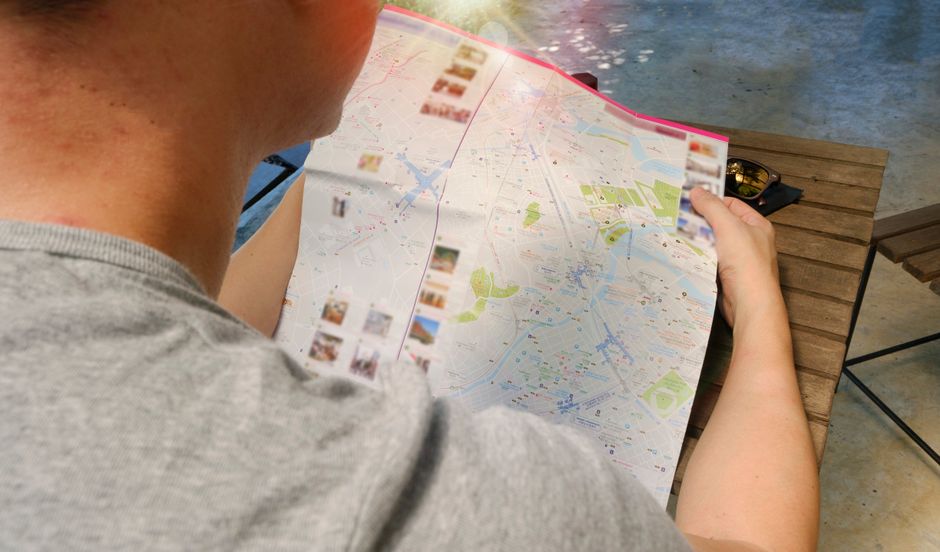
Most tourist targeting is opportunistic. Thieves and scammers are looking for the easiest, most distracted, most confused person in the crowd. Don’t be that person.
- Don’t stand on the street staring at your phone to navigate. Stop, step to the side, orient yourself, put the phone away, then walk.
- Never pull out a paper map in a crowd. Offline map on your phone, glanced briefly, is far less visible.
- Dress to blend in. Research what locals wear. An obviously “tourist” outfit in a crowded market is an invitation.
- Be confident in your walk even when you’re not sure where you’re going. Uncertainty shows.
- The “help with directions” scam: someone asks you for help, walks you somewhere, and suddenly there’s a financial expectation. Be politely firm and move on quickly.
- Loud, aggressive offers to help with your luggage in transit areas: decline firmly and keep moving.
Money and Phone: How to Handle Both Without Broadcasting It
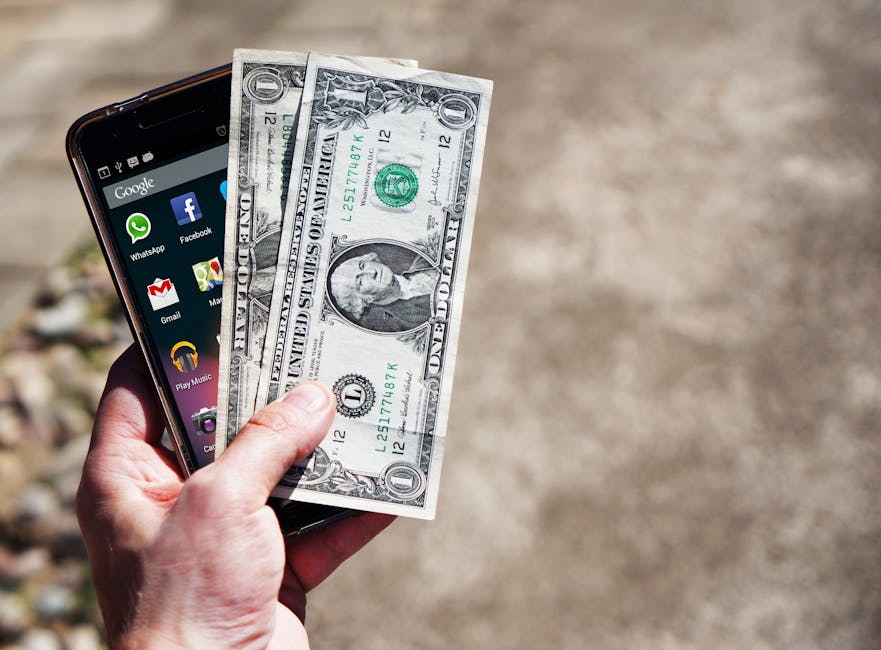
Your phone and cash are your two most theft-attractive possessions.
- Use a money belt under your clothing for your passport, backup cash, and a spare card
- Carry a small amount of “decoy” cash in your front pocket — enough to satisfy a pickpocket without losing everything
- Never take out your wallet in a crowd. Step aside somewhere private.
- Use your phone at chest level with awareness of who’s around you — not staring down at it while walking
- Get a phone case with a wrist strap for markets and crowded areas — dramatically harder to grab and run
- Notify your bank before travel so your card isn’t frozen when you try to use it abroad
- Travel with two different debit cards from two different banks — if one is blocked or stolen, you have a backup
When Something Goes Wrong: The Exact Steps to Take

Even with everything right, things sometimes go wrong. Here’s the sequence.
Theft or robbery
— Get to safety first. Then file a police report (you’ll need it for insurance). Then contact your bank to cancel cards. Then call the nearest U.S. Embassy if your passport was taken.Medical emergency
— In most countries, 112 is the universal emergency number (works in Europe, many others). In Southeast Asia, go directly to a private hospital — public hospitals in tourist areas are often overwhelmed.Lost passport
— Contact the nearest U.S. Embassy or consulate immediately. Bring ID photocopies (you kept these in a cloud folder, right?) and a police report. Emergency passports can be issued in 24–48 hours.Scam in progress
— The magic words are “No, thank you” said firmly and walking away without further engagement. Do not argue. Do not explain. Just leave.Feeling unsafe in a location
— Walk into any shop, restaurant, or hotel and stay there until you feel stable. Ask the staff to help you call a ride. You owe no one an explanation for leaving a situation.
Solo travel is the most freedom you can buy. These precautions don’t diminish that freedom — they protect it.