Sedona Has Just 10,000 Residents. Tourism Is Testing Its Water System—Here’s What Visitors Should Know
We may earn money or products from the companies mentioned in this post. This means if you click on the link and purchase the item, I will receive a small commission at no extra cost to you ... you're just helping re-supply our family's travel fund.
Sedona has about 10,000 residents. In a normal year it hosts roughly 3 million visitors, according to local tourism estimates. That is a ratio of around 300 visitors for every resident, and it explains why a red-rock town in the Arizona high desert gets so much attention for its water. Sedona water use is not a crisis story in the headlines sense, but it is a stress-test story. A small system built for a small town has to supply hotels, restaurants, spas, trailheads, and short-term rentals in a place where rain is limited and the water comes largely from underground.
Here is what visitors should know: where Sedona’s water comes from, why tourism adds pressure, what the town is doing about it, and how a traveler can stay in the red rocks without adding to the problem.
What Visitors Should Know About Sedona Water Use
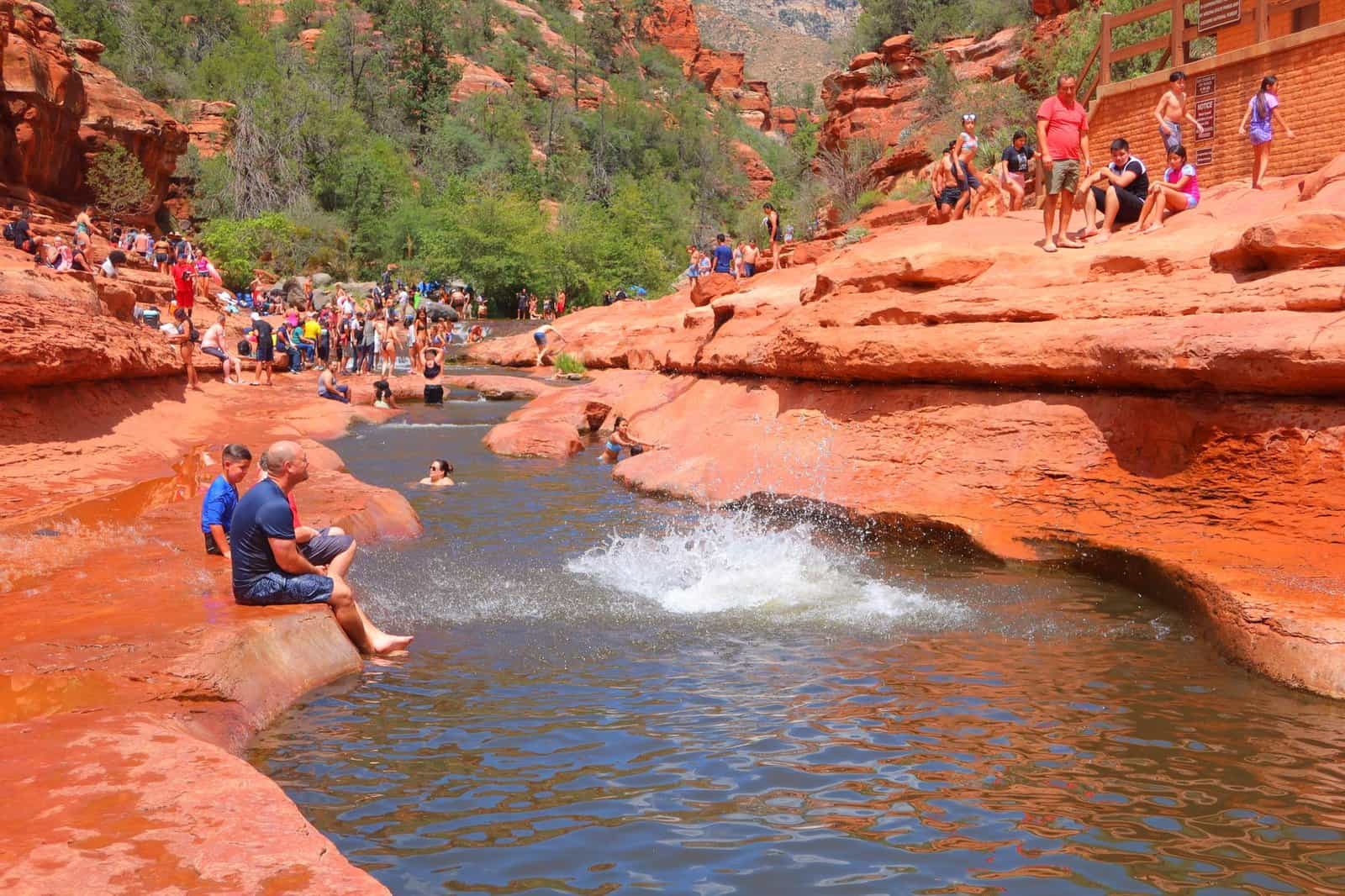
Start with the basics. Sedona sits in the Verde Valley in Yavapai and Coconino counties, around 4,300 feet in elevation, and receives roughly 18 inches of precipitation a year, mostly in winter storms and summer monsoons. Oak Creek runs through town and is a popular swimming and wading spot, but it is not the source of most household water. Most residents are customers of Arizona Water Company, a private utility that pumps groundwater from wells across the Sedona area. The company reports average pumping in the Sedona service area of about 3,000 acre-feet a year in recent years, equal to nearly 3 million gallons a day. An acre-foot is about 326,000 gallons, enough to supply a few households for a year.
Groundwater is replenished slowly. In the Verde Valley, only a small share of annual precipitation soaks down into the aquifer, so heavy pumping can lower water levels over time. That is why local officials treat conservation as a long-term priority, not a seasonal one. Visitors are part of that equation because a hotel guest uses water for showers, laundry, restaurants, pools, and landscaping, and a town that doubles or triples its daytime population on a busy weekend needs more capacity than its resident count suggests.
Why Tourism Raises the Stakes
Visitors use water in visible and invisible ways
A typical American household uses roughly 300 gallons of water a day, according to national estimates. A hotel room can use similar or more water per occupied night once laundry, restaurant service, and pools are counted. Resorts with spas, golf courses, and extensive landscaping can use far more. Short-term rentals add another layer, because they are occupied by visitors who do not live in the community and may not think about how much they use.
Peaks are higher than averages
Water systems are built for peak demand, not averages. Spring break, fall color, and holiday weekends fill Sedona’s hotels and rentals, and demand spikes in the afternoon and evening. Summer heat raises landscape irrigation needs. A utility must be able to deliver water on the busiest day, even if most days are far calmer.
The economy depends on the same resource
Tourism is Sedona’s main industry, and the red rocks only draw visitors if the town stays livable. Restaurants and lodging employ a large share of local workers, many of whom commute from nearby Cottonwood and the Village of Oak Creek because Sedona housing is expensive. Water supports the businesses, the workers, and the scenery, including the riparian habitat along Oak Creek.
What the Town and Region Are Doing
Sedona has taken several steps to manage water, and they offer a model for other small tourist towns.
- Reclaimed water: The city runs a wastewater treatment plant that produces reclaimed water used to irrigate golf courses and other landscaped areas, reducing groundwater use for that purpose.
- Conservation programs: The city and utility offer rebates and education programs for efficient fixtures and landscaping suited to the desert.
- Planning: The Sedona community plan and regional groups such as the Verde River basin partnerships track groundwater levels and project future demand.
- Regulations: New development and short-term rental rules have drawn attention to how much growth the area can sustain.
- Monitoring: Wells are measured regularly, and the utility reports pumping to state authorities.
Specific restrictions and programs can change, so it is worth checking the City of Sedona and Arizona Water Company websites for current notices, especially in summer and during drought.
How to Visit Sedona Without Straining Its Water
You do not need to avoid Sedona. You need to behave like a guest in a dry place. The following habits make a real difference.
- Choose efficient lodging. Hotels that advertise water-saving fixtures, towel and linen reuse programs, and native landscaping are a better bet than resorts with large lawns. Ask when you book.
- Take shorter showers. Cutting a shower by two minutes saves several gallons, and it takes no effort.
- Reuse towels. Hanging a towel on the rack for a second day can reduce laundry volume significantly across a stay.
- Skip the car wash. Dust is part of the landscape, and washing a rental car is a luxury in a desert town.
- Fill a reusable bottle. Bring a refillable bottle for hikes rather than buying single-use plastic, and refill at your lodging.
- Avoid pools if you have other options. Public pools are efficient, but private resort pools consume a lot. Oak Creek swimming spots are free, though check rules, because some areas are restricted.
- Stay on trails and respect closures. Trampling soil and vegetation increases erosion and runoff, which affects the watershed.
- Visit in shoulder seasons. A mid-week stay in winter or early summer spreads demand more evenly than a holiday weekend.
Where Your Money Goes
Sedona is a pricey place to stay. Hotel rooms commonly range from about $200 to $450 a night in peak season, and many resorts cost far more. Short-term rentals add another price tier. Food is more expensive than in nearby Cottonwood or Flagstaff, where many travelers can find lower prices. The cost of lodging reflects a combination of demand, limited land, and high building costs. Staying in a neighboring community such as Cottonwood, Camp Verde, or Clarkdale can cut costs by a third or more, and the drive to Sedona takes 20 to 30 minutes. That also spreads out demand on Sedona’s infrastructure, though it adds traffic on State Route 89A and 179.
Trails, Shuttles, and Traffic
Water is not the only strain. Sedona’s trailheads fill early, roads clog, and parking is limited. The city runs a shuttle that serves popular trailheads, and using it helps relieve crowding. The Red Rock Pass or a state park fee may be required to park in some national forest and state park areas, so check requirements before you go. Arriving at sunrise and leaving before midday avoids both the heat and the crowds.
If you hike, carry plenty of water, at least a liter or two per person depending on the season and the trail, and know the signs of heat illness. Summer temperatures can exceed 100 degrees in the lower elevations, and the dry air hides how quickly you lose fluids.
Common Questions From Visitors
Is the tap water safe to drink?
Yes. Arizona Water Company publishes an annual water quality report for its Sedona customers. The water is hard because of the minerals in the ground, which leaves spots on glasses and can dry the skin. Many visitors bring a filter bottle or simply fill up at their lodging.
Will a hotel or restaurant ask me to conserve?
Possibly. Some businesses post cards asking guests to reuse towels, serve water only on request, or limit irrigation. These are small requests, but they reflect a town that knows where its supply comes from. Following them costs you nothing.
Is it better to camp than to stay in a resort?
It depends. Dispersed camping on national forest land has a low water footprint if you pack in your own supply and follow the rules, but it comes with fire restrictions and permit requirements in some areas. Developed campgrounds along Oak Creek Canyon offer facilities and a simple way to limit extra use. Check current closures before you go, because fire danger and flooding can affect access.
Do the red rocks really depend on tourists’ good behavior?
The rocks do not, but the creek corridors, the soil crust, and the vegetation do. Sedona’s most fragile areas are not the big formations but the thin layer of soil and plants that holds the desert together, and it is easily damaged by off-trail walking.
A Bigger Picture
Sedona’s water story is also the story of many western towns. Arizona’s cities are rapidly growing, and the state faces long-term pressure on the Colorado River, which supplies water to its central and southern regions. Smaller communities that rely on groundwater face a different set of limits, since aquifers recharge slowly and are shared with neighbors. The Verde River, which runs through the valley, is a major regional resource and supports wildlife and recreation downstream. Decisions in Sedona affect the river’s flow over time.
That is why conservation by both residents and visitors matters. A single traveler’s choices are small, but across millions of visitors they add up.
The Takeaway
Sedona’s roughly 10,000 residents and millions of visitors share a water system that depends largely on groundwater. Tourism raises peak demand, and conservation is a long-term necessity. Visitors can help by choosing efficient lodging, using less water, respecting trails, and visiting in shoulder seasons. Do that, and you can enjoy the red rocks without adding to the strain.