Gary, Indiana Had 178,000 People at Its Peak. It Has 69,000 Now. Here’s What Happened to the Rest
We may earn money or products from the companies mentioned in this post. This means if you click on the link and purchase the item, I will receive a small commission at no extra cost to you ... you're just helping re-supply our family's travel fund.
In 1960, Gary, Indiana counted 178,320 residents, roughly 178,000 people, which made it one of the biggest cities in the state. The 2020 census counted 69,093, or about 69,000. That is a drop of roughly 109,000 people, or nearly two-thirds of the city, in 60 years. The Gary Indiana population decline is one of the starkest in the American Midwest, and it did not happen because of a single event. It was a chain: steel jobs shrank, white families moved out as the city grew more Black, retailers followed, and the tax base collapsed.
So where did the rest go? Most of them did not disappear. They moved a few miles south and east to suburbs like Merrillville, Portage, Crown Point, and Hobart, or across the state line to the Chicago area. Here is how it unfolded and what Gary looks like today.
What Happened to Gary’s Missing 109,000 Residents
Gary was founded in 1906 by U.S. Steel, which built a giant mill on the southern shore of Lake Michigan and a city next to it. It was named for Elbert Gary, the company’s chairman. Immigrants and Black Southerners arrived by the thousands to work in the mills, and the city grew fast, topping 100,000 residents by 1930 and reaching its peak in 1960. At its height, Gary Works was one of the largest steel plants in the world, and a mill job meant a stable middle-class life.
The decline came in three overlapping waves.
Wave one: the suburbs pull people out
Starting in the 1950s and 1960s, many white residents moved out of the city to nearby suburbs, a pattern seen across American cities. In Gary the shift was sharp because of the city’s rapid racial change. The Black share of the population rose from roughly four in ten residents in 1950 to a clear majority by 1970. Housing discrimination, school fights, and fears about neighborhood change contributed to white flight, and highways and new subdivisions made suburban living easy. The U.S. 30 corridor, with its shopping centers and malls, drew stores away from downtown Gary.
Black residents faced their own barriers. Many were kept out of the suburbs by discriminatory real estate practices, and Gary became a center of Black political power. Richard Hatcher won election as mayor in 1967, becoming one of the first Black mayors of a major American city, and in 1972 Gary hosted the National Black Political Convention. But political power did not stop the loss of jobs and tax revenue.
Wave two: the steel jobs vanish
Starting in the 1970s, the American steel industry shrank because of foreign competition, new technology, and a changing economy. U.S. Steel cut jobs repeatedly in Gary, and automation meant fewer workers were needed for the same output. Employment at Gary Works fell from tens of thousands at its peak to a few thousand today. The mill still operates, but it employs a fraction of its former workforce.
When the mills lost workers, the effect rippled. Local shops, bars, and banks lost customers. Younger people left to find jobs elsewhere, and those who could sell their homes did. Between 1970 and 2000, the city lost tens of thousands of people each decade.
Wave three: disinvestment feeds itself
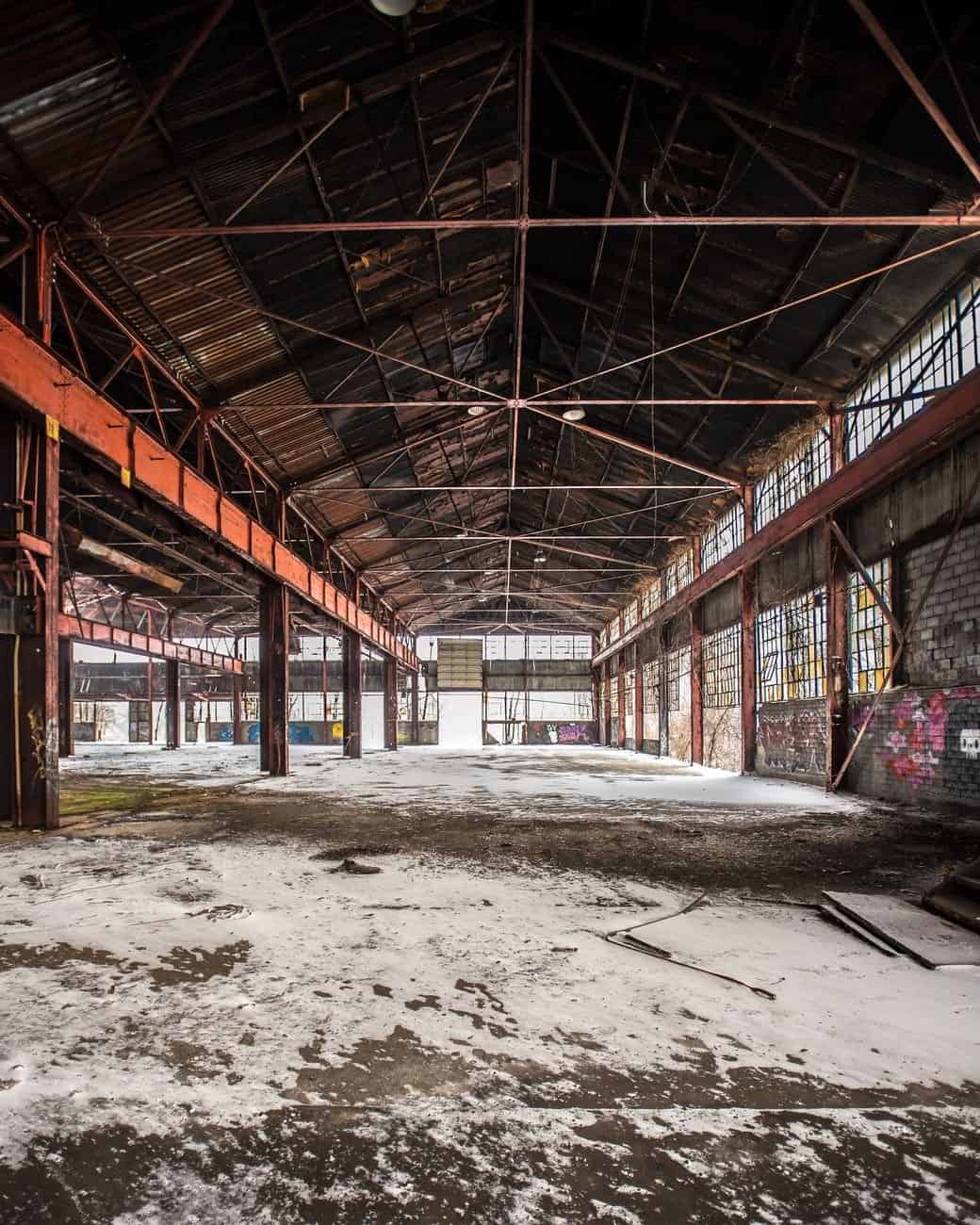
As residents left, property values dropped, and the city’s tax base shrank. Gary struggled to pay for police, fire, schools, and roads. Downtown became hollowed out. Landmarks like the Union Station, City Methodist Church, and Gary Roosevelt High School fell into disrepair. Thousands of vacant houses and lots appeared. Crime rose in some periods, and the city’s reputation suffered.
The pattern is typical of what happens when population and revenue fall together: fewer residents mean less money for services, and weaker services push more residents out.
The Gary Indiana Population Decline in Plain Terms
Here are the census counts that tell the story:
- 1960: about 178,000
- 1970: about 175,000
- 1980: about 152,000
- 1990: about 117,000
- 2000: about 103,000
- 2010: about 80,000
- 2020: about 69,000
The sharpest drop came between 1970 and 1990, when the city lost about 58,000 people. Losses continued through the 2000s, though at a slower pace. The 2020 census showed that Gary is still shrinking, but the rate of decline has eased compared with earlier decades.
Why the Mills Mattered So Much
A modern reader may find it hard to picture how completely a steel mill could define a city. In Gary’s prime, the mill set the shift schedule for much of the town. Bars opened early to serve workers coming off the night shift, corner stores stocked lunch pails, and the union hall was a center of civic life. Wages were high enough that a worker with a high school diploma could buy a house, raise children, and send them to college. When the company shed workers, it was not merely losing payroll. It was removing the stable income that supported every other part of the economy.
Schools suffered next. As enrollment fell, the school district closed buildings and cut programs, and families who could afford to leave did. Some of the city’s grandest buildings, including Roosevelt High School and the Palace Theatre, were left empty. The visible decay then reinforced the outward flow, a cycle that urban planners describe as a feedback loop.
Where the People Went
Those who left did not spread out evenly. Many went to the nearby suburbs in Lake and Porter counties, which grew as Gary shrank. Merrillville, a few miles south, became a regional retail and hotel center. Portage and Crown Point grew with new housing. Some residents moved to Chicago, about 30 miles west, or to other Midwest cities. Others followed work to the South and West.
Some families also moved within the region to follow better schools, newer houses, and lower crime. Suburban growth was not an accident. Governments and developers built roads, utilities, and subdivisions that made moving easy, while Gary did not have the funds to keep up.
What Gary Is Like Today
The population has stabilized somewhat around 69,000, and the city is now trying to rebuild. Several features make a visit more interesting than the headlines suggest.
- Miller Beach: a lakefront neighborhood on the east side with a beach, restaurants, and a more affluent feel. It is part of the Indiana Dunes area and has attracted new residents.
- Marquette Park: a lakeside park with a historic Aquatorium and beach, popular for walking and picnics.
- The Gary Southshore RailCats: a minor-league baseball team that plays at U.S. Steel Yard downtown.
- Michael Jackson’s boyhood home on Jackson Street: the Jackson family lived here, and fans leave tributes outside the small house. Respect the privacy of current owners.
- The Gary Public Library and the city’s architecture: examples of the early twentieth century city planning.
- Gary/Chicago International Airport: a small airport that serves charter and some commercial flights.
Efforts to revitalize the city include plans to restore historic buildings, remove blight, and attract new businesses. The city and regional partners have worked on demolition programs and on new housing. Results are mixed, and it will take years to see lasting changes.
What Visitors Should Know
Gary has been unfairly portrayed in some media, but it also has real challenges. Some neighborhoods have extensive vacant property and limited services. As with any city, stick to well-trafficked areas, avoid wandering at night, and use judgment. Check hours and access for specific sites, since some are only open at certain times, and some are private property.
If you want to experience the area, a good day might include the Miller Beach lakefront, a stop at the Indiana Dunes National Park a few miles east, a ball game in the evening, and dinner at a local restaurant. Spending money in neighborhoods like Miller Beach supports businesses that are trying to anchor the city.
Lessons From Gary
Gary’s story is a case study in how a company town can rise and fall with a single industry. When U.S. Steel built the city, it provided jobs but also tied the city’s fate to one employer. When steel faltered, the city had little else to fall back on. Racial segregation and discriminatory practices made the situation worse, by limiting where people could live and what investments flowed to Black neighborhoods. Suburban expansion encouraged people to leave without paying the cost of the city they left behind.
Other cities, including Detroit, Flint, and Youngstown, have gone through similar patterns. Some have found a way to stabilize, often through diversification, anchor institutions like hospitals and universities, and a mix of public and private investment. Gary is still searching for its version.
The Takeaway
Gary lost about 109,000 residents between 1960 and 2020, and they left because of a combination of lost steel jobs, white flight, suburban growth, and a shrinking tax base. Many moved a short distance to nearby suburbs, while others left the region altogether. The city that remains, at around 69,000, has a lakefront, historic buildings, and a stubborn sense of identity, and it is trying to write a new chapter.