Early-Morning Flights Arrive Late Far Less Often Than Evening Flights. Here’s Why the First Flight of the Day Is the Safest Holiday Bet
We may earn money or products from the companies mentioned in this post. This means if you click on the link and purchase the item, I will receive a small commission at no extra cost to you ... you're just helping re-supply our family's travel fund.
Booking the first flight of the day is one of the simplest ways to avoid a delay. An analysis of U.S. Bureau of Transportation Statistics data from 2023 through 2025 found that 11.0% of flights departing before 8 a.m. arrived 15 minutes or more late, compared with 28.7% of flights departing after 8 p.m. Flights before 6 a.m. did even better, at 9.8%. A separate analysis by Thrifty Traveler found that flights leaving at 7 and 8 a.m. were on time 84.3% of the time, compared with 56.7% for flights leaving at 11 p.m.
Here’s why: early-morning flights usually use planes that spent the night at the airport, so they aren’t waiting for a late plane to arrive from somewhere else. Crews start their day on time, airports and airspace are less crowded, and thunderstorms are less common in the morning. As the day goes on, delays ripple through airline schedules, and evening flights inherit them. And if your early flight is canceled, you have the whole day to get on another one.
There are a few caveats, especially in winter. Here’s how it all works.
Why the First Flight of the Day Is the Safest Bet
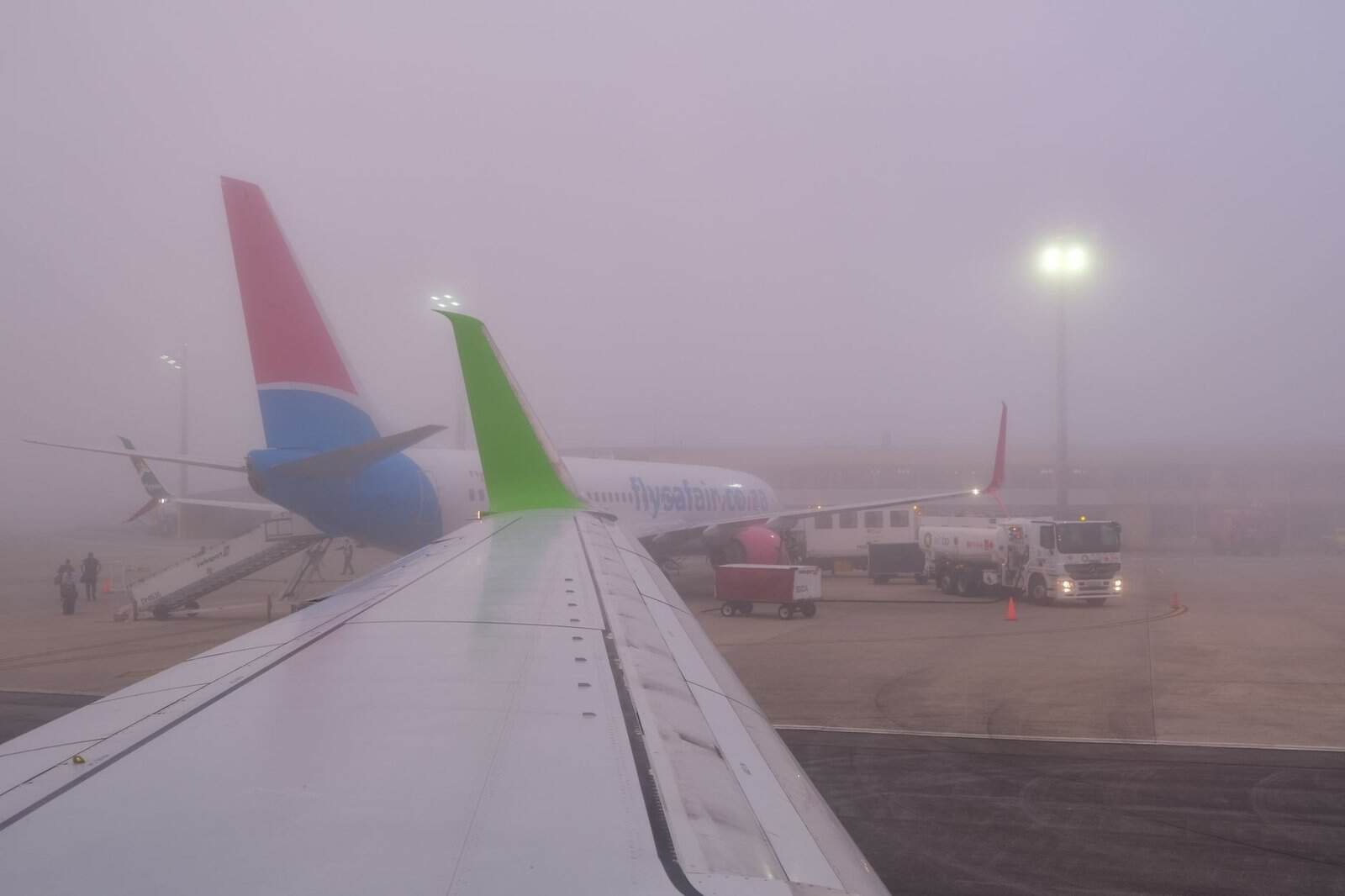
The plane is already there
Most flights use a plane that just arrived from another city. If that earlier flight was late, yours will be too. Airlines call this a late-arriving aircraft delay, and it’s one of the most common causes of delays in the U.S.
The first flights of the morning usually use planes that arrived the night before and sat at the gate or on a ramp overnight. There’s no inbound flight to wait for, which removes one of the biggest sources of delay.
Crews start fresh
Pilots and flight attendants have strict limits on how long they can work. Late in the day, a delay can push a crew past its limit, and the airline has to find a replacement crew or cancel the flight. Early in the morning, crews are at the start of their duty day, so that’s much less likely.
Less congestion
Airports and the airspace around them get busier as the day goes on. At large hubs, airlines schedule banks of flights that all arrive and depart close together. When weather or traffic slows things down, the Federal Aviation Administration may slow arrivals or issue ground delays, and the backlog grows. Early flights usually leave before that happens.
Fewer thunderstorms
In summer, thunderstorms tend to build in the afternoon and evening. That’s less of a factor during the holidays, but it’s part of why evening flights have worse records year-round.
Delays build through the day
Each of these factors adds up. A delay at 7 a.m. can ripple through a plane’s schedule for the rest of the day, along with crews and connecting passengers. The later you fly, the more chances there are for something earlier to go wrong. That’s why flights after 8 p.m. are delayed more than two and a half times as often as flights before 8 a.m. in that analysis.
More options if something goes wrong
If an early flight is canceled, you have the rest of the day to get on another one. If your last flight of the night is canceled, you may be stuck until the next morning. During the holidays, when flights are full, that difference can matter.
The Winter Caveats
The first flight of the day isn’t perfect, especially in winter.
De-icing and frost
Planes that sit outside overnight in cold weather can collect frost, snow, or ice. Before they can take off, they need to be de-iced, which can take time, especially when many planes need it at once early in the morning. A delay of 15 to 30 minutes for de-icing isn’t unusual at northern airports.
Slightly more cancellations at dawn
Delays are much lower in the early morning, but cancellations tell a slightly different story. One analysis of federal data found that flights leaving at 5 a.m. were canceled 1.31% of the time, compared with 1.05% for flights at 11 a.m. Mechanical problems found during morning checks and crew issues can cause some of those early cancellations. Still, the difference is small, and the delay advantage is much larger.
Getting to the airport
An early flight means getting to the airport in the dark, often in cold weather. Roads may be icy, and public transit may not be running yet. Plan your ride ahead of time, and allow extra time for security, since early-morning lines at some airports can be long.
How to Use the First Flight of the Day for Holiday Travel
- Book early: The first flights of the day are popular, especially during the holidays, so book as soon as you can.
- Choose nonstop: A nonstop flight removes the risk of a missed connection.
- If you have to connect, connect early: An early first leg gives you more time, and more backup flights, if something goes wrong.
- Check where the plane is coming from: Some apps show where your plane is before your flight. If it’s already at your airport, that’s a good sign.
- Get to the airport early: Morning security lines can be long, especially around Thanksgiving and Christmas.
- Stay near the airport: If you live far away, consider a hotel near the airport the night before.
What About Red-Eyes?
Overnight flights, or red-eyes, often have good on-time records too, because the airspace is quiet. But they’re usually the last flight of the day for the plane, and if they’re canceled, there may be no other option until the next morning. They’re also harder on sleep, especially if you’re traveling with kids.
How to Find the First Flight of the Day
Airline websites and booking sites let you sort flights by departure time. A few tips for finding and choosing the earliest one:
- Sort by departure time. Look for flights that leave before 8 a.m., and ideally before 7 a.m.
- Check the arrival time, too. A flight that leaves at 6 a.m. but connects through a busy hub at midday loses some of its advantage.
- Look at the aircraft’s history. Flight-tracking apps and sites can show where a plane spent the night and how often a particular flight number has been late in recent weeks.
- Compare airports. If you live near more than one airport, one may have more early departures on your route.
- Consider hubs. At an airline’s hub, many planes overnight at the airport, so early departures are common.
Is It Worth the Early Alarm?
For many travelers, the hardest part of the first flight is waking up for it. A 6 a.m. departure can mean leaving home at 4 a.m. or earlier, especially if you need to park, check bags, or get through a long security line. That’s a real cost, especially for families with small children.
Whether it’s worth it depends on how much a delay would cost you. If you’re going to a Thanksgiving dinner, a wedding, or a holiday event with a fixed time, or if you have a tight connection, an early flight gives you the most room to recover from problems. If your schedule is flexible and an evening arrival works just as well, a midday flight may be a reasonable compromise.
Holiday Timing Matters, Too
The day you fly matters as much as the time. The busiest days around Thanksgiving are usually the Tuesday and Wednesday before the holiday and the Sunday after it. Around Christmas and New Year’s, the busiest days shift depending on which day of the week the holidays fall. Flying early on a busy day helps, but flying early on a less crowded day helps even more. Thanksgiving Day itself and Christmas Day often have lighter crowds, and early flights on those days can be among the smoothest of the season.
What the Data Doesn’t Tell You
On-time statistics are averages across thousands of flights, airports, and airlines. They can’t predict what will happen on any single day. A big storm can cancel morning flights along with everything else, and an evening flight on a clear night can be perfectly on time. The data simply show that, over time, early flights avoid many of the problems that build up later in the day.
It also helps to look at your specific route and airport. Some airports are more prone to delays than others, because of weather, congestion, or runway layout. And airlines differ in their on-time records. If you’re choosing between two flights at similar times, a flight-tracking site can show how often each one has been on time recently.
Morning Flights and Connections
If your trip includes a connection, an early first flight matters even more. A delay on the first leg can cause you to miss the second flight, and during the holidays, the next available seats may be hours or days away. Starting early gives you more backup flights to choose from if something goes wrong, and more time to get to your final destination the same day.
The Bottom Line on the First Flight of the Day
Federal data show that early flights are far less likely to be delayed than evening ones. Book the first flight of the day when you can, especially for holiday trips, leave time for de-icing in winter, and plan your ride to the airport carefully. If something does go wrong, you’ll have the rest of the day to fix it.