Wisconsin’s Great River Road Runs 250 Miles Along the Mississippi. 8 River Towns Worth Stopping In This Late Fall
We may earn money or products from the companies mentioned in this post. This means if you click on the link and purchase the item, I will receive a small commission at no extra cost to you ... you're just helping re-supply our family's travel fund.
The Wisconsin Great River Road follows the Mississippi River for about 250 miles on Wisconsin Highway 35, from Prescott in the north to Kieler near the Illinois border. The byway passes through 33 river towns in eight counties, with limestone bluffs on one side and the river, its backwaters, and its locks and dams on the other.
Late fall is a good time to drive it. The leaves are mostly down, which opens up views of the river, summer crowds are gone, and migrating birds stop along the river in big numbers. Tundra swans gather near Alma in November, and bald eagles are common along the river into winter. Here are eight river towns worth stopping in.
8 River Towns Worth Stopping In
The towns are listed from north to south, the way you’d reach them driving down from the Twin Cities.
1. Prescott
Prescott sits where the St. Croix River meets the Mississippi, at the northern end of Wisconsin’s Great River Road. From the riverfront, you can watch the clear, darker St. Croix meet the muddier Mississippi. Freedom Park, on a bluff above town, has an overlook and an information center about the byway. Prescott is only about 30 miles from St. Paul, so it’s an easy starting point.
2. Maiden Rock
Maiden Rock is a tiny village on Lake Pepin, a wide, natural lake in the Mississippi River. It’s named for a tall bluff south of town. According to a Dakota legend, a young woman named Winona jumped from the bluff rather than marry a man she didn’t love. A bluff-top state natural area offers trails and views over the lake.
3. Stockholm
Stockholm was settled by Swedish immigrants in the 1850s and is now a village of fewer than 100 people with art galleries, small shops, and a pie shop. The Stockholm Pie & General Store is a popular stop for pie by the slice or whole pies to take home for Thanksgiving. Check hours, since many businesses in town cut back in late fall.
4. Pepin
Pepin is the birthplace of Laura Ingalls Wilder, author of the “Little House” books. She was born in 1867 in a cabin about seven miles north of town, the setting of “Little House in the Big Woods.” A replica cabin stands at the Little House Wayside, and the Laura Ingalls Wilder Museum in the village has exhibits about her life. The museum is seasonal, so check whether it’s open. Pepin’s marina and lakefront are good places to watch the water.
5. Alma
Alma is a narrow town squeezed between the bluffs and the river, with many 19th-century buildings. Buena Vista Park, on top of the bluff, has one of the best views on the whole drive, overlooking the river, the town, and Lock and Dam 4. In late fall, tundra swans stop at Rieck’s Lake Park, just north of town, on their migration. The swans usually peak in November. Down in town, you can watch barges pass through the lock from an observation platform.
6. Fountain City
Fountain City is known for Eagle Bluff, one of the highest points on the upper Mississippi, and for the Rock in the House, a house where a huge boulder rolled off the bluff and crashed through the wall in 1995. It’s now a roadside attraction. The town also has a row of 19th-century buildings and views of the river and the barges heading for Lock and Dam 5A.
7. Trempealeau
Trempealeau sits next to Perrot State Park, where trails climb bluffs with sweeping views over the river and the backwaters. Trempealeau Mountain, a bluff surrounded by water, is a landmark. The historic Trempealeau Hotel, built in 1871, has a restaurant and rooms. The nearby Trempealeau National Wildlife Refuge has a drive through wetlands where you may see migrating ducks, geese, and swans in late fall.
8. Prairie du Chien
Prairie du Chien is one of the oldest European settlements in the upper Mississippi Valley, dating to French fur traders in the 1700s. Villa Louis, a Victorian mansion on St. Feriole Island, is run by the Wisconsin Historical Society and is known for its restored 1880s interiors. The site often holds holiday events, so check its schedule. The town also has the remains of Fort Crawford and a historic downtown.
Driving the Wisconsin Great River Road in Late Fall
- Watch the light: In November, sunset is around 4:30 p.m., so start early.
- Check hours: Many shops, museums, and restaurants in small towns cut their hours or close for the season after October.
- Bring binoculars: Eagles, swans, and other birds are common along the river in late fall and early winter.
- Watch for deer: They’re active at dawn and dusk, especially during hunting season.
- Plan for weather: Snow is possible in late November. Check road conditions before you go.
How Long Does the Drive Take?
Driving the full 250 miles without stopping takes about five to six hours. If you want to see the towns, plan two or three days. A few ways to split it:
- Day one: Prescott to Alma, with stops in Maiden Rock, Stockholm, and Pepin.
- Day two: Alma to Trempealeau, with stops in Fountain City and Perrot State Park.
- Day three: La Crosse to Prairie du Chien, with a stop at Villa Louis.
La Crosse, the largest city on the route, is a good place to stay, with plenty of hotels and restaurants.
Bird-Watching on the Wisconsin Great River Road
The Mississippi River is a major migration route for birds. In late fall, look for:
- Tundra swans: They stop in large numbers near Alma and in the backwaters of the Upper Mississippi River National Wildlife and Fish Refuge.
- Bald eagles: They follow open water and gather near locks and dams, where the water stays open in winter.
- Ducks and geese: Many species pass through the backwaters.
The Locks and Dams Along the Route
The Mississippi River along Wisconsin’s border is controlled by a series of locks and dams built mainly in the 1930s to keep the river deep enough for barges. Several are on or near Wisconsin’s Great River Road, including Lock and Dam 4 at Alma, Lock and Dam 5A near Fountain City, and others farther south. At some of them, you can stand on an observation deck and watch tows of barges move through the locks, which can take an hour or more for a long tow.
The dams also create pools and backwaters that attract birds. In winter, the water just below the dams often stays open when the rest of the river freezes, which draws bald eagles that hunt for fish. That makes the dams some of the best places on the drive to see eagles from late fall through early spring.
Where to Eat Along the Way
Small river towns on Wisconsin’s Great River Road have cafes, taverns, bakeries, and supper clubs, but many keep shorter hours after the summer season. A few tips:
- Plan meals around the bigger towns, like Prescott, Alma, La Crosse, and Prairie du Chien, where more restaurants stay open year-round.
- Check hours before you go, especially on weekdays in November and December.
- Try local fish. Many restaurants along the river serve walleye, perch, or catfish.
- Look for pie and baked goods. Stockholm and other small towns along Lake Pepin are known for pie, which makes a good holiday treat to take home.
Holiday Events in River Towns
Several towns along the route hold holiday events in late November and December, such as tree lightings, parades of lights, craft fairs, and Christmas markets. Villa Louis in Prairie du Chien often hosts Victorian holiday programs. Dates change from year to year, so check town websites, local chambers of commerce, and the Wisconsin Great River Road’s own site before your trip.
How the Byway Is Marked
Wisconsin’s Great River Road is marked with green-and-white pilot’s wheel signs, the same symbol used along the Great River Road in other states. The route follows WIS 35 for most of its length, so it’s easy to follow. Some towns have pull-offs and overlooks with information boards about local history and wildlife, which make good short breaks.
Driving North to South, or South to North
The towns on this list are arranged from north to south, but you can drive the route in either direction. If you’re coming from the Twin Cities, start in Prescott. If you’re coming from Madison, Milwaukee, or Chicago, it may be easier to start in Prairie du Chien and drive north. Either way, the views of the river are good, since the road stays close to the water for much of the drive.
Late-Fall Light on the River
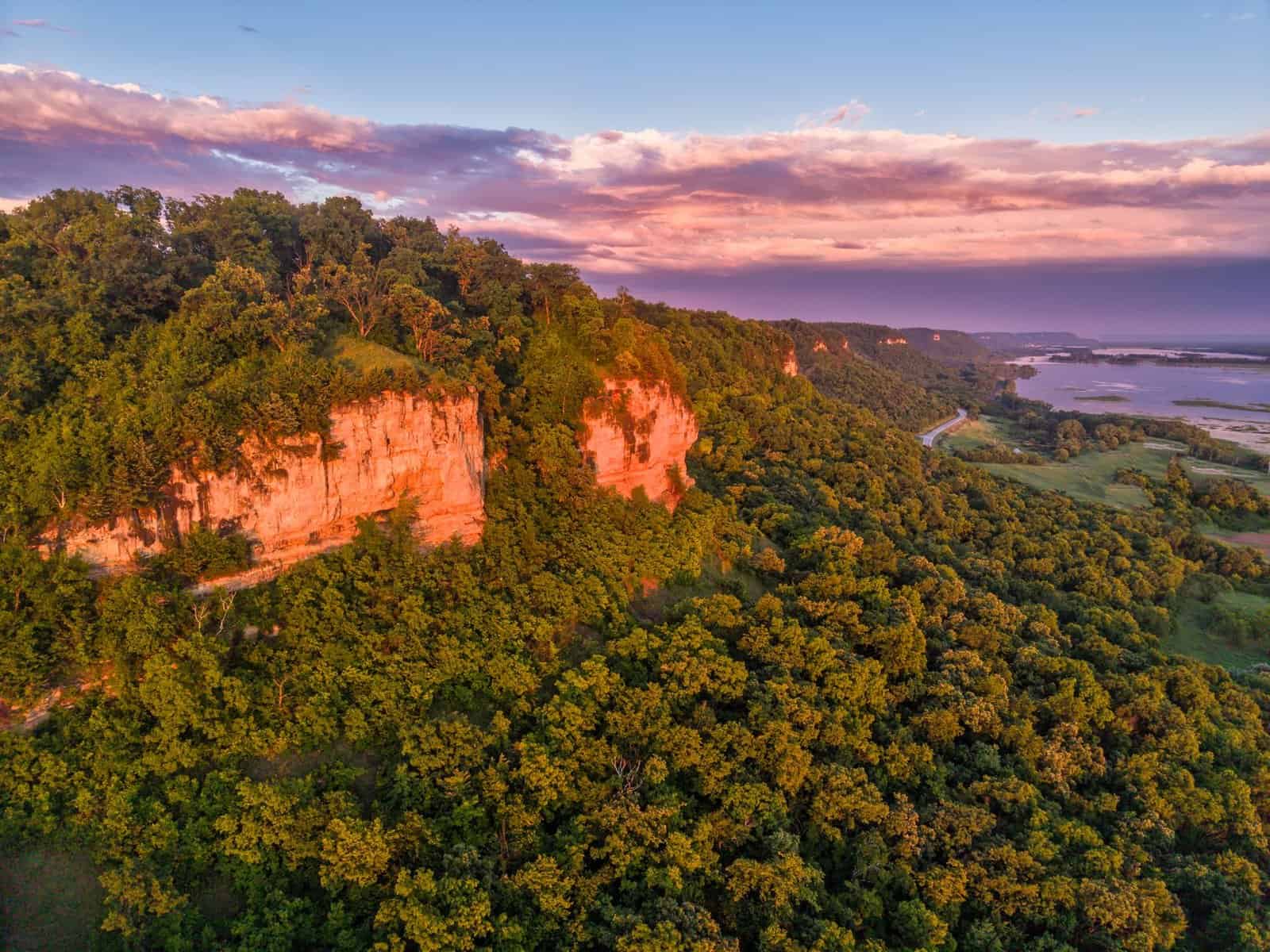
In November, the sun sits lower in the sky, and the light on the bluffs and the water can be dramatic, especially in the early morning and late afternoon. Fog sometimes forms over the river on cold mornings, then burns off as the day warms. The overlooks in Alma, Perrot State Park, and Prescott are good places to watch the light change.
The Bottom Line on the Wisconsin Great River Road
Wisconsin’s stretch of the Great River Road is one of the most scenic drives in the Midwest, and late fall shows off the river and its bluffs. Stop in Prescott, Maiden Rock, Stockholm, Pepin, Alma, Fountain City, Trempealeau, and Prairie du Chien for views, history, pie, and birds. Take your time, bring binoculars, and check hours before you go.