Savannah Home Prices Beat Two National Downturns — Why Jobs Don’t Explain the Climb
We may earn money or products from the companies mentioned in this post. This means if you click on the link and purchase the item, I will receive a small commission at no extra cost to you ... you're just helping re-supply our family's travel fund.
Savannah, Georgia’s median home price rose through the 2008 financial crisis recovery and again through the 2020 pandemic downturn, a pattern that doesn’t match most mid-sized Southern cities, where housing tends to track the national cycle fairly closely. Savannah’s median home price sits around $340,000 as of 2024 market data, roughly double what it was in 2012, and local economists point to something unusual: the city’s housing market isn’t driven primarily by local wages, it’s driven by a national appetite for a very specific kind of historic property that exists almost nowhere else in the country.
A Housing Stock That Can’t Be Replicated
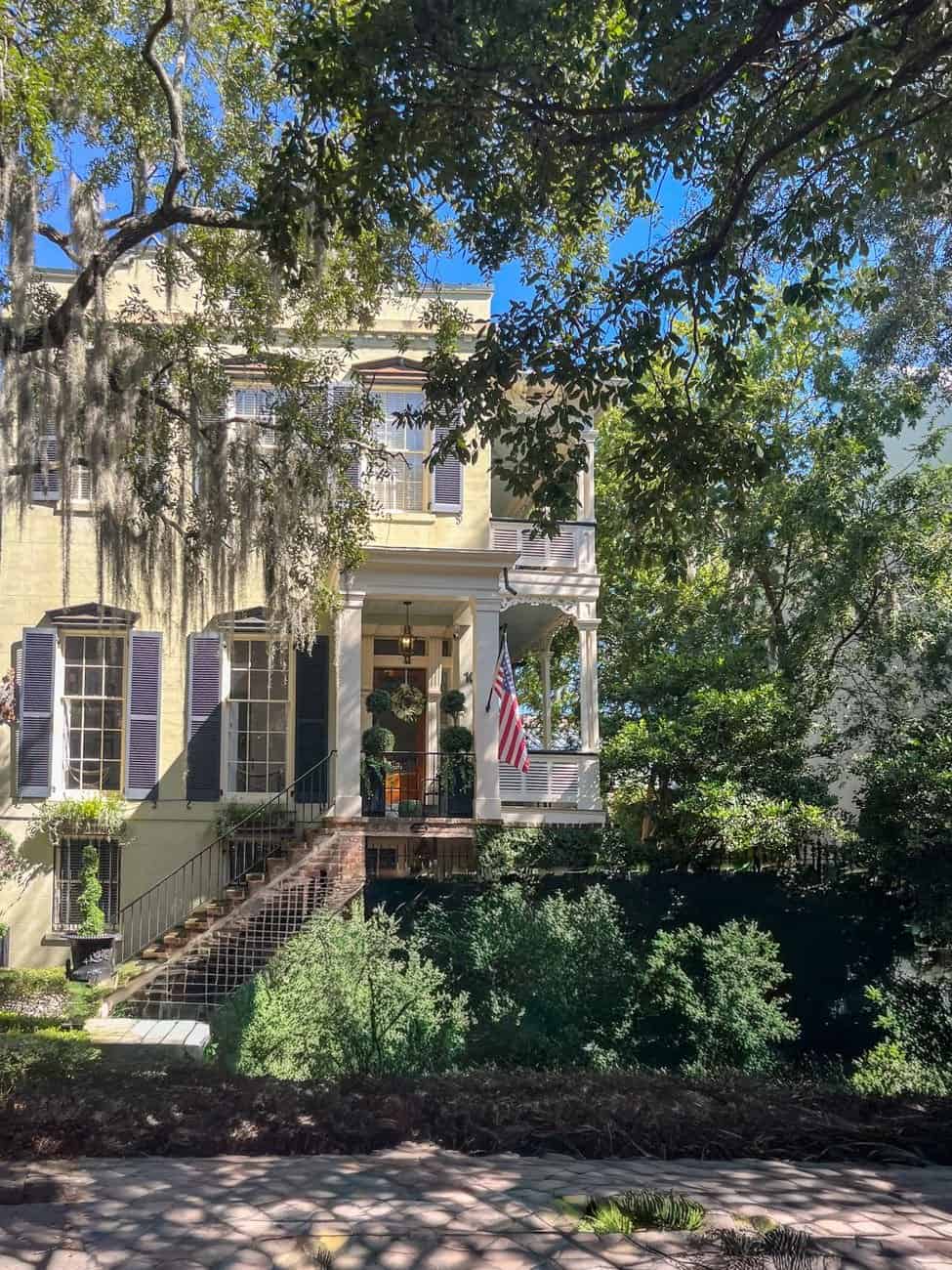
Savannah’s Historic District, one of the largest urban National Historic Landmark Districts in the country at roughly 2.5 square miles, contains thousands of buildings dating from the 18th and 19th centuries, protected by one of the strictest and oldest preservation ordinances in America, established in 1955 through the work of the Historic Savannah Foundation. You cannot build more of this inventory. Every renovated Savannah townhouse with original heart-pine floors and a walled courtyard is a fixed, non-replicable asset, and that scarcity has made the market behave more like fine art or rare real estate in cities like Charleston or New Orleans than like typical suburban housing.
This matters because most housing markets respond to local supply and demand — more jobs, more buyers, higher prices; recession, fewer buyers, falling prices. Savannah’s historic core partially decouples from that logic because its buyer pool is national and even international, including a steady stream of buyers relocating specifically for the architecture and lifestyle rather than for a job opportunity in Savannah itself.
The Film and Tourism Effect
- Georgia’s film tax incentive program, one of the most generous in the country, has driven a substantial production economy into Savannah, with productions using the historic squares as filming locations
- Savannah College of Art and Design, SCAD, has purchased and renovated dozens of historic buildings since the 1980s, directly increasing preserved inventory values
- Tourism brings an estimated 14 million visitors annually to Savannah and Chatham County, according to local tourism authority estimates, sustaining a short-term rental market that competes directly with the long-term housing supply
- Short-term rental restrictions passed by the city in recent years have aimed to slow the conversion of historic homes into full-time Airbnbs, with mixed results
SCAD’s role is especially underrated in explaining Savannah’s price resilience. The art and design school has systematically bought and restored historic buildings across downtown since its founding in 1978, effectively acting as a well-funded, mission-driven preservation developer that has both protected historic stock and steadily reduced the available inventory, tightening supply further.
What Rising Prices Have Displaced
The flip side of Savannah’s remarkable price resilience is that longtime residents, particularly in historically Black neighborhoods adjacent to the tourist core like the Historic Landmark District’s western edges, have been pushed outward as property values and short-term rental conversions accelerated. Local housing advocates have raised concerns for years about displacement pressure in neighborhoods that were majority-Black and working-class for generations before becoming attractive to renovation buyers.
Savannah’s city government has experimented with affordable housing set-asides and short-term rental caps, but the fundamental tension remains: a housing stock that’s globally desirable and legally frozen in size will keep rising in price regardless of what happens to local wages, unless the city finds ways to expand affordable supply outside the historic core, in neighborhoods that don’t carry the same preservation restrictions or tourism appeal.
Savannah’s housing market is, in that sense, a preview of what happens to any city that combines strict, successful historic preservation with strong national demand: prices become almost entirely disconnected from the local economy, rising and falling on national buyer sentiment rather than Savannah’s own job market.
The Port That Nobody Associates With Savannah’s Charm
What tourists rarely notice is that Savannah is also home to one of the busiest container ports in the country, the Georgia Ports Authority’s Garden City Terminal, which has grown into the third-largest container port in the United States by volume. That industrial economy runs almost entirely separate from the historic district’s tourism economy, employing thousands in logistics, shipping, and manufacturing, and it has attracted major corporate investment, including large distribution centers built by national retailers along the interstate corridors well outside the tourist zone.
This split economy — a globally recognized historic tourism district generating national real estate demand, layered on top of one of the busiest ports on the East Coast generating industrial and logistics jobs — gives Savannah an unusual economic resilience compared to cities that depend on tourism alone. When hotel occupancy softens, the port keeps running; when shipping volume dips, tourism keeps drawing visitors. Few visitors walking through the shaded squares of the historic district realize the same city is also one of the country’s most important shipping gateways.
Hyundai’s massive electric vehicle and battery manufacturing complex, under construction in nearby Bryan County since 2022 and representing one of the largest economic development investments in Georgia history, adds a third leg to the region’s economy that has nothing to do with either tourism or the historic port trade. That project alone is projected to bring thousands of manufacturing jobs to the Savannah metro area, a scale of industrial investment that will likely push housing demand even further outward from the historic core into surrounding Chatham, Bryan, and Effingham counties over the next decade.
What This Means for the Next Decade
Savannah is on track to become a case study in how a legacy tourism economy, a major industrial port, and a brand-new advanced manufacturing sector can all expand simultaneously within the same metro area without directly competing for the same land or labor pool, since each draws on distinct geography and distinct workforce skills. Housing analysts watching the region expect continued price appreciation in the historic core driven by national demand, alongside a separate, faster-growing wave of new construction in the outer counties driven by manufacturing wages, a bifurcation that will likely make Savannah’s overall median home price figures increasingly misleading as a description of any single, unified housing market.