Roswell’s UFO Story Made It Famous—But Dairy and the Air Force Actually Keep This New Mexico City Economy Running
We may earn money or products from the companies mentioned in this post. This means if you click on the link and purchase the item, I will receive a small commission at no extra cost to you ... you're just helping re-supply our family's travel fund.
Roswell, New Mexico’s name has become globally synonymous with UFO conspiracy culture since a rancher found debris on his property in 1947 that the U.S. military initially described, then quickly recharacterized, generating a controversy that never fully faded and eventually spawned an entire tourism industry built around alien mythology. Yet the city’s actual year-round economy has comparatively little to do with extraterrestrials, resting instead on dairy processing, a regional air cargo and aviation testing industry, and a legacy Air Force presence that shaped the city’s infrastructure decades before the UFO story ever existed.
What the UFO Economy Actually Generates
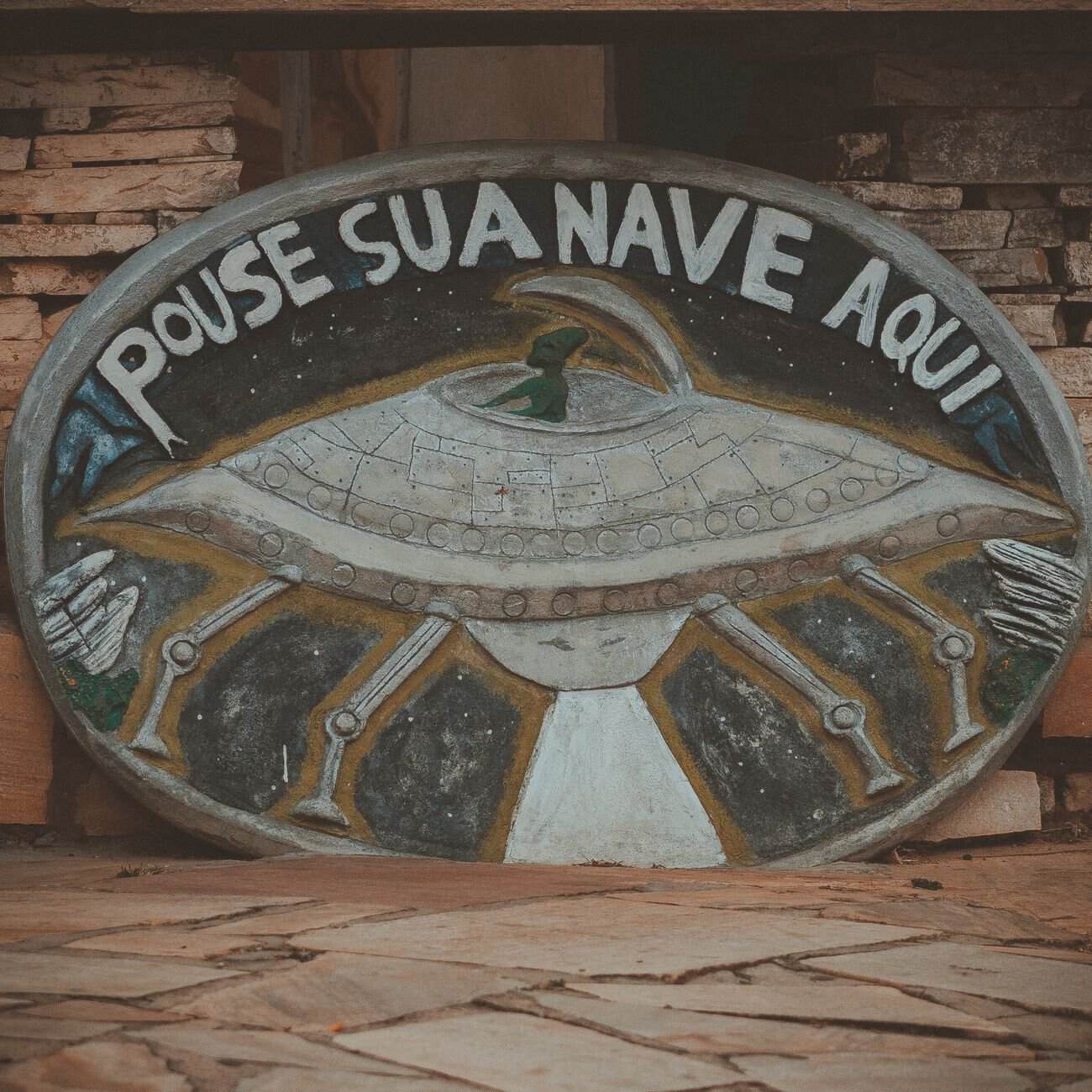
The International UFO Museum and Research Center, along with an annual UFO Festival held each July, draws visitors from across the country and internationally, generating a meaningful but ultimately modest slice of the city’s roughly $1 billion metro-area economy. Local business owners along Main Street have leaned heavily into alien-themed branding, from extraterrestrial murals to UFO-shaped streetlights, a deliberate civic decision to embrace the story commercially even as many residents remain skeptical of the original 1947 incident’s more sensational interpretations.
This UFO tourism economy is genuinely significant for downtown Roswell specifically, supporting restaurants, gift shops, and hotels that likely wouldn’t exist in a city of Roswell’s modest size and remote southeastern New Mexico location otherwise, but it represents a small fraction of total citywide employment compared to the industries that actually anchor the broader Chaves County economy.
The Industries Locals Actually Work In
- Leprino Foods and other dairy processing operations make southeastern New Mexico one of the more significant dairy-producing regions in the country, an unexpected agricultural identity for a state better known nationally for chile and cattle ranching
- Roswell International Air Center, built on the site of the former Walker Air Force Base, has become a significant aircraft storage, testing, and maintenance facility, taking advantage of the region’s dry climate that limits corrosion for stored aircraft
- Eastern New Mexico’s oil and gas activity, tied to the Permian Basin, provides significant employment and tax revenue for the broader region surrounding Roswell
- New Mexico Military Institute, a public military boarding school and junior college founded in 1891, remains one of the city’s most distinctive institutions and a significant source of both local employment and outside visitor spending
Walker Air Force Base, which closed in 1967 as part of a broader wave of Cold War-era base closures, left behind extensive runway and hangar infrastructure that the city successfully repurposed into the air cargo and aircraft storage operation that exists today, a redevelopment success story that gets far less attention than the UFO story despite arguably having a larger sustained economic impact on the city.
Why the UFO Story Still Dominates Roswell’s National Image
Roswell’s civic and tourism leadership made a deliberate choice decades ago to lean into the UFO association rather than fight it, recognizing that the story had already become permanently attached to the city’s name in national and international popular culture regardless of local preference, and that resisting the association would forgo real tourism revenue without actually changing outside perception. This calculated embrace has made Roswell one of the clearer examples of a city whose external brand identity and internal economic reality have diverged almost completely, yet coexist without much apparent local tension.
Local residents interviewed by regional and national media over the years have expressed a fairly consistent mix of mild amusement and pragmatic acceptance about the UFO association, generally acknowledging its tourism value while pointing out, often with some exasperation, that visitors expecting a city entirely organized around alien culture find instead a fairly ordinary regional agricultural and aviation hub with one very effectively marketed downtown tourist district layered on top.
What Roswell’s Story Reveals About Place Branding
Roswell offers an unusually clean example of how a single historical incident, regardless of its actual significance to a place’s broader economy or identity, can permanently define outside perception in a way that becomes essentially impossible to reverse once it takes hold in national media and popular culture. Cities facing similar single-story branding challenges, whether tied to a disaster, a scandal, or a strange event, have sometimes studied Roswell’s approach of leaning into the association commercially rather than fighting a losing battle against a narrative already fixed in the public imagination.
The gap between Roswell’s UFO reputation and its dairy-and-aviation reality ultimately says less about the city itself than about how national attention functions: a single vivid, easily retold story will almost always outcompete a more accurate but less immediately interesting account of a place’s actual day-to-day economic life, no matter how much larger that mundane reality is in practice. Similar single-story branding dynamics have shaped outside perception of other small American towns, from Sedona’s New Age reputation overshadowing its ranching history to Salem, Massachusetts’s witch trial association dominating a city whose modern economy runs largely on unrelated maritime and educational institutions, suggesting Roswell’s situation is a particularly vivid example of a pattern that recurs whenever a single dramatic historical episode becomes permanently attached to a place name in the national imagination. Chaves County’s broader agricultural economy, dominated by dairy and pecan farming alongside cotton and alfalfa, receives essentially no national attention despite representing a considerably larger and more stable share of regional employment than the tourism generated by the UFO Museum and Festival, a disparity in attention that mirrors similar mismatches between economic reality and national perception found in numerous other small American cities defined externally by a single memorable event rather than their actual day-to-day economic base. Roswell’s public school system and local college, Eastern New Mexico University-Roswell, round out an institutional base that, combined with the dairy, aviation, and military-legacy employment already described, gives the city a considerably more conventional and stable economic profile than its outside reputation as an alien-tourism curiosity would suggest to anyone who hasn’t spent meaningful time there. Chaves County’s unemployment rate has generally tracked close to New Mexico’s statewide average in recent years, further evidence that Roswell’s underlying economy functions as an unremarkable regional hub rather than the fringe curiosity its national reputation implies.