Burlington’s Housing Shortage Is Competing With Its Own Ski Towns for Workers—What Visitors Should Know
We may earn money or products from the companies mentioned in this post. This means if you click on the link and purchase the item, I will receive a small commission at no extra cost to you ... you're just helping re-supply our family's travel fund.
Burlington, Vermont’s rental vacancy rate has hovered near or below 2% for much of the past decade, according to Vermont Housing Finance Agency data, one of the tightest rental markets in New England, and the shortage has grown severe enough that Burlington now competes directly with nearby ski towns like Stowe and Killington for the same limited pool of service workers, teachers, and healthcare staff who simply cannot find anywhere affordable to live within a reasonable commute of either place.
The city’s geography compounds the problem in ways that don’t affect most small American cities: Lake Champlain forms Burlington’s entire western boundary, eliminating any possibility of westward expansion, while the University of Vermont and its medical center occupy a substantial share of the city’s remaining developable land on the east side, leaving very little room for the kind of horizontal residential growth that easing-housing-pressure cities elsewhere have relied on.
A Zoning Code Built for a Smaller City
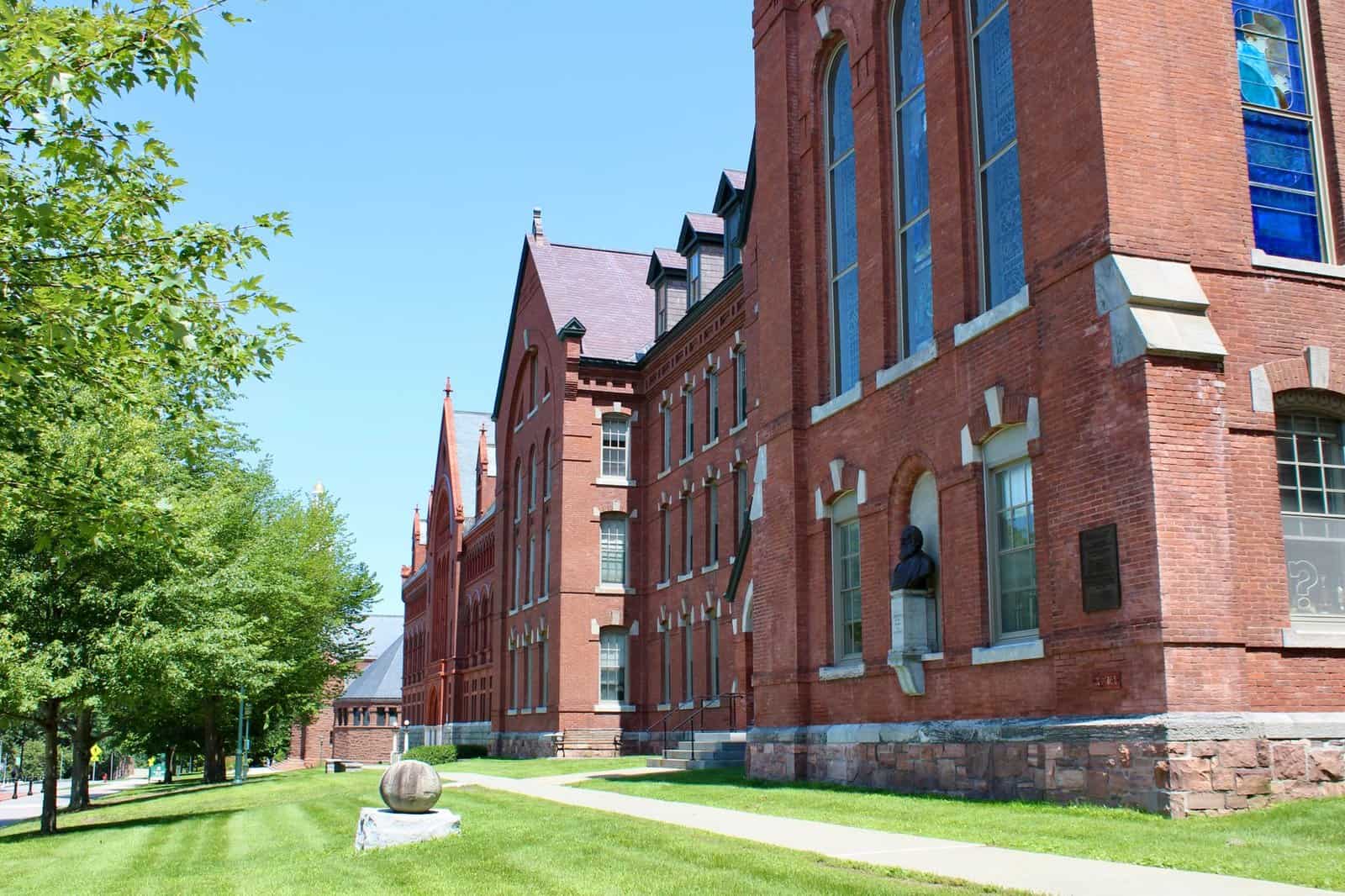
Burlington’s zoning code, largely unchanged in its fundamental structure since the mid-20th century, restricts much of the city to single-family and low-density residential use, a pattern common across small American cities built before the current housing shortage but increasingly recognized locally as a direct contributor to the current crisis. The city council has debated significant zoning reform multiple times over the past decade, including proposals to allow greater density near the University of Vermont campus and downtown core, with mixed and often slow-moving results given Vermont’s broader tradition of local control over land use decisions.
Act 250, Vermont’s statewide land use and development law passed in 1970 specifically to prevent unchecked sprawl and protect the state’s rural character, adds another layer of regulatory review that, while broadly popular among Vermonters for preserving the state’s landscape, has made large-scale housing development measurably slower and more expensive to permit than in states with less rigorous environmental review requirements.
Who Actually Struggles to Find Housing
- University of Vermont Medical Center, the region’s largest employer, has publicly acknowledged housing availability as a recruitment and retention challenge for nursing and support staff
- Public school teachers in the Burlington School District increasingly commute from towns 20 to 30 minutes away where rental costs are meaningfully lower
- Restaurant and retail workers downtown often share apartments with multiple roommates well into their thirties, a pattern more commonly associated with far larger, more expensive coastal cities
- Refugee resettlement programs, which have brought a substantial New American population to Burlington over the past two decades, face particular strain finding available units for larger families
The competition with ski towns adds a distinctive regional wrinkle: Stowe and other nearby resort communities have their own severe workforce housing shortages driven by second-home ownership and short-term rental conversion, meaning workers squeezed out of Burlington don’t have an obvious lower-cost alternative nearby, unlike workers in many metro areas who can simply move to a cheaper suburb.
What the City Has Tried
Burlington voters and city officials have pursued several targeted responses, including a municipal Housing Trust Fund that supports affordable housing development, revisions to accessory dwelling unit rules to allow more homeowners to add rental units on existing lots, and increased density allowances in specific downtown and near-campus zones. The Champlain Housing Trust, one of the largest community land trusts in the country, has also played an outsized role in Burlington specifically, permanently preserving affordability on a meaningful share of the city’s housing stock by separating land ownership from home ownership.
Despite these efforts, housing production has consistently lagged behind demand growth driven by University of Vermont enrollment increases, healthcare sector job growth, and pandemic-era remote worker relocation from more expensive parts of the Northeast seeking Vermont’s quality of life at what initially appeared to be a relative discount, though that discount has narrowed considerably as prices have risen.
The Broader Vermont Housing Problem Burlington Represents
Vermont as a whole has one of the oldest housing stocks in the country, with a substantial share of homes built before 1970 and increasingly costly to maintain, insulate, and bring up to modern building code, a statewide challenge that compounds Burlington’s specific supply constraints. The state legislature has taken up housing reform as a recurring priority in recent sessions, including efforts to streamline Act 250 review specifically for housing projects, reflecting a growing recognition that Vermont’s traditionally strict land-use protections, while environmentally valuable, have real economic costs when they collide with an acute, statewide housing shortage.
What Burlington’s situation ultimately illustrates is how geographic constraint, legacy zoning, historically popular but restrictive environmental review, and genuine economic growth can combine to produce a housing crisis in a small city of just 45,000 people that rivals, in relative severity, shortages typically associated with much larger and more famous American metro areas. Comparable small cities elsewhere in New England, including Portland, Maine, and Portsmouth, New Hampshire, have faced strikingly similar dynamics, suggesting Burlington’s crisis reflects a broader regional pattern of geographically constrained, historically preserved small cities colliding with renewed demand for smaller-city living rather than any uniquely Vermont-specific policy failure. Housing researchers who study the region increasingly treat Burlington as a case study precisely because its combination of constraints, water on one side, an anchor institution on the other, and a deep tradition of local land-use control, makes the underlying tensions unusually visible and well documented compared to sprawling metro areas where the same pressures diffuse across dozens of municipalities instead of concentrating in one small city government’s hands. Vermont’s overall population growth has remained modest by national standards even as Burlington’s specific housing pressure has intensified, underscoring that the crisis stems less from overwhelming statewide demand and more from an unusually severe mismatch between where people specifically want to live, near the state’s only real urban amenities and its flagship university and medical center, and where the state’s zoning and geography actually permit new housing construction to happen at meaningful scale. Some regional planners have proposed that satellite communities like Winooski and South Burlington absorb a larger share of the metro area’s housing growth going forward, effectively formalizing what has already been happening informally as workers priced out of Burlington proper settle in these adjacent, somewhat less constrained municipalities instead.