Ricketts Glen’s Falls Trail Passes 21 Waterfalls. Here’s Why Mid-November Is Your Last Safe Window Until Spring
We may earn money or products from the companies mentioned in this post. This means if you click on the link and purchase the item, I will receive a small commission at no extra cost to you ... you're just helping re-supply our family's travel fund.
Twenty-one named waterfalls, one trail, and a gate that usually closes before Thanksgiving. The Ricketts Glen Falls Trail is one of the most spectacular hikes in the eastern United States, and if you want to hike it before spring, the weeks between now and late November are your last safe window, because the park closes the trail every winter once ice turns its stone steps into a hazard.
The closure is not optional. Pennsylvania’s park reservation system states that every winter the Falls Trail closes due to ice and hazardous conditions. During the closure, the only people allowed on the trail are registered ice climbers and experienced hikers with crampons, an ice ax, rope, and a hiking partner, and the park says the trail is typically closed from late November until mid-to-late April. The park office can be reached at 570-477-5675 for updates.
The trail itself is worth the effort. According to regional trail guides, the full Falls Trail loop is 7.2 miles with nearly 1,000 feet of elevation change, passing 21 named cascades from the 11-foot Cayuga Falls to the 94-foot Ganoga Falls, the tallest in the park.
Why Mid-November Is Your Last Safe Window on the Ricketts Glen Falls Trail
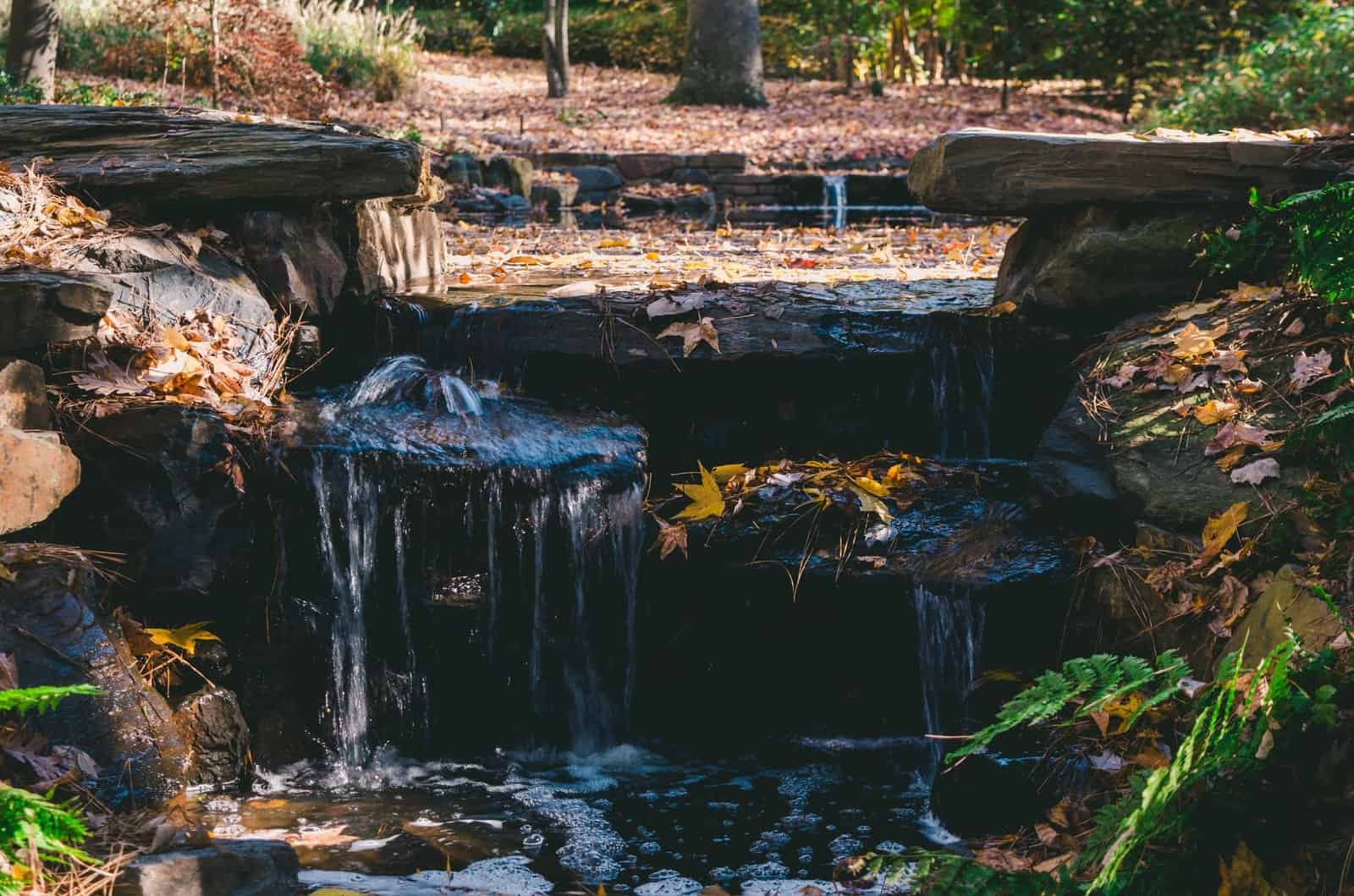
The Falls Trail runs along two steep glens, Ganoga Glen and Glen Leigh, where Kitchen Creek’s branches drop over a staircase of sandstone and shale ledges. The trail itself is a series of narrow paths and stone steps cut into the rock right beside the falls. Spray and seepage keep the rock wet year-round.
Once nighttime temperatures fall below freezing, that wet rock starts to ice over, especially in the shaded glens where the sun barely reaches in late fall. Here is why the timing matters:
- Ice forms first in the glens: The narrow, shaded valleys stay colder than the surrounding plateau, so ice appears on steps and ledges before it shows up in the parking lot.
- Wet leaves hide hazards: Fallen leaves cover the stone steps in November and are slick even before ice forms.
- Daylight is short: Sunset comes around 4:45 p.m. in mid-November. The full loop takes most hikers four to five hours.
- Closure comes without much warning: The park closes the trail when conditions demand it, typically in late November. If an early freeze arrives, the gate can go up sooner.
That makes the first half of November, on a dry day with above-freezing temperatures, the last practical window for most hikers.
What You Will See on the Trail
The 21 named waterfalls are split between the two glens, with a few more below the point where they meet, called Waters Meet. Many of the falls are named for Native American tribes and places connected to the family of R. Bruce Ricketts, the landowner who built the original trail.
- Ganoga Falls: The tallest at 94 feet, in Ganoga Glen.
- Cayuga Falls: The smallest named falls, at 11 feet.
- Waters Meet: The junction of the two glens, where a footbridge crosses Kitchen Creek.
- Old-growth forest: Below Waters Meet, the trail passes through old hemlocks and pines, some hundreds of years old.
Ricketts Glen was designated a National Natural Landmark in 1969 because of its waterfalls and old-growth forest.
How to Hike It in Late Fall
Choose the Right Route
The full loop is 7.2 miles, including a section through the old-growth forest below Waters Meet. A shorter option, about 3.2 miles, connects the tops of the two glens using the Highland Trail and skips the lower section. You still see most of the big waterfalls on the shorter loop.
Many guides, including Hiking PA, recommend starting from the Lake Rose Trailhead off Route 487 and hiking counter-clockwise: down Glen Leigh, then up Ganoga Glen, then back along the Highland Trail. Going up Ganoga’s steepest stairs rather than down them is easier on the knees and safer on wet rock.
Check Conditions the Day Before
- Call the park office: 570-477-5675 for trail status.
- Check the forecast: Look for dry days with highs above 40 degrees and no overnight freeze if possible.
- Avoid the day after rain: Rain raises the flow, which looks great, but it also soaks the steps.
Pack for Wet, Cold Conditions
- Boots with aggressive tread: Not sneakers. Waterproof hiking boots are best.
- Traction devices: Microspikes or similar traction devices can help on early ice or frost, but they do not make an iced-over trail safe.
- Trekking poles: Helpful on the many stone steps.
- Layers: The glens are cooler and damper than the plateau.
- Headlamp: Even if you plan to finish early, bring one.
- Water and food: There are no services on the trail.
- Blaze orange: Hunting is allowed in parts of the park in season. Wear bright colors on the approach and in the parking areas.
Start Early
Begin by 9 or 10 a.m. to finish with daylight to spare. Allow four to five hours for the full loop, more if you stop often for photos.
Safety on the Falls Trail
Pennsylvania’s park system rates the Falls Trail as “most difficult,” and people are injured here every year, often from slips on wet rock. Basic rules make a big difference:
- Stay on the trail: Do not climb on wet rocks for photos or step close to the edges of the falls.
- Watch your feet, then look: Stop walking when you want to look at the falls.
- Keep kids close: The trail is not suitable for very young children or anyone unsteady on stairs.
- Leave dogs home if they are not used to steep terrain: Pets must be leashed, and stone steps are hard for some dogs.
- Turn around if conditions are icy: No waterfall is worth a fall.
The Rest of the Park
Ricketts Glen State Park covers about 13,000 acres across Luzerne, Sullivan, and Columbia counties. Beyond the Falls Trail, it has:
- Lake Jean: A 245-acre lake with a beach, boat rental in summer, and lake views year-round.
- Other trails: Gentler loops through the forest and around the lake.
- Cabins and campsites: Available by reservation. Some are open in the cold months.
After the Falls Trail closes, the park stays open for other trails, winter sports, and, for those with the right gear and registration, ice climbing in the glens.
Getting There
Ricketts Glen is in northeastern Pennsylvania, north of Benton and west of Wilkes-Barre.
- From Philadelphia: About 140 miles, roughly 2.5 to 3 hours.
- From New York City: About 160 miles, roughly 3 hours.
- From Wilkes-Barre/Scranton: About 45 minutes to an hour.
Route 487 approaching the park from the south is very steep and winding. Trucks and trailers are advised to use other routes, and drivers should use low gears on the descent.
Where to Stay
Lodging near the park is limited. Options include park cabins, small motels and B&Bs in nearby towns like Benton and Laporte, and hotels in the Wilkes-Barre area, typically $100 to $180 a night in November.
What It Costs
Pennsylvania state parks do not charge an entrance fee, so hiking the Falls Trail is free. Camping and cabin rentals are extra.
Photographing the Falls in Late Fall
Late fall is one of the best times to photograph the waterfalls. The light is soft, the leaves on the ground add color, and higher flows after autumn rains make the falls fuller.
- Bring a small tripod: Long exposures smooth the water, and the glens are shaded.
- Protect your gear: Spray reaches the trail near many of the falls.
- Stay on the trail: Never climb out onto wet rocks for a shot.
- Shoot early: The glens get dark quickly in mid-afternoon in November.
Who Should Skip the Falls Trail
The Falls Trail is not for everyone, even in good conditions. Consider an easier hike elsewhere in the park if:
- You have knee, hip, or balance problems that make steep, uneven stairs hard.
- You are hiking with very young children who cannot handle steep drop-offs.
- You do not have proper boots.
- The forecast calls for freezing temperatures or rain.
If the Trail Is Already Closed
If you arrive and the Falls Trail is closed, you still have options. The park’s other trails, including loops near Lake Jean, are open, and the scenery is still beautiful. Some viewpoints near the top of the glens may be visible from safe areas, but do not go past closure signs. Plan to return in late spring, when the trail reopens and the waterfalls run high with snowmelt.
When the Trail Reopens
The park says the Falls Trail typically reopens in mid-to-late April, once the ice is gone. Spring brings the highest water flow of the year, and late spring adds green leaves and wildflowers. Call the park office before driving up to confirm it is open.
The Bottom Line
The Ricketts Glen Falls Trail packs 21 named waterfalls into a 7.2-mile loop, and the park typically closes it from late November until mid-to-late April because ice makes the rock steps dangerous. If you want to see the falls before spring, go on a dry day in early to mid-November, start early, wear real boots, call the park office first, and turn around if you find ice.