One Florida Spring Counted 932 Manatees on a Single Morning. Here’s When to Go to See a Crowd Like That
We may earn money or products from the companies mentioned in this post. This means if you click on the link and purchase the item, I will receive a small commission at no extra cost to you ... you're just helping re-supply our family's travel fund.
On January 21, 2024, researchers counted 932 manatees in the spring run at Blue Spring State Park in Orange City, Florida. It was the highest single-day count in the park’s history, topping the previous record of 736 set just weeks earlier on January 1, 2024. For anyone hoping to see Blue Spring State Park manatees in big numbers, that day shows what is possible when conditions line up.
Here is when to go: on a cold morning between late December and February, ideally a day or two after a cold front pushes through Central Florida. Manatees gather in the spring because its water stays near 72 degrees all year, while the St. Johns River outside can drop into the 50s. Arrive when the park opens at 8 a.m. The park often reaches capacity and closes its gates on cold weekend mornings, so early arrival is the difference between seeing hundreds of manatees and waiting in a line of cars.
When to Go to See a Crowd Like That
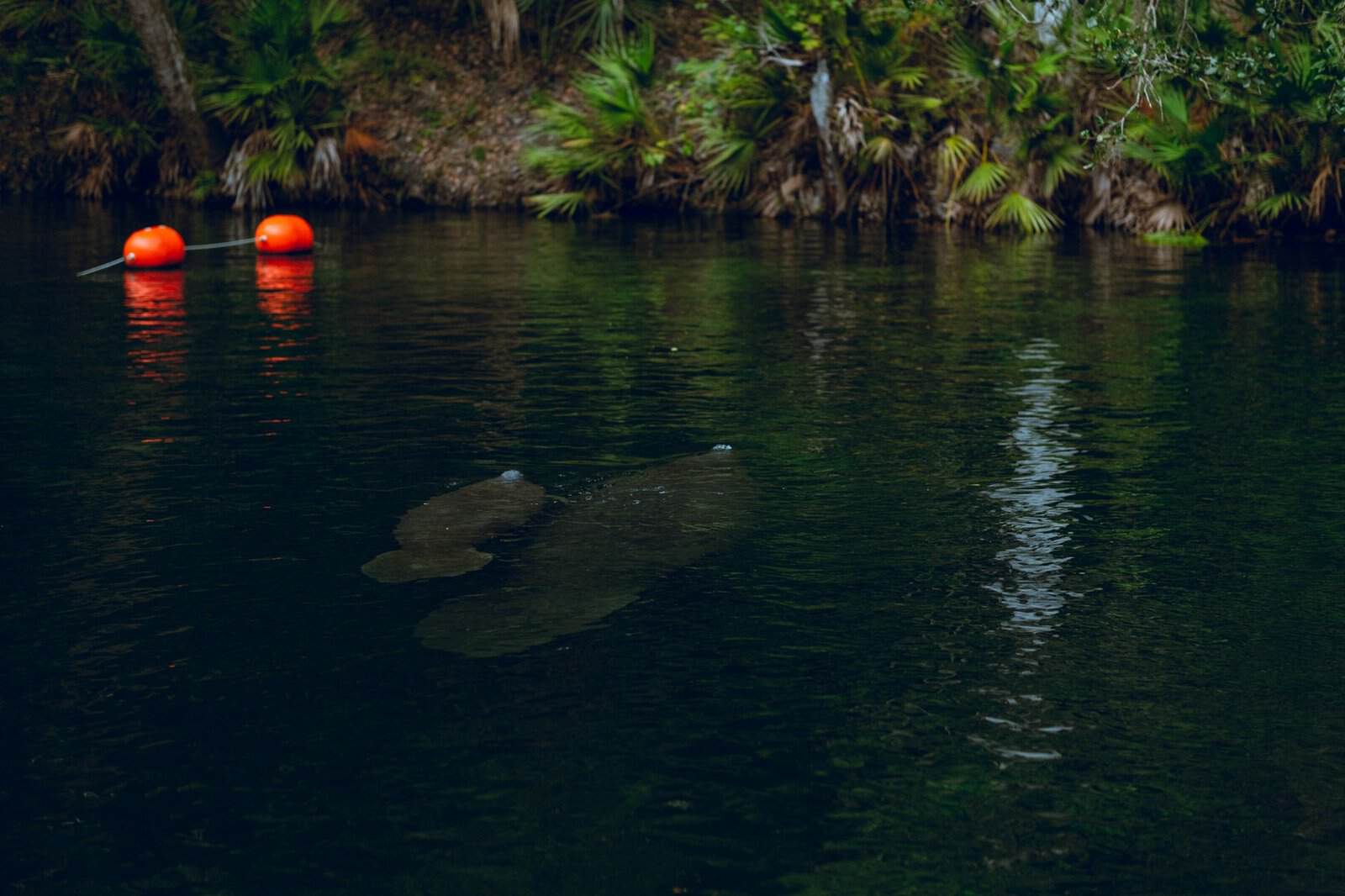
Manatee season at Blue Spring runs from roughly mid-November through March. That is when the park focuses on protecting the animals, and it closes the spring run to swimming, tubing, and paddling. Early in the season, counts are usually modest. The big numbers come later, once winter cold fronts push river temperatures down.
The pattern is simple. Manatees are large but have little body fat for insulation, and they can suffer from cold stress when water temperatures drop below about 68 degrees for long. When a front cools the river, they move into the warm spring run to wait it out. The colder and longer the cold snap, the more animals pack in.
So timing breaks down like this:
- Best months: late December through February, with January often producing the highest counts.
- Best days: one to three days after a strong cold front, when air temperatures are low and the river has cooled.
- Best time of day: early morning, when manatees are most concentrated in the spring run after a cold night.
- Weaker days: warm spells, when manatees may leave the spring to feed in the river.
If you can only go on one day, pick a cold weekday morning in January. You get strong numbers and smaller crowds than a weekend.
How the Count of Blue Spring State Park Manatees Grew
The numbers at Blue Spring tell a long recovery story. In 1970, researchers counted only 14 manatees using the spring. Protections followed, including the park’s winter closure to water activities and boating rules in the St. Johns River.
The count has risen sharply over the decades. In early 2023, the park recorded a then-record count of 729. The 736 count on New Year’s Day 2024 broke that, and the 932 count on January 21, 2024, set the current record. Blue Spring has become the most important winter gathering place for manatees on the St. Johns River.
The counts come from Save the Manatee Club researchers and park staff, who survey the spring run regularly during the season and post daily numbers. Checking those posts before you leave is one of the best ways to decide whether a trip is worth it that day.
What You Will See at Blue Spring State Park
The spring run is a narrow, clear channel that flows about a third of a mile from the boil, where water rises from underground, to the St. Johns River. A boardwalk runs along the run, with several viewing platforms. On a good morning, manatees rest shoulder to shoulder below you, surfacing every few minutes to breathe.
You may see:
- Mothers with calves, which stay close together in the warm water.
- Manatees with boat-propeller scars, which researchers use to identify individuals.
- Fish like gar, tilapia, and catfish sharing the water.
- Wading birds and occasional alligators along the edges.
Because the water is clear, you can often see manatees rolling, nuzzling, and resting near the bottom. Polarized sunglasses cut surface glare and make it easier to see into the water.
Getting Into the Park on Cold Mornings
Blue Spring is popular, and on cold days the park often fills early. When the lots reach capacity, rangers close the entrance and hold cars until space opens. On peak days, the wait can stretch for a long time.
To improve your chances:
- Arrive before 8 a.m. so you are near the front of the line when the gates open.
- Visit on a weekday if you can.
- Carpool to reduce the number of cars your group needs.
- Have the entry fee ready to speed things up.
The park’s entry fee is per vehicle and is modest by attraction standards. Check the Florida State Parks website for the current rate. The park opens at 8 a.m. year-round and closes at sundown.
Rules During Manatee Season
The park closes the spring run to all water activities during manatee season, and the rules are strict for good reason. Manatees are a protected species, and disturbing them can stress animals that are already conserving energy.
On the boardwalk:
- Keep your voice down and avoid tapping on rails.
- Do not throw anything into the water, including food.
- Keep drones on the ground. Drones are not allowed over the spring.
- Stay on the boardwalk and observation decks.
Boat tours on the St. Johns River operate from the park in the area outside the spring run. They are a good way to see river wildlife, but tour boats do not enter the protected spring run in winter.
Where Blue Spring Is and How to Get There
Blue Spring State Park is in Orange City in Volusia County, about 30 miles north of Orlando and roughly the same distance west of Daytona Beach. Most visitors come by car via Interstate 4, which makes it an easy morning trip from either city.
The nearby town of DeLand has a historic downtown with restaurants and shops, and it makes a good stop after a morning at the spring. The park itself has a concession area with snacks and a small store, plus a campground and cabins for overnight stays. Cabins are popular in winter and book far ahead, but staying inside the park means you skip the morning gate line.
What to Bring for a Cold Morning Visit
Central Florida cold snaps can surprise visitors. Morning temperatures on peak manatee days can sit in the 30s or 40s, especially near the river.
- A warm jacket, hat, and gloves.
- Polarized sunglasses to see through surface glare.
- Binoculars for watching animals farther down the run.
- A camera with a polarizing filter if you want clear underwater shots.
- Snacks and water, especially if you face a long gate wait.
The boardwalk is flat and accessible, so it works for strollers and wheelchairs.
Other Places to See Manatees in Winter
Blue Spring is the headline, but it is not the only option in Florida. If the park is full or the count is low, consider other warm-water sites:
- Crystal River and Three Sisters Springs on the Gulf Coast, where guided swims are allowed under rules.
- Manatee Lagoon in Riviera Beach, a free viewing center near a power plant’s warm-water outflow.
- TECO Manatee Viewing Center in Apollo Beach near Tampa.
- Homosassa Springs Wildlife State Park, which has an underwater observatory.
Each has its own rules and conditions. Blue Spring stands out for its clear water and the sheer number of manatees that can pack into a small space on the right morning.
How to Read the Daily Manatee Count
During the season, the park and Save the Manatee Club post a daily count, usually based on an early-morning survey of the spring run. Researchers paddle or walk the run and tally animals, often identifying regulars by scar patterns. That number is the best single tool for planning a visit.
A few patterns help you read it:
- A count in the dozens usually means the river is warm and many manatees are out feeding.
- A count in the hundreds usually follows a cold front and means the run is packed.
- Counts can swing sharply from one day to the next as the weather changes.
- The count reflects the morning. By afternoon on a warming day, some animals may leave.
If the forecast shows a cold front arriving midweek, plan to visit one or two mornings after it passes. That is when the river is coldest and the spring is most crowded. Checking the count the night before and again in the morning lets you decide whether the drive is worth it.
A Simple Morning Plan
For a first visit, keep it simple. Leave early enough to reach the entrance before 8 a.m. Walk straight to the boardwalk and head toward the boil end of the run, where water is warmest and animals often cluster. Spend at least an hour moving slowly between platforms, since manatees shift position and surface at different spots.
Then warm up with a coffee from the concession, walk the Pine Island Trail if you want a short hike, or join a St. Johns River boat tour from the park. Finish with lunch in DeLand. That gives you the manatees at their best and the rest of the day to explore the area.
Why the 932 Count Matters
Florida’s manatee population has faced serious threats in recent years. Habitat loss, seagrass die-offs, and boat strikes have taken a toll, and an unusual mortality event affected many animals in the early 2020s. Against that backdrop, the record count at Blue Spring is a reminder of how important warm-water refuges are.
When you watch hundreds of manatees resting in a clear spring on a cold morning, you are seeing a habitat that works. The spring gives them warmth, safety, and space, and visitors who follow the rules help keep it that way. If you time your trip right, you might see a crowd close to that record morning in January 2024.