Mount Rushmore Gets the Postcards. The Black Hills Have 1.2 Million Acres Most Visitors Never See.
We may earn money or products from the companies mentioned in this post. This means if you click on the link and purchase the item, I will receive a small commission at no extra cost to you ... you're just helping re-supply our family's travel fund.
Mount Rushmore National Memorial and the Sturgis Motorcycle Rally dominate the Black Hills’ reputation so thoroughly that many visitors treat the entire region as a single stop rather than the sprawling, 1.2-million-acre national forest it actually is. The Black Hills National Forest spans a substantial portion of western South Dakota and a slice of Wyoming, and the sites most visitors skip in favor of the two headline attractions include some of the region’s most distinctive terrain and history.
What’s Actually in the Black Hills Beyond the Two Famous Stops
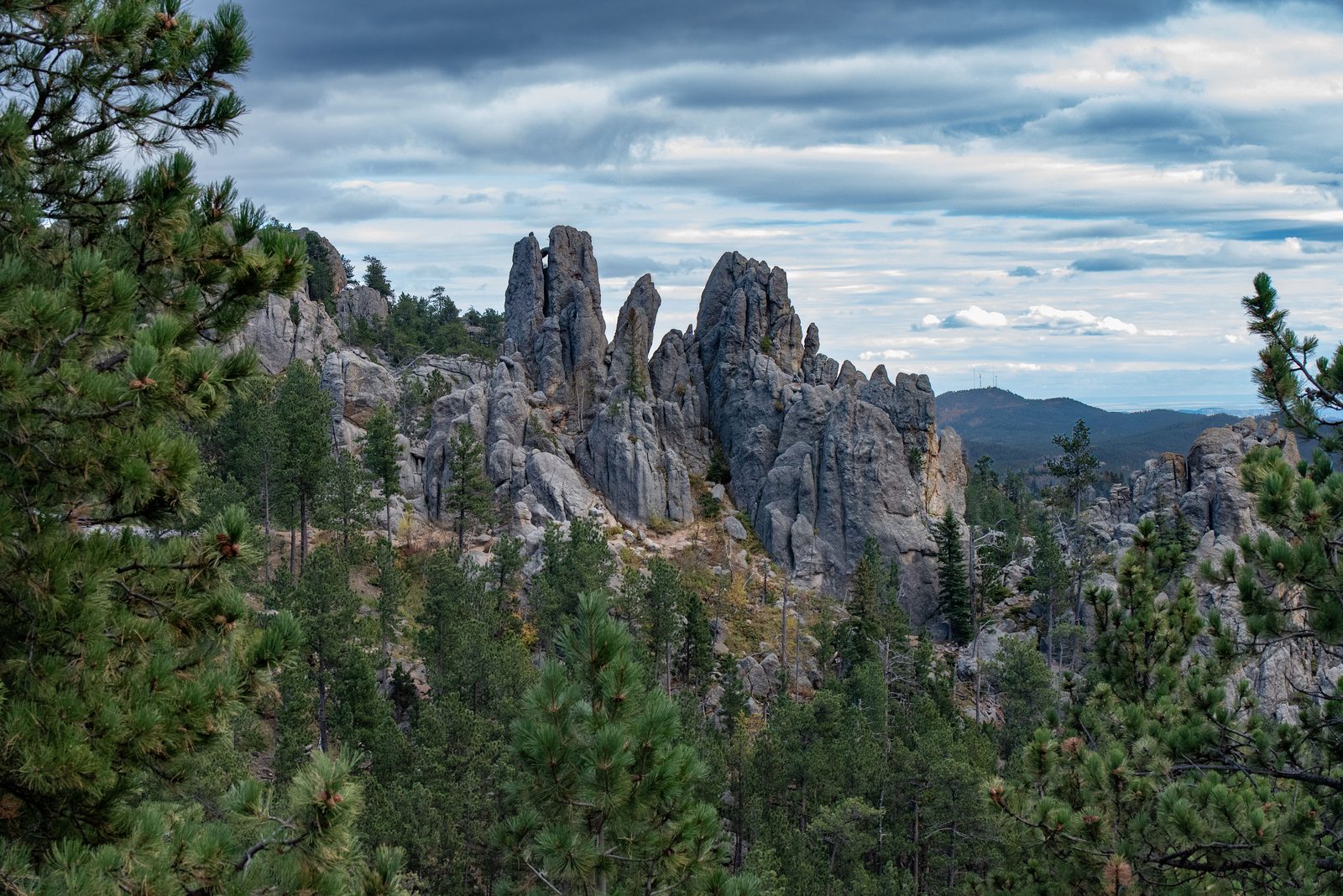
Custer State Park, at roughly 71,000 acres, holds one of the largest publicly owned bison herds in the country and the Needles Highway, a granite-spire mountain drive that predates Rushmore’s own carving and was specifically routed by Governor Peter Norbeck to showcase the region’s rock formations. Spearfish Canyon, a limestone gorge along US-14A, offers waterfalls and fall foliage driving considered by many regional travel writers to rival anything in the more heavily marketed parts of the Rockies, and Jewel Cave National Monument, one of the longest cave systems in the world by mapped mileage, sits a short drive from Rushmore with a fraction of its visitor traffic.
The History Sturgis and Rushmore Overshadow
- The Black Hills hold deep spiritual and historical significance to the Lakota Sioux, who call the region Ȟe Sápa and consider it sacred land seized in violation of the 1868 Fort Laramie Treaty after gold was discovered there in the 1870s
- Deadwood, a former Gold Rush boomtown now built around casino tourism, retains a genuinely preserved Wild West downtown with the graves of Wild Bill Hickok and Calamity Jane at Mount Moriah Cemetery
- The Crazy Horse Memorial, an ongoing mountain carving project started in 1948 and still under construction, was specifically initiated as a Lakota-led counterpoint to Rushmore, funded entirely through private donations and visitor admission rather than any federal money
- Wind Cave National Park, one of the first cave systems in the world to receive national park protection in 1903, sits in the southern Black Hills with a fraction of Rushmore’s visitor count despite comparable geological significance
Why Sturgis Distorts the Region’s Image for One Week a Year
The Sturgis Motorcycle Rally draws several hundred thousand attendees to a town of under 7,000 residents for roughly ten days each August, an event so large relative to the region’s normal population that it temporarily reshapes traffic patterns, lodging availability, and pricing across the entire Black Hills, not just Sturgis itself. Visitors who plan a Black Hills trip without checking the rally’s dates sometimes find themselves accidentally caught in the middle of it, facing booked-out lodging and inflated prices region-wide; visitors who specifically want the rally experience plan around those same dates deliberately, making the calendar check equally important in either direction.
How to Actually Build a Trip Around the Full Region
A realistic Black Hills itinerary spends a day at Mount Rushmore and the Crazy Horse Memorial, a day exploring Custer State Park’s wildlife loop and Needles Highway, and at least a half-day in Spearfish Canyon or Jewel Cave, with Deadwood worked in for an evening if casino history and a Wild West downtown appeal. Rapid City, the region’s largest city, functions as the most practical base, sitting within roughly 30-45 minutes of most of the sites listed here, and offers considerably more lodging inventory and price flexibility than trying to stay directly adjacent to Rushmore itself.
How the Region’s Tribal History Shapes Visits Today
The Crazy Horse Memorial’s origin as a Lakota-initiated response to Rushmore adds a layer of context that most visitors to the region encounter only if they specifically seek it out, and several Black Hills tour operators and cultural centers now offer programming specifically focused on Lakota history and the region’s ongoing legal and cultural disputes over land taken in violation of the 1868 treaty. Visitors interested in that fuller context can find it at the Crazy Horse Memorial’s own visitor center, which explicitly frames the monument’s history in relation to the treaty violations and Rushmore’s construction.
Timing Notes for a Black Hills Trip
- Custer State Park’s annual Buffalo Roundup each fall draws its own dedicated crowd separate from the summer tourist season
- Spearfish Canyon’s fall foliage typically peaks in late September to early October, a different and often less crowded window than summer
- Booking lodging well outside Sturgis Rally week (early August) avoids both the crowding and the price surge tied to the event
The Bottom Line for Anyone Planning a Trip
Rushmore and Sturgis will always be the Black Hills’ headline acts, and they earn that status. But the region’s other 1.2 million acres are where a Black Hills trip goes from checking a box to actually understanding the place.