Medellín, Colombia Has Won Every ‘Most Transformed City’ Award Possible. Here’s What Americans Find When They Arrive
We may earn money or products from the companies mentioned in this post. This means if you click on the link and purchase the item, I will receive a small commission at no extra cost to you ... you're just helping re-supply our family's travel fund.
Medellín, Colombia’s transformation from the world’s most dangerous city (it held the title of murder capital of the world in the early 1990s, when Pablo Escobar’s operation was at its peak) to a genuinely functioning, visitable city is one of the most documented urban turnarounds in recent history. What’s less well-documented is what American travelers actually find when they land at El Dorado — what the experience is like, what it costs, and what the context requires knowing before you go.
What Medellín Looks Like in 2026
The Medellín that most tourists experience is El Poblado — the upper-class, heavily internationalized neighborhood that’s become the center of the expat and digital nomad community. El Poblado has good restaurants, cocktail bars, specialty coffee shops, and accommodation at prices that range from backpacker hostels to boutique hotels. It is, by any measure, a safe and pleasant area to stay and walk around. It is also, to a significant degree, insulated from the complexity of the broader city.
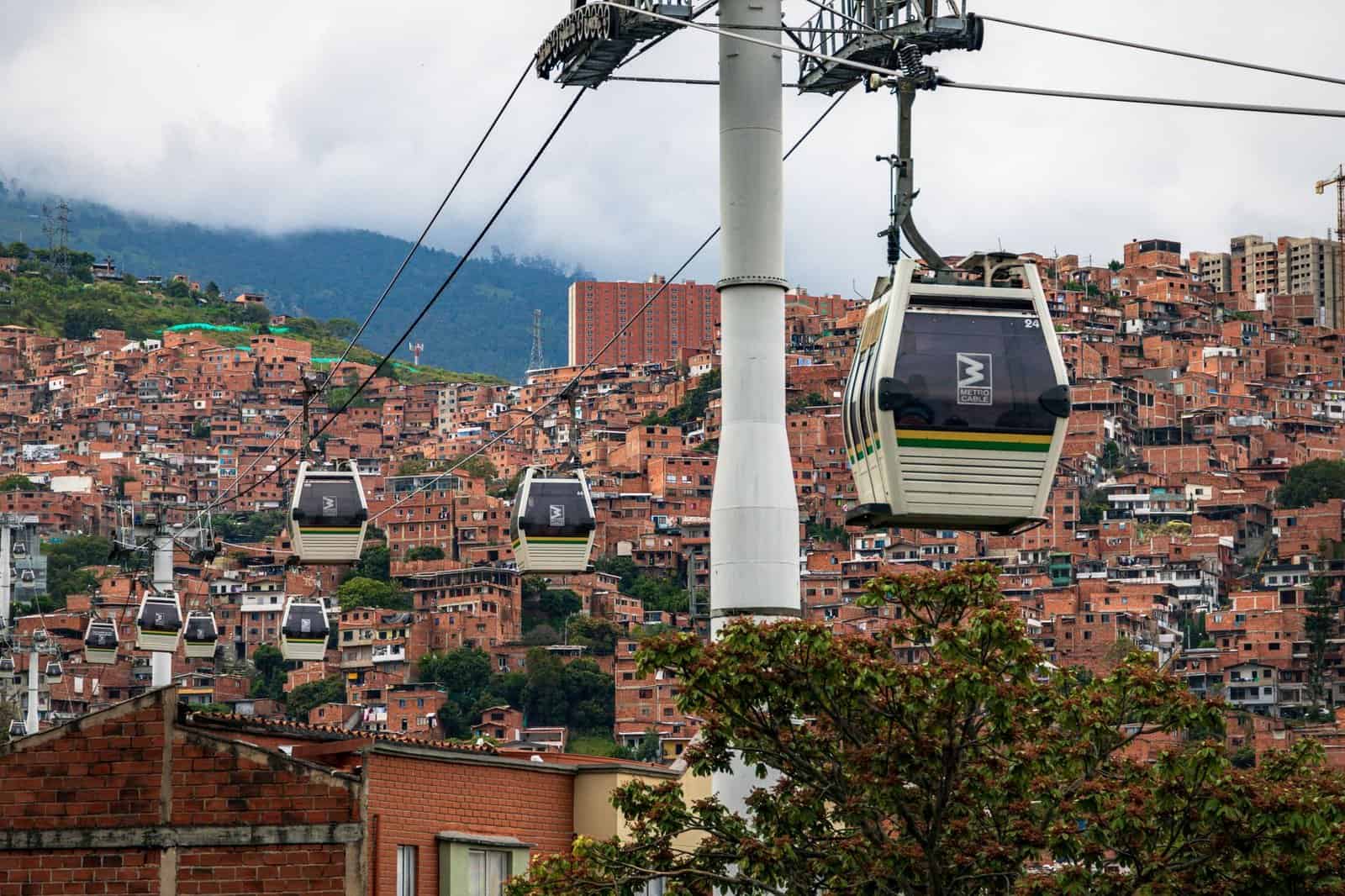
The metro system — built in the 1990s as part of Medellín’s transformation investment — connects El Poblado to the rest of the city efficiently and safely. The Metrocable gondola extensions into the hillside comunas (neighborhood districts that were once completely outside of city services) are both a functional transit system and one of the most visually spectacular urban transit experiences anywhere in the world. Riding the gondola from the metro station up into the hillsides, looking out over the city in the Valle de Aburrá, is one of the definitive Medellín experiences.
The Cost Advantage That’s Made Medellín a Remote Work Capital
Medellín’s cost of living relative to its quality level is the central attraction for the large North American and European remote worker community that has settled there since 2020. A furnished one-bedroom apartment in El Poblado rents for $600–$900 USD per month. Restaurant meals at mid-tier establishments run $8–$15 USD. A specialty coffee costs $2–$3 USD. A monthly gym membership at a quality facility costs $20–$30 USD. On a North American or European income, Medellín represents an extraordinary quality-of-life-to-cost ratio.
What American Tourists Are Getting Wrong
Several things get missed or misrepresented in the Medellín coverage aimed at English-speaking audiences. The city is significantly safer than it was — the transformation is real. It is not, by any measure, without crime risk, and tourist areas see targeted theft and scams that specifically exploit travelers who’ve absorbed the “it’s safe now” narrative without the nuance. Standard precautions that apply to any Latin American city (don’t flash expensive items, don’t walk alone in unfamiliar areas at night, use Uber rather than hailing street taxis) apply in Medellín with equal force.
The drug tourism problem is real and worth naming: Medellín’s narco history has generated a specific tourism product built around drug culture (Pablo Escobar tours, nightlife scenes) that has drawn visitors who are engaging with the city in ways that the community finds deeply offensive. Many Medellín residents whose families lived through the violence of the Escobar era view these tours as exploitative. Being a thoughtful visitor includes understanding what you’re participating in when you book a tour framed around the cartel history.
What Medellín Offers at Its Best
- The Botero Sculptures Plaza and Museo de Antioquia: Fernando Botero donated 23 of his own sculptures to a public plaza in his hometown — free, outdoors, extraordinary
- The Metro and Metrocable system: affordable, safe, extraordinary views
- The Laureles and Envigado neighborhoods: less internationalized than El Poblado, better local restaurant culture
- Colombia’s extraordinary coffee: Medellín is 2 hours from the Coffee Axis (Eje Cafetero) and the specialty coffee scene in the city is world-class
Medellín deserves its reputation as a transformed city and as a destination worth visiting. The trip rewards preparation, contextual awareness about what the transformation actually involved, and willingness to engage with the city beyond the El Poblado bubble that most short-term visitors never leave. Done well, it’s one of the most interesting urban travel experiences available to Americans right now, at prices that make the trip accessible at any budget level.