Yellowknife, Northwest Territories Has the Best Northern Lights Access in North America. Here’s What the Trip Actually Involves
We may earn money or products from the companies mentioned in this post. This means if you click on the link and purchase the item, I will receive a small commission at no extra cost to you ... you're just helping re-supply our family's travel fund.
The aurora borealis is one of the most-Googled travel experiences. Most Americans who want to see the Northern Lights think of Iceland or Norway. Both are excellent. But Yellowknife, Northwest Territories in Canada sits directly under the auroral oval — the band of maximum Northern Lights activity that rings the magnetic pole — and offers viewing conditions that are statistically superior to any European destination. The trip requires some planning and a tolerance for serious cold. Here’s what’s involved.
Why Yellowknife Is the Best Northern Lights Destination in North America
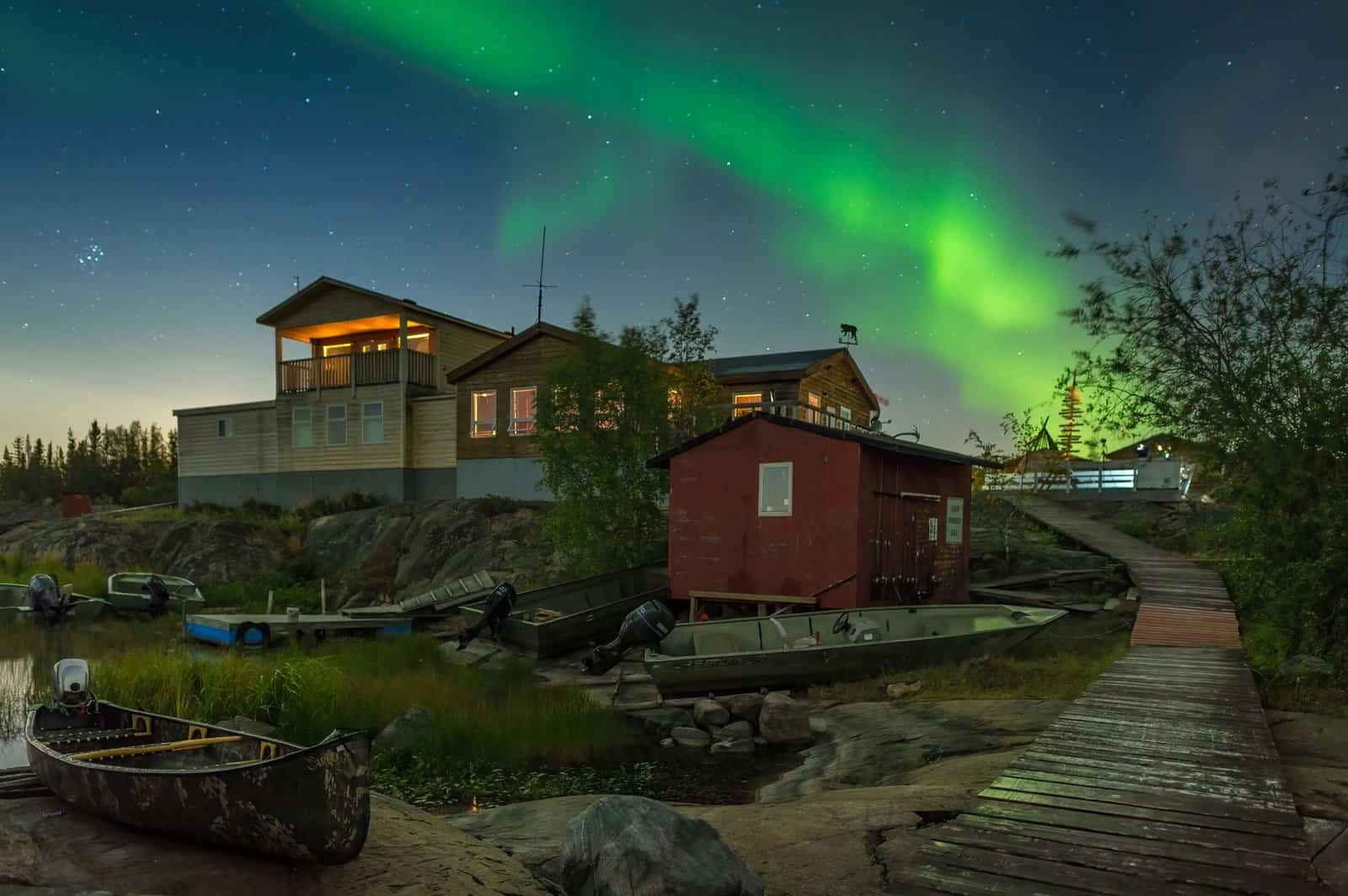
The auroral oval passes directly over Yellowknife, which means the city sits in the zone of maximum aurora frequency. Combined with a sub-Arctic continental climate that produces extremely clear, dry winter nights (the NWT has far less cloud cover in winter than coastal destinations like Iceland), Yellowknife averages over 240 nights per year when aurora activity is present. During peak periods (September–April, with the deepest winter being the most reliable), the lights appear on more than two-thirds of clear nights.
The setup around Yellowknife also makes viewing logistically simple. Prelude Lake and Frame Lake, both within 30–40 minutes of the city, have aurora viewing infrastructure (heated viewing cabins, hot food, dark sky conditions without driving hours from civilization). Tour operators who specialize in aurora chasing run nightly excursions and have learned, over decades, how to read the local sky conditions and get guests to the best viewing positions within the practical window.
How to Get There
Yellowknife is accessible by air from Calgary, Edmonton, and Vancouver — all of which have direct connections to major US hubs. The flight to Yellowknife from the connecting cities takes about 2 hours. The Canadian dollar exchange rate in 2026 makes the trip meaningfully more affordable for Americans than the CAD prices suggest — currently running approximately 25–30% favorable for USD holders.
What the Trip Costs
Per-person approximate cost (USD) for a 5-night Yellowknife aurora trip:
- Round-trip flights (US hub to Calgary/Edmonton to Yellowknife): $700–$1,100
- Hotel (5 nights, mid-range): $120–$160 CAD/night ≈ $90–$120 USD/night = $450–$600
- Aurora tour packages (3 nights): $100–$200 CAD/person/night ≈ $75–$150 USD = $225–$450
- Food (5 days): $50–$80 USD/day for meals
- Total estimated: $1,800–$2,800 per person
The Cold Reality
Yellowknife in January averages -25°C (-13°F) with wind chill regularly reaching -40°C (-40°F — the temperatures converge at that point, where Celsius and Fahrenheit are the same). This is not a challenge that clothing budgets can solve with bargain gear — proper wool base layers, insulated mid-layers, a -40°C-rated parka, insulated boots rated for the temperature, and face protection are required, not optional. Rent high-quality cold weather gear in Yellowknife rather than buying marginally adequate gear at home.
The aurora reward is proportional to the cold commitment. The people who see the lights dancing overhead for hours while sitting in a heated viewing cabin with hot chocolate are the people who prepared for the cold, booked the right tour, and timed their trip for a high solar activity period (check NOAA’s Space Weather Prediction Center forecasts before booking specific dates). The lights at Yellowknife in a good season are among the most extraordinary sights available to any human being on Earth. The trip earns every bit of its reputation among people who make it.
Yellowknife Beyond the Northern Lights
Yellowknife’s identity beyond the aurora tourism that’s made it famous in recent years: it’s the capital and largest city of the Northwest Territories (population 20,000), 400 kilometers south of the Arctic Circle, with a gold mining history visible in the abandoned Giant Mine site north of the city and the preserved Wildcat Café (open since 1937 and still serving). The Old Town neighborhood of Yellowknife, on the rocky peninsula jutting into Great Slave Lake, has the houseboats, float plane docks, and wooden buildings that give the city its specific character — a northern frontier identity that feels earned rather than performed.
The Dene Nation’s cultural presence in Yellowknife includes the Prince of Wales Northern Heritage Centre — the territorial museum with outstanding collections on Dene culture, Métis heritage, and the natural history of the Northwest Territories — and a community relationship with the land that’s visible in the fish camps on Great Slave Lake and the drum dancing ceremonies that welcome visitors during summer festivals. The aurora season runs September through March; the summer solstice midnight sun (where the sun doesn’t set for 24 hours around June 21) is a second Yellowknife experience that the winter aurora tourism crowds never see.