Your Flight Was Cancelled — Here’s What the Airline Owes You in the Next 24 Hours (That Nobody Tells You Until It’s Too Late)
We may earn money or products from the companies mentioned in this post. This means if you click on the link and purchase the item, I will receive a small commission at no extra cost to you ... you're just helping re-supply our family's travel fund.
Your flight just got cancelled. You’re staring at the departures board, your stomach drops, and the gate agent is already surrounded by a mob of confused passengers. In the chaos, most people accept whatever the airline offers — a voucher, a rebooking three days later, maybe a lukewarm apology — and have no idea they’ve just walked away from money and rights they were legally entitled to.
This is the complete picture of what actually happens in those first 24 hours, what airlines are required to provide, and what they quietly hope you won’t ask for.
The Moment a Flight Gets Cancelled, a Legal Clock Starts
Flight cancellations trigger a series of regulatory timelines most passengers are entirely unaware of. The U.S. Department of Transportation has specific rules about what airlines must do — and when — and the airlines know them far better than you do. That information asymmetry is expensive.
Within the first few minutes of a cancellation, you have the right to:
- A full cash refund to your original payment method (not a voucher) if you choose not to travel
- Rebooking on the next available flight at no additional charge
- Compensation for “controllable” cancellations — meaning anything the airline caused themselves
The moment you accept a travel voucher instead of a refund, you’ve typically waived your right to the cash. Airlines are counting on that.
What the DOT Actually Requires (Not What the Airline Wants You to Think)

Here’s where most passengers get burned. Airlines have customer service policies — which are promises they make voluntarily — and then there are DOT regulations, which are the law. These are not the same thing, and airlines routinely conflate them.
DOT regulations require:
- Full cash refunds for any cancelled flight, regardless of the reason, if you opt not to fly
- Refunds processed within 7 business days for credit card purchases, 20 calendar days for cash/check
- Notification of cancellations and the reason as soon as it is known
What DOT does not currently require (as of 2025, though new rules are phasing in):
- Hotels for stranded passengers on weather-related cancellations
- Meal vouchers for weather-related cancellations
- A specific cash compensation amount per cancellation (unlike the EU’s EC 261/2004 rules)
The critical phrase here is “controllable cancellation.” If your flight was cancelled because of a mechanical issue, a crew scheduling problem, or an airline staffing shortage — that’s controllable. If it was cancelled because a hurricane shut down the airport — that’s not. The difference determines what you can demand.
The Refund Rule Airlines Hope You Miss
The single most important thing to know: you are always entitled to a full cash refund if your flight is cancelled and you choose not to travel. Full stop. No exceptions. No fine print.
Airlines will often present you with options that look like:
- Rebook on a new flight (they choose the time)
- Accept a travel credit for future use
- Get a refund (buried third, presented last, framed as the worst option)
The reason they bury the refund is simple: a travel credit keeps your money in their ecosystem. A cash refund means that money is gone. Airlines will sometimes tell passengers at the gate that refunds must be requested “through the website” — which is true, but it’s also a delay tactic designed to get you so desperate to travel that you rebook instead.
If you want the refund:
- Do not accept any alternative compensation first
- File the refund request immediately, while you’re still at the airport if possible
- Document the cancellation notice — screenshot the app, take a photo of the departures board
- If the airline refuses, dispute the charge with your credit card company as a “services not rendered” dispute
The credit card dispute route has a high success rate and airlines know it, which is why they often become more cooperative when you mention it.
Hotel and Meal Vouchers: Who Gets Them and Who Gets Nothing

This is where the “controllable vs. not controllable” distinction becomes money in your pocket or money you never see.
For controllable cancellations (mechanical, crew, airline operations):
- Most major carriers — Delta, United, American, Alaska — have committed to providing hotel accommodations for stranded passengers under DOT’s Airline Customer Service Dashboard
- Meal vouchers (typically $10–$15 per meal, sometimes more) for delays over a certain threshold
- Ground transportation to and from the hotel
For weather or “force majeure” cancellations:
- Airlines are generally not required to provide hotels or meals
- You’re entitled to the cash refund, but stranded accommodation is at your expense
- This is exactly why travel insurance with “trip interruption” coverage exists
What to Actually Say at the Gate
Don’t ask. Assert. The difference in language matters more than you’d think.
Instead of: “Excuse me, do I qualify for a hotel voucher?”
Say: “I need a hotel voucher for tonight. My flight was cancelled due to [mechanical/crew]. I understand this is a controllable cancellation.”
Gate agents have significant discretion. Passengers who demonstrate they know their rights are more likely to get them than passengers who seem like they’ll accept whatever’s offered.
Rebooking: Your Rights vs. What Airlines Try to Push
When an airline cancels your flight, they’ll typically rebook you on the next available flight on their own metal. What they won’t tell you:
- You can often request rebooking on a partner airline if it gets you there faster
- You can request a refund instead of any rebooking, at any point before you board a new flight
- “Next available” legally means next available, not the airline’s preferred routing or a flight the next morning if same-day options exist
For domestic cancellations, airlines are not legally required to rebook you on a competitor’s flight — but some will. American, Delta, and United have historically done this during major disruptions. Alaska Airlines has been particularly willing to book passengers on other carriers. It never hurts to ask, and framing it as “getting me to my destination by end of day” rather than “booking me on another airline” can help.
The Difference Between Weather Cancellations and Airline Fault

Airlines have a financial incentive to classify as many cancellations as possible as weather-related, because weather cancellations dramatically reduce their obligations. The problem is that the classification isn’t always accurate.
How to Check What Actually Caused Your Cancellation
- Check FlightAware or FlightRadar24 for your specific tail number — you can often see if the plane was sitting at the airport perfectly fine before the “weather” cancellation was declared
- Check if other airlines are still operating on the same route — if competitors are flying and only your airline cancelled, weather is probably not the primary cause
- Look at weather reports for the departure airport from third-party sources, not the airline’s
If you can demonstrate that a cancellation was not genuinely weather-related, you significantly strengthen your case for controllable-cancellation compensation, hotel vouchers, and meal credits.
Scripts That Actually Work at the Gate
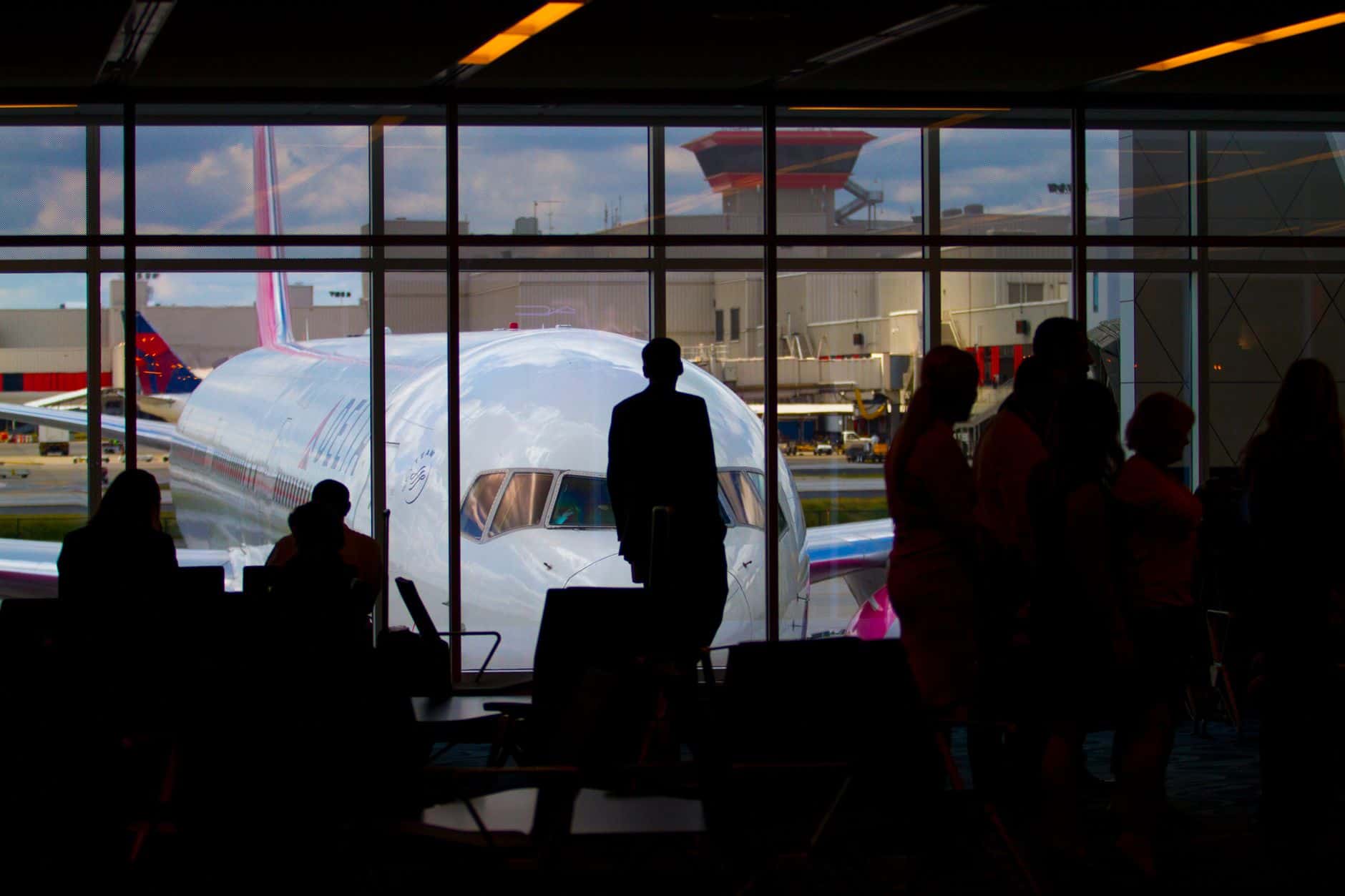
Gate agents are not your enemy — they’re often just as frustrated as you are, and they deal with dozens of hostile passengers every shift. The passengers who get the best outcomes are calm, specific, and informed.
For a Cash Refund
“My flight was cancelled and I’d like to request a full cash refund to my original payment method rather than a travel credit. I understand under DOT regulations I’m entitled to this. Can you process it here, or should I call the 800 number right now?”
For a Hotel Voucher
“I’ve been stranded due to a controllable cancellation and I need a hotel accommodation voucher for tonight. Who can I speak with to get that issued?”
For Rebooking on a Partner
“My next option on your airline isn’t until tomorrow morning. Are there any partner airlines where you can protect my booking to get me there by tonight?”
For Meal Vouchers
“I’ve been here for [X hours] due to the cancellation. Are meal vouchers available for controllable delays?”
What to Do If the Airline Refuses to Cooperate
You’ve asked politely, you’ve cited your rights, and the gate agent is still telling you there’s nothing they can do. Here’s the escalation path:
- Call the airline simultaneously — while you’re in line at the gate, call the airline’s 1-800 number. Phone agents sometimes have more flexibility than gate agents, and wait times are often shorter than the gate line
- Try the airline’s social media team — airline Twitter/X and Facebook support desks are staffed by specialists who can often resolve issues faster than phone or gate agents
- File a DOT complaint — the DOT’s Aviation Consumer Protection Division tracks complaints and they do result in investigations. Airlines know this and unresolved complaints can affect them during regulatory reviews
- Dispute with your credit card — for denied refunds, a credit card chargeback for “services not rendered” is one of the most effective tools available to passengers
- File with your state attorney general — several states have their own consumer protection statutes that go beyond federal minimums
The system is not designed to be fair. It is designed to be complex enough that most passengers give up. The passengers who don’t give up — who document everything, escalate methodically, and know their rights — are the ones who come out ahead.
Keep screenshots of your cancellation notice, keep receipts for every expense you incur as a direct result of the cancellation, and send everything to the airline in writing. Paper trails are what separate the passengers who get compensated from the passengers who get vouchers that expire in a year.