Mark Twain Got His Pen Name Writing for a Virginia City Newspaper. 7 Things to See There This Winter
We may earn money or products from the companies mentioned in this post. This means if you click on the link and purchase the item, I will receive a small commission at no extra cost to you ... you're just helping re-supply our family's travel fund.
Samuel Clemens was a young reporter for the Territorial Enterprise, the leading newspaper of Virginia City, Nevada, when he first signed his work “Mark Twain.” On February 3, 1863, he used the pen name on a humorous letter to the paper, signing off “yours dreamily, MARK TWAIN.” That Comstock mining town still stands on the side of Mount Davidson, and Virginia City Nevada in winter is one of the best times to walk its boardwalks without summer crowds.
According to Wikipedia’s account of his time at the paper, Clemens wrote for the Territorial Enterprise from 1862 to 1865, and it was there that his literary skills first took shape. He had joined the staff in Virginia City in September 1862. The letter where he first used the name was written while he was covering the territorial legislature in Carson City, but it was written for, and published by, the Virginia City paper.
Today, Virginia City is a national historic landmark district about 20 miles south of Reno, at roughly 6,200 feet. In December, the town decorates for Christmas on the Comstock. Here are seven things to see there this winter.
Why visit Virginia City Nevada in winter
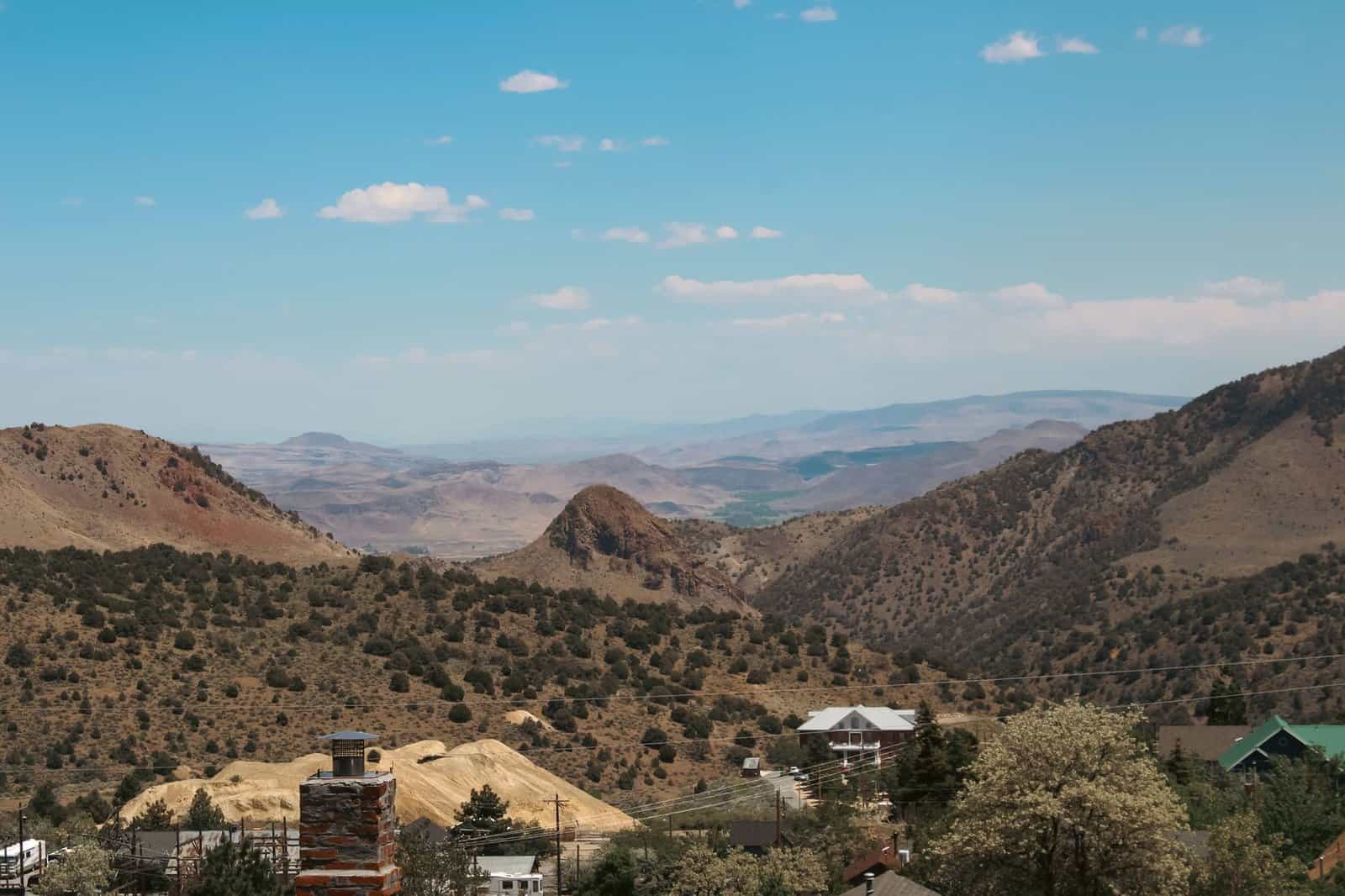
Virginia City boomed after the Comstock Lode, one of the richest silver strikes in American history, was found in 1859. Mining money built mansions, churches, an opera house, and dozens of saloons. When the mines declined, much of the town was left intact, and today its 19th-century main street, C Street, draws visitors from all over.
Summer and fall weekends can be crowded with tourists, motorcycle rallies, and events. Winter is quieter, with cold air, occasional snow on the wooden sidewalks, and a festive December. Some attractions run reduced hours in the off-season, so check before you go.
1. The Mark Twain and Territorial Enterprise story
The Territorial Enterprise was Nevada’s most influential newspaper during the Comstock boom, and Clemens was one of a group of reporters who made it famous for humor, hoaxes, and colorful writing. His years there shaped the voice that later made him one of America’s most famous writers.
Twain wrote about his Nevada years in his 1872 book Roughing It, which includes stories of Virginia City, the mines, and the newspaper. Walking C Street, you can see the setting for many of those stories. Look for historical markers and exhibits related to Twain and the newspaper, and consider reading Roughing It before or during your trip.
2. Christmas on the Comstock
Throughout December, Virginia City celebrates Christmas on the Comstock. According to the town’s visitor bureau, the Victorian-style holiday celebration features the official tree lighting, a saloon crawl, holiday performances, a Christmas giveaway, and holiday train rides. The historic buildings are decorated with lights and garlands.
The saloon crawl is a popular event for adults, with participants visiting historic saloons along C Street. Families tend to come for the tree lighting and the trains. Check the official calendar for this year’s dates, since events can sell out or change.
3. The V&T Railway holiday trains
The Virginia and Truckee Railroad once hauled ore and passengers between Virginia City and Carson City, and part of the line has been restored for excursion trains. In December, the V&T runs holiday trains.
According to the visitor bureau, the V&T Candy Cane Express departs from the Virginia City depot for a narrated round-trip ride of about 40 minutes, with heated seats, Christmas carols, and a free cookie. The Electric Holiday Train O’ Lights is a separate evening ride with the train decorated in lights. The bureau warns that trains sell out, so reserve early.
4. Piper’s Opera House
Piper’s Opera House was one of the West’s great entertainment venues during the Comstock era, hosting performers, lecturers, and touring productions. The current building dates to the 1880s, after earlier versions burned. Twain himself lectured in Virginia City.
Today, the opera house hosts tours and events. Check its schedule for winter hours and performances. Even from the outside, the building is a striking reminder of how much money flowed through this mountain town.
5. St. Mary in the Mountains
St. Mary in the Mountains Catholic Church is one of Virginia City’s most recognizable landmarks. Its tall steeple rises above the town, and the church was rebuilt after the Great Fire of 1875, which destroyed much of Virginia City. The church remains an active parish.
Visitors are often welcome to look inside when the church is open. Be respectful during services and events.
6. The Mackay Mansion
The Mackay Mansion was associated with John Mackay, one of the so-called Silver Kings who made fortunes on the Comstock. The house offers a look at how mine owners and managers lived during the boom, with period furnishings and stories about the town’s history.
The mansion offers tours, and in some seasons hosts ghost tours and holiday events. Check current hours before visiting in winter.
7. Historic saloons and the Silver Terrace Cemeteries
Virginia City’s saloons are part of its identity. The Bucket of Blood Saloon, one of the best known, has views across the valley from its back windows. Other historic saloons along C Street offer drinks, music, and old Western atmosphere.
On the north edge of town, the Silver Terrace Cemeteries contain graves of miners, merchants, and families from the boom years. The cemeteries are divided into sections for fraternal organizations, religious groups, and other communities. Walking among the old headstones on a cold winter day is a powerful reminder of how hard life on the Comstock could be.
Other things to do
- The Way It Was Museum: Exhibits on mining, the Comstock, and local history.
- Fourth Ward School: A historic 1870s schoolhouse turned museum. It has historically operated seasonally, so check whether it is open in winter.
- Mine tours: Some businesses offer tours of historic mine workings.
- C Street shops: Candy stores, antique shops, and gift shops line the boardwalks.
Getting there in winter
From Reno, the most direct route is State Route 341, known as the Geiger Grade, which climbs from the Truckee Meadows to Virginia City. The road has steep grades and curves, and it can be snowy or icy in winter. Another route goes through Carson City and up from the south.
Check the Nevada Department of Transportation’s road conditions before you go, carry winter supplies, and drive cautiously. Some visitors join tours or shuttles from Reno during events.
What to wear
Virginia City sits at about 6,200 feet, which means it is colder than Reno. Winter days can be cold, windy, and occasionally snowy. Dress in layers, wear warm boots with good traction for wooden sidewalks that can be slick, and bring gloves and a hat.
Where to stay
Virginia City has a small number of hotels, inns, and bed-and-breakfasts. Many visitors stay in Reno or Carson City and visit as a day trip. During Christmas on the Comstock events, book lodging and train tickets early.
A sample winter day
Drive up from Reno in late morning after roads have been cleared. Walk C Street and read historical markers about Twain and the Territorial Enterprise. Have lunch at a historic saloon or cafe. Tour the Mackay Mansion or Piper’s Opera House, then visit St. Mary in the Mountains. In late afternoon, walk through the Silver Terrace Cemeteries. Ride a V&T holiday train in the evening if it is running, then warm up with a drink before heading back down the hill.
A short history of the Comstock
The Comstock Lode was found in 1859 on the slopes of Mount Davidson, and within a few years Virginia City had grown into one of the largest cities in the West. Silver and gold from the Comstock helped finance the Union during the Civil War, and Nevada became a state in 1864, partly because of the wealth flowing from its mines. Deep mines, elaborate timbering systems, and huge pumps were developed to reach ore far underground, and many techniques used there were later adopted in mining around the world.
By the late 1870s, production began to decline, and the population fell over the following decades. Much of the boom-era town survived, though, and today it is part of a National Historic Landmark district. That history is what gives a winter walk down C Street its weight: almost every building you pass has a story connected to the silver rush.
Budget tips
Many of Virginia City’s best experiences are free, including walking C Street, reading markers, and visiting the cemeteries from the outside. Paid tours and train rides add up, so pick the one or two that interest you most.
The bottom line
Samuel Clemens first used the name Mark Twain in 1863 while writing for Virginia City’s Territorial Enterprise, and the town he wrote about still looks much like it did. In winter, you can follow the Twain story, enjoy Christmas on the Comstock, ride V&T holiday trains, visit Piper’s Opera House, St. Mary in the Mountains, and the Mackay Mansion, and explore historic saloons and the Silver Terrace Cemeteries. Check hours, dress for cold, and plan the drive carefully.