We Tried Full-Time RV Life for a Year. Here’s What It Actually Costs — and Why Most People Quit
We may earn money or products from the companies mentioned in this post. This means if you click on the link and purchase the item, I will receive a small commission at no extra cost to you ... you're just helping re-supply our family's travel fund.
The RV life content pipeline is one of the most successfully monetized niches in travel media. Beautiful rigs parked in front of glowing canyon sunsets. Couples working remotely from a cliff in Sedona. Kids doing school in the desert while their parents sip coffee and look meaningfully at the horizon.
None of this is fake, exactly. But it represents approximately 4% of the full-time RV experience. The other 96% involves things like: discovering your grey water tank cracked somewhere in New Mexico, spending three days in a Walmart parking lot waiting for a part, arguing with your partner about whether 47°F inside the rig counts as “too cold to stay,” and calculating whether you can afford another week at this $85/night campground.
Here is what the people who actually did it — not the ones still posting about it, but the ones who came home — say about the real experience.
The Real Monthly Cost Breakdown
Numbers vary significantly based on rig type, travel style, and whether you have kids. Here’s a composite from multiple full-time RVers who documented their budgets for 6–12 months:
- Campsite Fees: $400–$1,200/month This is the biggest variable. National Park sites run $15–$35/night. Private campgrounds (KOA, etc.) run $45–$85/night. If you’re moving every few days and using private campgrounds, you can easily spend $1,500+/month just on a place to park. Boondocking (camping on free public land) brings this close to zero but requires planning and isn’t available everywhere.
- Fuel: $300–$800/month A Class A motorhome gets 6–10 mpg. At current diesel prices, 1,000 miles/month costs approximately $400–$700. If you’re staying put more, fuel drops dramatically. “Slow travelers” who move once or twice a month can keep fuel under $200.
- Rig Payment or Depreciation: $500–$2,000/month If you’re financing a new rig, budget $1,000–$2,000/month. If you paid cash, account for depreciation and the opportunity cost of that capital. A used rig bought for $50,000 loses meaningful value over time.
- Insurance: $150–$400/month Full-timer RV insurance (required if it’s your primary residence) runs higher than vacation use. Health insurance is its own major issue — without employer coverage, expect $400–$800+/month per person for ACA marketplace plans.
- Food: $600–$1,200/month for a couple This is often underestimated. Cooking in a small rig with limited fridge space means more frequent grocery trips and higher waste. Eating out because you’re tired of cooking on a two-burner stove happens more than planned.
- Maintenance and Repairs: $200–$500/month (averaged) RVs break. Budget 1–2% of the rig’s value per year in repairs, then mentally double it because first-year full-timers almost always hit unexpected issues. Tires alone can be $1,500–$3,000 when replacement comes due.
- Connectivity: $100–$200/month You need at least two cellular plans from different carriers for redundancy, plus potentially a dedicated hotspot. Starlink is $120/month and is increasingly the choice for remote work.
Realistic total for a couple: $2,500–$5,500/month, depending on travel pace, rig type, and whether they’re financing.
The Costs Nobody Talks About
- Mail and Domicile You need a legal address. South Dakota, Texas, and Florida are popular for full-timers due to no state income tax. Mail forwarding services run $15–$40/month. Getting a driver’s license, vehicle registration, and banking setup for a new domicile state takes multiple trips and significant admin time.
- Storage Unit for Your Stuff Most people can’t or won’t sell everything. A 10×10 storage unit runs $100–$200/month in most markets. Full-timers who kept a storage unit for two years paid $2,400–$4,800 for the privilege of keeping furniture they never used.
- The “We Need a Hotel Night” Fund Even the most committed full-timers occasionally need a real bathroom, a full-size bed, a working shower, or just a night where the rig isn’t rocking in 40mph winds. Budget $200–$400/month for this psychological necessity.
- Subscriptions You Now Need Reserve America for campsite reservations. Campendium or The Dyrt Pro for site finding. Passport America or Harvest Hosts for discounted/free camping. These add up to $100–$200/year but are essential.
What People Say After They Stop — The Honest Debrief

We pulled from forums, Reddit’s r/RVLiving, and documented “we quit” posts to compile the most honest takes from people who are no longer full-timing:
- “The community is real, but it’s not permanent” “You meet incredible people at every campsite. And then you all leave in different directions. After a while the constant connection-and-goodbye cycle is emotionally exhausting in a way I didn’t expect.” — common sentiment in RVing communities
- “We weren’t prepared for how much maintenance would dominate our time” “At least once a month, something needed to be fixed. It wasn’t always expensive but it was always time. We spent three weekends on a slide-out issue. Three weekends. That’s not travel.”
- “Remote work is much harder in an RV than the content makes it look” “Connectivity is genuinely unreliable. We were in a beautiful spot in Montana and couldn’t get a work call out for two days. We missed income over that.”
- “The small space became a relationship pressure cooker” “There is nowhere to go when you need space. 200 square feet with another person is an intimacy stress test. Couples that are already solid can handle it. Couples that have any unresolved issues find them fast.”
- “We miss having a place that’s ours” “I miss having a kitchen where I can cook something real. I miss having a bathroom where my knees don’t touch the wall. I miss having a guest room. We loved the travel but we had to come home.”
The Types of People Who Love It vs. Who Quit
Who succeeds at full-time RV life:
- People with genuinely location-independent income (not “someday” remote work — actual, tested remote work that pays on time)
- Couples or solo travelers who are comfortable with solitude and don’t need a social anchor
- People who have mechanical aptitude or are willing to learn — being handy reduces maintenance costs dramatically
- Those who embrace slow travel — parking somewhere for 2–4 weeks at a time rather than constantly moving
- Retirees with fixed income (Social Security, pension) who’ve eliminated most fixed costs and aren’t trying to work
Who struggles:
- Families with school-age kids who underestimate the complexity of homeschooling on the road
- People who need strong social community — RV parks don’t replicate the depth of a home neighborhood
- People who financed the rig and need to make up the payment — the savings story falls apart fast
- Anyone who planned to “figure out the income part” once they were on the road
Is It Actually Cheaper Than a House?
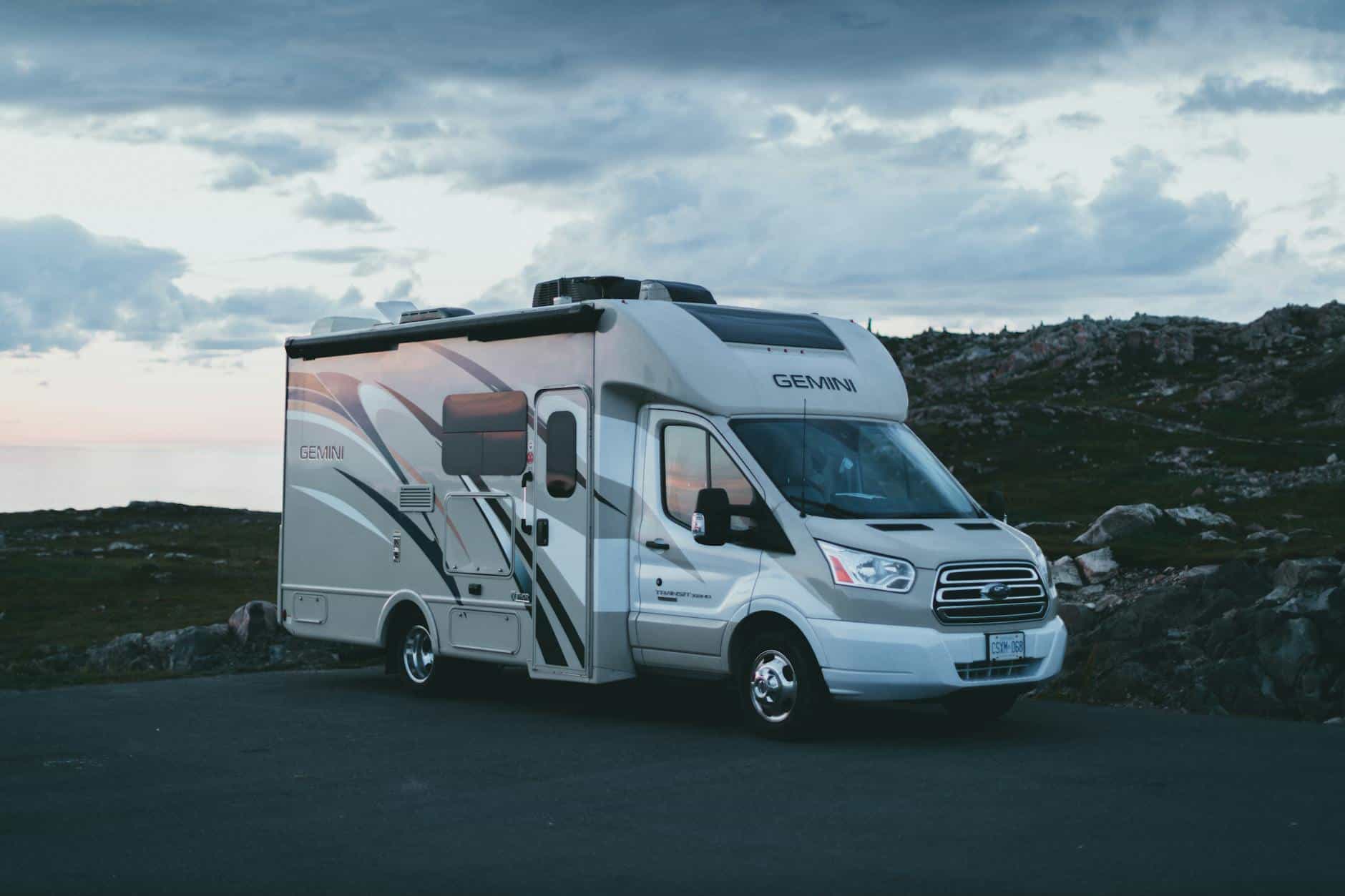
Sometimes. The honest math:
- If you own a rig outright, move slowly, boondock frequently, and work remotely — yes, you can live on $2,000–$2,500/month as a couple, which is hard to beat in any US housing market.
- If you’re financing a $100,000+ Class A, paying for private campgrounds, and eating out half the week — you’re spending $5,000–$6,000/month and the “it’s cheaper than rent” math evaporates.
- Health insurance is the budget item that ruins the math for most people under 65. Without employer coverage, this alone can add $800–$1,500/month for a couple.
The full-time RV life can be genuinely extraordinary. It can also be genuinely exhausting, expensive, and lonely in ways the Instagram feed never shows. The people who love it tend to know what they signed up for. The people who quit often say the same thing: they wish someone had told them what it was actually like before they sold all their stuff.