The Grand Canyon’s South Rim Stays Open All Winter. 8 Things That Change When Snow Hits
We may earn money or products from the companies mentioned in this post. This means if you click on the link and purchase the item, I will receive a small commission at no extra cost to you ... you're just helping re-supply our family's travel fund.
The North Rim of the Grand Canyon closes to most visitors in winter, but the South Rim stays open all year. The National Park Service says so directly on its road conditions page. If you plan to visit the Grand Canyon South Rim in winter, you will find the canyon looking very different, with snow on the rim and fog sometimes filling the gorge below, and a park that works a little differently than it does in summer.
The South Rim sits around 7,000 feet above sea level, high enough for real winter weather. Storms can bring snow, ice, and temporary road closures, and the NPS warns that road conditions can change rapidly in winter. But winter also brings smaller crowds, cheaper rooms, and access to roads that are closed to private cars the rest of the year.
Here are eight things that change when snow hits the South Rim.
What to expect at the Grand Canyon South Rim in winter
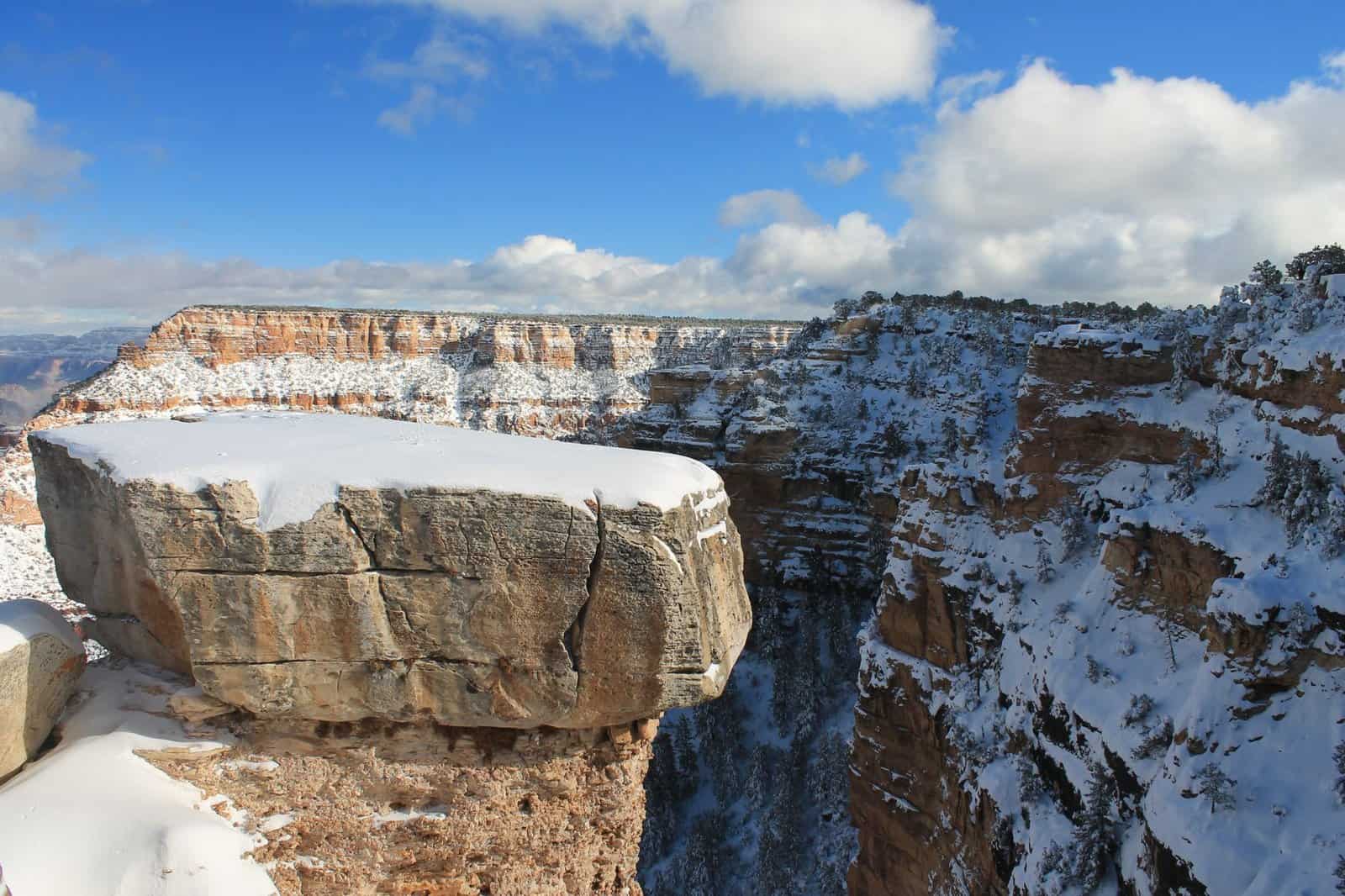
The South Rim is the most visited part of the park, home to Grand Canyon Village, the main visitor center, historic lodges, and the most famous viewpoints. In winter, it stays busy enough to feel lively but quiet compared with the summer rush. Daytime temperatures often hover in the 30s and 40s Fahrenheit, and nights can drop into the teens or lower.
1. Hermit Road opens to private cars
For most of the year, Hermit Road, a 7-mile scenic route west of Grand Canyon Village, is closed to private vehicles and served by free shuttle buses. According to the NPS, the road is open to private vehicles only during the winter months of December, January, and February. Vehicles must be under a certain length.
That means you can drive yourself to viewpoints like Hopi Point, Mohave Point, and Hermits Rest, stopping when and where you want. It is one of the biggest perks of a winter visit.
2. Trails get icy, especially near the rim
The upper sections of popular trails like the Bright Angel Trail and South Kaibab Trail can be covered in packed snow and ice in winter. These sections are steep, and slipping can be dangerous. The NPS recommends traction devices, such as microspikes, for winter hiking on the upper trails.
Even short walks along the rim can be icy. Wear sturdy boots, use traction devices, and stay well back from the edge, especially where snow makes it hard to see where the ground ends.
3. Roads can close temporarily during storms
The NPS says that during winter storms, travelers should expect winter driving conditions, and some roadways may be temporarily closed while snow is cleared. That includes park roads and approach highways like Arizona Route 64 from Williams and U.S. 180 from Flagstaff.
Check the NPS road conditions page and the Arizona Department of Transportation’s road information before you go. Carry winter supplies in your car, and drive slowly on snow and ice. The NPS also warns drivers to watch for deer, elk, and coyotes on roads.
4. Desert View Drive usually stays open
Desert View Drive, which runs 23 miles east from Grand Canyon Village to Desert View and the East Entrance, is usually open to all vehicles throughout the year, according to the NPS, unless it is temporarily closed by snow and ice. Viewpoints along the drive include Grandview Point, Moran Point, Lipan Point, and the Desert View Watchtower.
The drive is a great way to see the canyon from different angles, and in winter, it is often quieter than in summer.
5. Shuttle routes change
Because Hermit Road opens to private cars in winter, the Hermits Rest shuttle route may not run or may run on a different schedule. Other shuttle routes in Grand Canyon Village continue to operate in winter, though schedules can shift. Check the park’s shuttle information for current routes.
6. Crowds thin and rooms can be easier to find
Winter is the South Rim’s quietest season, outside of the holiday weeks around Christmas, New Year’s, and Presidents’ Day. Parking is easier, viewpoints are less crowded, and lodging inside the park is easier to book. Rates at some hotels in the park and in nearby Tusayan may be lower than in summer.
Mather Campground in Grand Canyon Village stays open year-round, offering winter camping for those prepared for cold nights.
7. Cold and altitude become serious
At around 7,000 feet, the South Rim can be very cold, especially with wind. If you plan to hike below the rim, conditions change dramatically as you descend. The upper trails may be snowy and icy, while temperatures at the bottom of the canyon can be much milder.
Dress in layers, protect against wind, and carry extra warm clothing. Altitude can make exertion harder and increase dehydration. Drink water even when it is cold.
8. Snow and fog create rare views
One of the most memorable sights in winter is snow on the rim and the canyon’s upper ledges, outlining rock layers in white. Occasionally, a cloud inversion fills the canyon with fog, leaving only the tops of buttes and temples visible above a sea of clouds.
These conditions are unpredictable and short-lived. If you are lucky enough to see one, you are seeing something most summer visitors never will.
The North Rim is closed
The North Rim, about 1,000 feet higher than the South Rim, closes to most visitors in winter. Highway 67 to the North Rim is not maintained in winter, and services there close. If you are planning a winter trip, focus on the South Rim.
Best winter viewpoints
With fewer crowds and Hermit Road open to cars, winter is a great time to explore viewpoints at your own pace:
- Mather Point: Near the main visitor center, with sweeping views.
- Yavapai Point and Geology Museum: Exhibits on canyon geology and big views.
- Hopi Point: On Hermit Road, a classic spot for sunset.
- Mohave Point: Views of the Colorado River on Hermit Road.
- Hermits Rest: The end of Hermit Road, with a historic stone building.
- Lipan Point: On Desert View Drive, with wide views of the river and canyon.
- Desert View Watchtower: A historic tower designed by Mary Colter at the east end of Desert View Drive.
Winter hiking tips
If you hike below the rim in winter:
- Use traction devices for icy upper sections.
- Start early and turn around with plenty of daylight.
- Remember that going down is easy, and coming back up takes about twice as long.
- Carry water, food, and extra layers.
- Check the park’s trail conditions before you go.
- Do not attempt to hike to the river and back in one day.
Getting there in winter
The South Rim is about 80 miles north of Flagstaff and about 60 miles north of Williams. Many visitors arrive from Phoenix, about a four-hour drive. Winter storms can affect roads, so check conditions before leaving.
The Grand Canyon Railway runs from Williams to the South Rim, offering an alternative to driving. In winter, the railway has offered holiday-themed trips from Williams. Check the current schedule.
Where to stay
Lodging inside the park includes historic hotels like El Tovar and Bright Angel Lodge, along with other lodges in Grand Canyon Village. Tusayan, just outside the South Entrance, has more hotels. Williams and Flagstaff offer additional options farther away.
Book early for holiday periods. Outside the holidays, winter is often the easiest time to find a room in the park.
A sample winter day
Start the day at Mather Point to watch sunrise over a snowy canyon. Have breakfast in Grand Canyon Village, then walk along the Rim Trail. In late morning, drive Hermit Road, stopping at viewpoints and finishing at Hermits Rest. After lunch, drive Desert View Drive to the Watchtower. Head back to Hopi Point or Yavapai Point for sunset, then warm up with dinner in the village.
Holiday weeks are different
Winter at the South Rim is quiet most of the time, but the weeks around Christmas and New Year’s, along with Presidents’ Day weekend in February, can bring crowds close to summer levels at viewpoints and in Grand Canyon Village. Lodging in the park often sells out for these dates months in advance, and restaurants can have long waits. If you want the quiet winter experience, aim for early December, January after the New Year’s holiday, or weekdays in February.
Driving inside the park in snow
Park roads are plowed, but snow and ice can linger in shaded areas and parking lots. Drive slowly, use lower gears on hills, and leave extra room for stopping. Parking lots near popular viewpoints can be icy, so walk carefully.
The bottom line
The Grand Canyon’s South Rim stays open all winter, but snow changes the experience. Hermit Road opens to private cars, trails turn icy, roads may close briefly during storms, shuttle routes change, crowds thin, cold and altitude demand preparation, snow and fog create rare views, and the North Rim is closed. Plan for those eight changes, and you will see the canyon in one of its most beautiful and least crowded seasons.