Lexington, Kentucky Has More Horses Per Capita Than Almost Anywhere in America. It Also Just Works as a City.
We may earn money or products from the companies mentioned in this post. This means if you click on the link and purchase the item, I will receive a small commission at no extra cost to you ... you're just helping re-supply our family's travel fund.
Lexington sits at the center of Kentucky’s Bluegrass region, surrounded by horse farms whose black plank and white board fences run for miles along roads like Old Frankfort Pike and Paris Pike, considered among the most scenic drives in the country by multiple travel publications. The city itself, with roughly 320,000 residents, has become one of the more functional mid-size American cities — reasonable cost of living, a strong university anchor in the University of Kentucky, and an economy diversified enough that it doesn’t depend entirely on the horse industry or bourbon tourism that define its national image.
What the horse industry actually means for the local economy
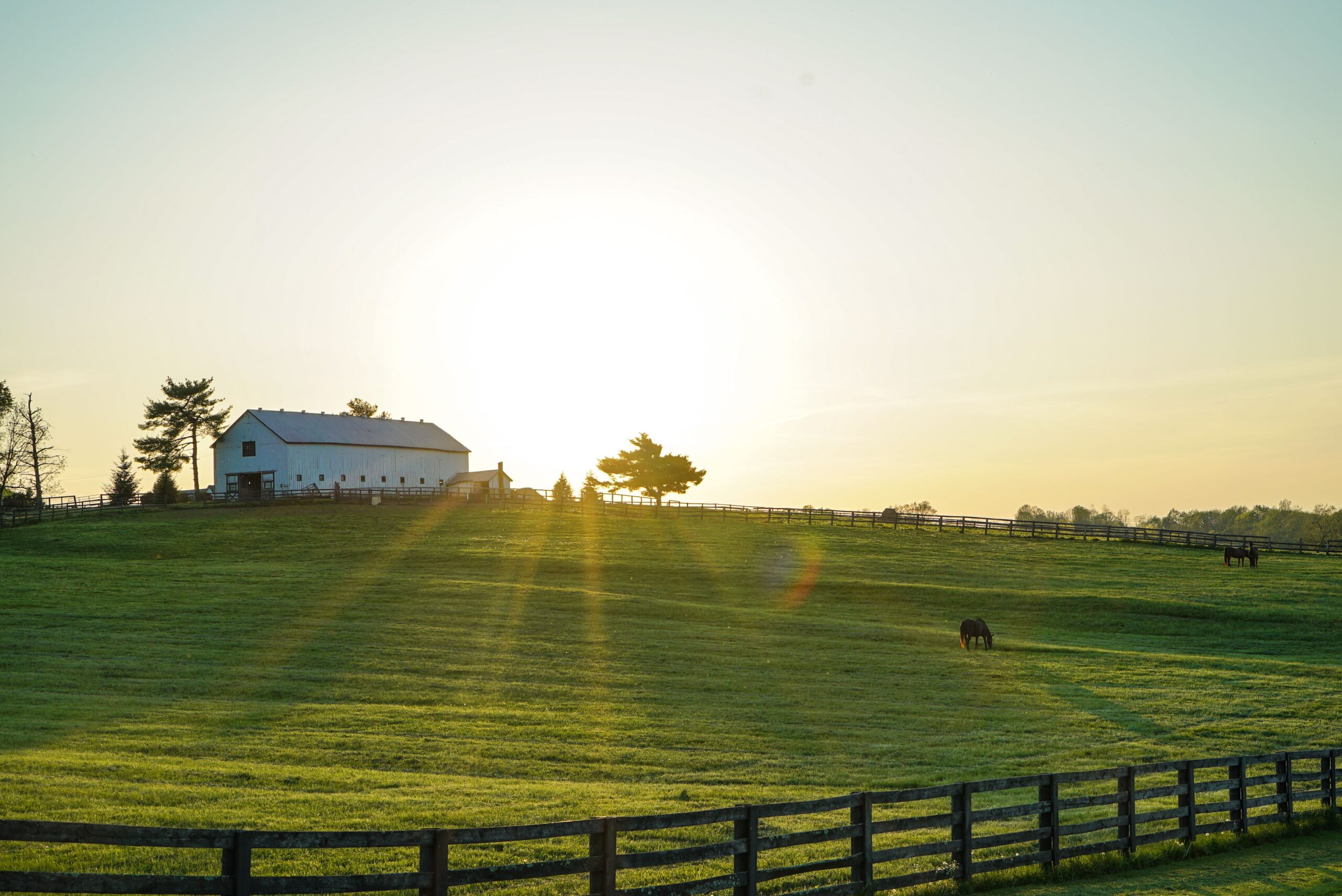
Keeneland, Lexington’s historic thoroughbred racetrack, hosts spring and fall race meets that draw serious bloodstock buyers and casual visitors alike, and its September and November yearling sales regularly produce individual horse sales in the millions of dollars, a reminder that the horse industry here isn’t a tourism gimmick but a genuine, high-stakes commercial sector. The Kentucky Horse Park, a working horse farm and museum that’s hosted world championship equestrian events, gives visitors direct access to the industry without needing insider connections to a private farm, while numerous farm tour operators run daily visits to active thoroughbred breeding operations throughout the surrounding countryside. This industry supports thousands of jobs directly and indirectly across breeding, training, veterinary care, and racing operations, making Lexington’s horse identity a genuine economic pillar rather than a marketing angle layered over an otherwise unrelated local economy.
Bourbon adds a second, complementary tourism and economic driver, with Lexington sitting at a convenient hub for the Kentucky Bourbon Trail, close enough to Woodford Reserve, Buffalo Trace, and other major distilleries that visitors often base themselves in Lexington rather than the smaller surrounding towns where the distilleries themselves are located.
Zoning protections specific to the horse farm landscape surrounding Lexington have played a significant role in preserving the scenic character that draws visitors and defines the region’s identity, with local land-use rules limiting subdivision development on historically designated horse farm parcels in ways that have prevented the kind of sprawl that’s eroded similar agricultural landscapes near other growing mid-size American cities. Preservation advocates and the local farming community have generally supported these restrictions, recognizing that the scenic farmland is itself an economic asset worth protecting deliberately rather than allowing market pressure to convert it into standard suburban development over time.
Why Lexington functions better than its national profile suggests
The University of Kentucky, with more than 30,000 students, anchors a genuinely diverse local economy that extends well beyond horses and bourbon into healthcare, given the university’s major medical center, and technology, with a growing presence of companies drawn by the relatively low cost of doing business and a steady pipeline of university graduates. Lexington’s cost of living remains meaningfully below national averages while median incomes have held up reasonably well, a combination that’s become rarer among mid-size American cities as coastal-market cost pressures have spread inland over the past decade. The city’s downtown has undergone real, sustained revitalization, with the CentrePointe development and a growing restaurant and brewery scene giving Lexington a genuine walkable core that smaller Southern cities of similar size sometimes lack entirely.
What makes a Lexington visit distinct from the rest of Kentucky
- Keeneland’s spring and fall race meets, with a considerably more low-key, less commercialized atmosphere than Louisville’s Kentucky Derby
- The scenic horse farm drives along Old Frankfort Pike, Paris Pike, and Versailles Road
- Direct access to the Kentucky Bourbon Trail’s major distilleries within a short drive
- A walkable downtown with a genuine local restaurant and brewery scene independent of tourism traffic
The honest comparison to Louisville
The horse industry’s economic footprint extends well beyond the farms themselves into a specialized veterinary and equine health sector that’s made Lexington a genuine hub for equine medicine research, with several practices and the University of Kentucky’s own veterinary programs drawing talent and investment specifically because of the concentration of high-value thoroughbreds in the surrounding region. That specialization has, in turn, made Lexington a magnet for equine-industry conferences and events well beyond the racing calendar itself, adding a business-tourism dimension to the local economy that operates independently of Keeneland’s race meets or the general horse-farm tourism most visitors associate with the region.
Louisville gets the bulk of Kentucky’s national tourism attention thanks to the Kentucky Derby and its larger overall size, but Lexington offers a genuinely different and, for many visitors, more approachable version of the state’s signature industries — horses and bourbon experienced at a calmer, less crowded pace, without needing to navigate Derby-week hotel prices that can multiply several times over for a single weekend. Lexington’s function as a real, economically diversified mid-size city rather than a single-industry tourist town is precisely what makes it work as well as it does, both for the people who live there year-round and for visitors who show up expecting a horse-country cliché and leave having experienced an actual functioning American city that happens to be surrounded by some of the most photographed farmland in the country.
Lexington’s downtown dining scene has grown enough in recent years to support a genuine restaurant week and a growing craft brewery cluster, giving visitors a reason to stay in the city itself for multiple nights rather than treating it purely as a day-trip base for touring the surrounding horse farms and distilleries.
Rand Paul’s long tenure as one of Kentucky’s U.S. senators has kept Lexington politically visible on the national stage well beyond what a city of its size would typically command, a reminder that the city’s influence extends into state and national politics in ways separate entirely from its horse-and-bourbon tourism identity.