They Make $2,800/Month and Live Better in Mexico Than They Did Making $90,000 in the U.S.
We may earn money or products from the companies mentioned in this post. This means if you click on the link and purchase the item, I will receive a small commission at no extra cost to you ... you're just helping re-supply our family's travel fund.
Sarah, 38, used to spend $3,200 a month just on rent in Austin, Texas. She had a good job in tech support, solid health insurance, and a 401(k) that was doing fine. She was also perpetually exhausted, perpetually broke-adjacent despite a good salary, and perpetually wondering why she was working this hard to afford a one-bedroom apartment she was barely home to enjoy.
Today she pays $850 a month for a two-bedroom apartment with a rooftop terrace in Mazatlán. Her total monthly expenses — rent, food, health insurance, entertainment, transportation — run about $1,600. She does freelance work remotely and clears around $2,800 a month. She’s saving money for the first time in her adult life.
“I don’t miss it,” she told me. “I miss specific people. I do not miss the cost.”
Why Mexico (and Why Now)

Mexico has been an expat destination for decades, but the post-pandemic remote work shift fundamentally changed who’s going and why. It’s no longer primarily retirees stretching a fixed income. It’s 30-somethings who realized they can earn U.S. dollars and spend Mexican pesos — a combination that changes the math on almost everything.
Mexico’s advantages over other cheap-country destinations:
- One to three flight hours from most U.S. cities (compared to Portugal at 9+ hours or Southeast Asia at 18+)
- Same or similar time zones as the U.S. — critical for remote workers on U.S. company schedules
- A healthcare system that is genuinely good quality at a fraction of U.S. prices
- A visa situation that’s relatively straightforward for Americans (tourist visa allows 180 days; the Temporary Resident Visa is attainable with proof of income)
- Infrastructure that’s better than most people expect: fast internet, Uber, Rappi delivery, modern grocery stores
Here’s what life actually looks like, with real numbers, across three different cost tiers.
The $1,400/Month Beach Town Option: Mazatlán
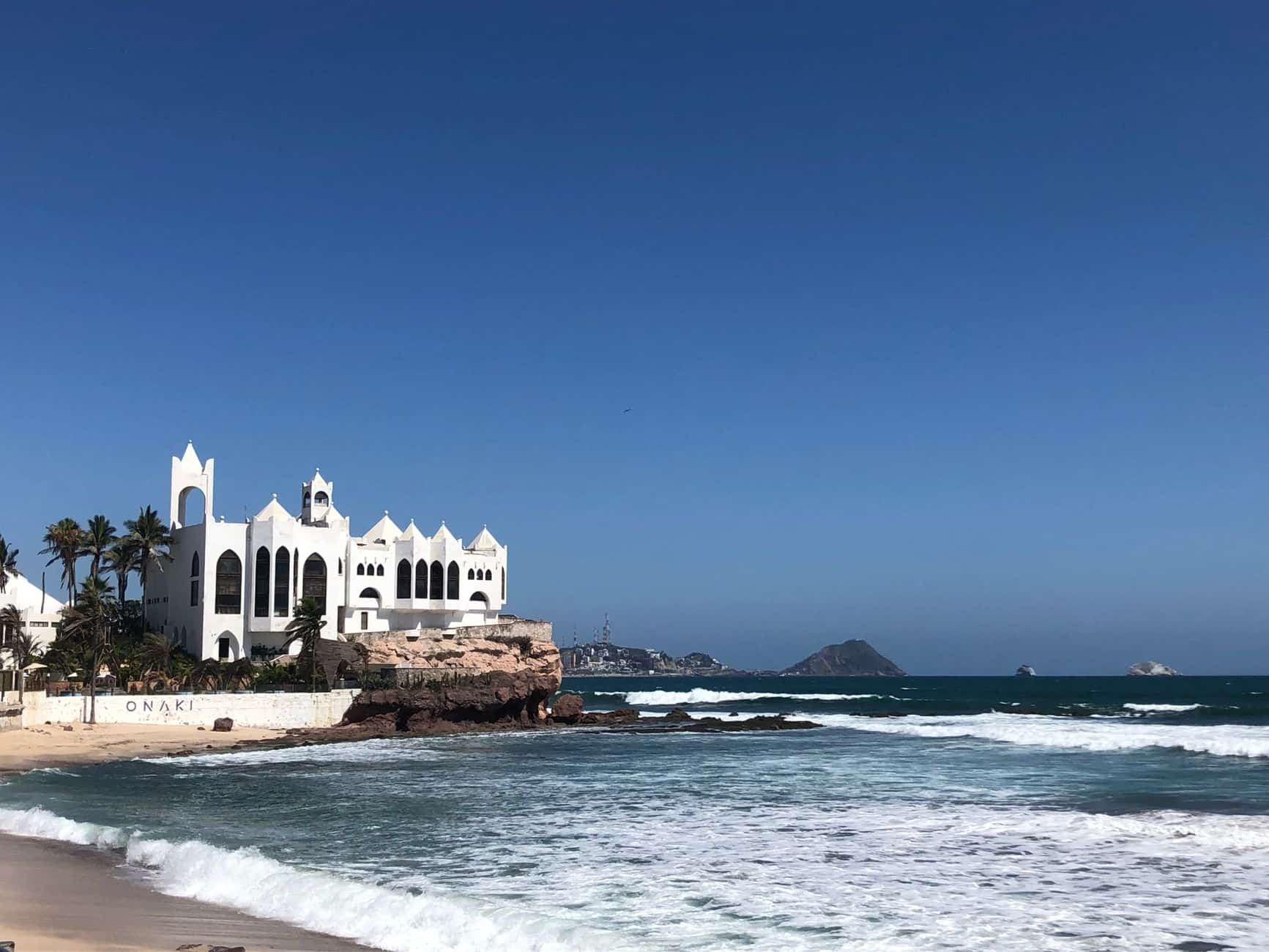
Mazatlán is having a moment, and the expats who got there two or three years ago are watching it happen with a mix of pride and anxiety about rising prices. For now, it remains one of the better value-to-quality ratios in Mexico.
Sample monthly budget (single person, comfortable lifestyle):
- Rent (1BR apartment, Old Town or Golden Zone): $500–$850
- Groceries: $150–$200
- Eating out (3–4 times per week, local restaurants): $150–$200
- Utilities (electric, water, internet): $80–$120
- Transportation (Uber, local buses): $40–$60
- Health insurance (private Mexican policy): $80–$150
- Entertainment, miscellaneous: $150–$200
- Total: approximately $1,150–$1,780/month
What that gets you: a real apartment (not a hostel), fresh seafood from the malecón market, a beach that’s walkable from most neighborhoods, and enough left over to actually save.
The $2,200/Month Colonial City Option: San Miguel de Allende

San Miguel de Allende is the most famous expat destination in Mexico, and prices reflect that. It’s also genuinely one of the most beautiful small cities in North America — cobblestone streets, 17th-century architecture, year-round spring weather at 6,000 feet elevation.
Sample monthly budget (single person, comfortable lifestyle):
- Rent (1BR apartment in or near Centro): $900–$1,400
- Groceries: $200–$250
- Eating out (mix of local and expat restaurants): $300–$400
- Utilities: $100–$150
- Transportation: $50–$80
- Health insurance: $80–$150
- Entertainment, Spanish classes, etc.: $200–$300
- Total: approximately $1,830–$2,730/month
San Miguel has a large, established English-speaking expat community, which is either a feature or a bug depending on your goals. If you want immersion, the large American bubble can be a barrier. If you’re nervous about the transition, that community is an enormous practical resource.
The $2,800/Month Mexico City Option

Mexico City is now a tech and creative hub with more than 50,000 American expats. Prices have risen significantly in the last three years — the gentrification of Condesa, Roma Norte, and Polanco has been real and fast. But compared to equivalent neighborhoods in any major U.S. city, it’s still a fraction of the cost.
Sample monthly budget (single person, Condesa or Roma Norte):
- Rent (1BR modern apartment): $1,100–$1,600
- Groceries: $200–$300
- Eating out (CDMX has some of the world’s best food at all price points): $300–$500
- Utilities + internet: $100–$150
- Metro + Uber (traffic is real; many people metro everywhere): $60–$120
- Health insurance: $80–$150
- Entertainment (concerts, museums, nightlife): $200–$400
- Total: approximately $2,040–$3,220/month
What you get is one of the world’s great cities — extraordinary food, world-class museums, a creative culture that’s electric right now — at a cost that’s roughly 40–50% less than an equivalent lifestyle in New York, LA, or San Francisco.
What the Numbers Don’t Tell You

Every expat I spoke with emphasized the same things that don’t appear in a budget spreadsheet:
- Healthcare quality is genuinely good. Private hospitals in Mexico’s major cities are modern and well-staffed. Specialist appointments that cost $400+ in the U.S. cost $30–$60 here. Prescriptions are available over the counter for medications that require costly doctor visits in the U.S.
- Daily life is slower, in a good way. Multiple expats used the same phrase: “I forgot what it felt like to not be in a hurry.”
- Safety is more nuanced than U.S. headlines suggest. Violent crime in Mexico is heavily concentrated in specific areas and largely tied to organized crime conflicts that don’t typically involve foreigners. The neighborhoods most expats live in — Condesa, Roma, Centro Histórico of various cities — are statistically comparable to major U.S. cities.
The Hard Parts Nobody Posts About

The expats who’ve been here longest are the most honest about the friction:
- Bureaucracy is real. Getting a Mexican bank account, converting a driver’s license, dealing with the SAT (Mexican tax authority if you establish residency) — these processes are slow and sometimes require a local fixer or immigration attorney.
- Language matters more than you think. In Mazatlán or San Miguel, you can get by with minimal Spanish. In Mexico City, your quality of life scales sharply with your Spanish ability.
- Homesickness is underestimated. Almost every expat mentions it. The first six months are an adventure. Month 8 or 9, missing specific people and specific things gets harder.
- U.S. taxes don’t go away. Americans owe U.S. taxes on worldwide income regardless of where they live. The Foreign Earned Income Exclusion helps (you can exclude roughly $126,000 of foreign-earned income), but the filing requirement and complexity remains.
How They Actually Made the Move

For people seriously considering it, here’s what the expats I talked to actually did:
- Took a 30-day trial trip first. Rented a furnished apartment on Airbnb or Furnished Finder for a month to see if day-to-day life actually appealed to them — not just the vacation version of it.
- Secured remote income before leaving. Almost nobody quit their job and figured it out later. They either negotiated remote work with their existing employer or built freelance income to a reliable level first.
- Hired a Mexican immigration attorney for the visa process. Costs $400–$800 but prevents costly mistakes in a process that has real consequences for getting wrong.
- Joined expat Facebook groups before moving. Groups like “Expats in Mexico City” and “San Miguel de Allende Expats” have answered every practical question you can think of and have members who’ve lived through whatever you’re trying to figure out.
The bottom line is simple math. If you can earn $3,000 a month remotely and your monthly expenses drop from $4,500 to $2,000, you’ve changed your financial trajectory entirely. That’s not a lifestyle downgrade — it’s a completely different relationship with money and time.