Kansas City Swapped Its 1972 Horseshoe Terminals for One New Building. 8 Things to Know Before You Fly Into KCI
We may earn money or products from the companies mentioned in this post. This means if you click on the link and purchase the item, I will receive a small commission at no extra cost to you ... you're just helping re-supply our family's travel fund.
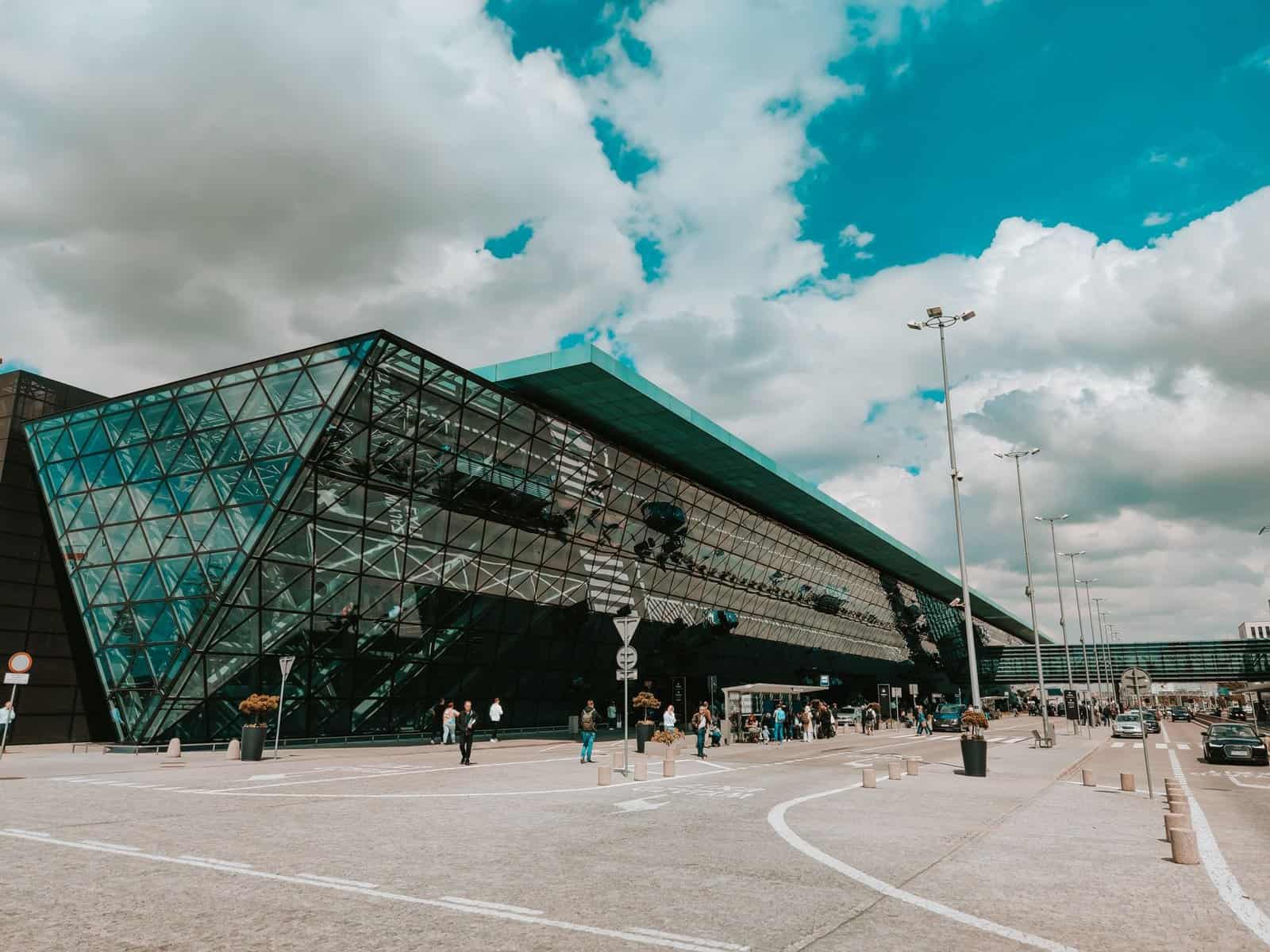
If you haven’t flown through Kansas City in a few years, the new KCI terminal will surprise you. The airport’s three horseshoe-shaped terminals, which opened in 1972 and let you walk from the curb to your gate in a few steps, are gone. In their place is one large building with two concourses, about 40 gates, and a lot more to do once you’re through security.
The single terminal opened on February 28, 2023, after four years of construction. It cost $1.5 billion and covers about 1.1 million square feet, which the city calls the largest infrastructure project in Kansas City’s history. The old layout was famous for convenience and infamous for what it lacked: after security checkpoints were tightened in the 2000s, many gate areas had no restrooms or food once you were screened.
The new building fixes that, but it works differently. Here are eight things to know before you fly into or out of Kansas City, from where your airline lives to how long the walk takes and what’s worth seeing on the way.
What Changed When the New KCI Terminal Opened
The old Kansas City International was built around TWA’s “drive to your gate” idea. Gates sat about 75 feet from the roadway, and there were no stairs to climb. That design felt easy for travelers but turned awkward as air travel changed. Big jets unloaded hundreds of people into small gate areas, and post-9/11 security meant walling off each gate cluster, so passengers waited in cramped rooms with few services.
Terminal A closed in 2014 and was torn down in 2019, and the new terminal was built on its site. Terminals B and C closed for good the night before the new building opened. The last flights in the old terminals were a Southwest departure to Chicago on February 27, 2023, and a Delta arrival from Salt Lake City just after midnight. The first departure from the new terminal was Southwest flight 904 to Chicago Midway at 5 a.m. Demolition of Terminals B and C began in July 2024, and the airport saved dozens of the old terminals’ mosaic medallions.
The airport is still MCI on your ticket. The code comes from its original name, Mid-Continent International, and it didn’t change with the new building.
8 Things to Know About the New KCI Terminal
1. Every airline is under one roof, split between two concourses
You no longer need to know which of three terminals your airline uses. Everyone checks in at the same hall. At opening, Delta, United, and American were at the north end of the check-in hall, with other airlines at the south end.
Past security, the building splits into Concourse A and Concourse B. When the terminal opened, the gates were assigned roughly like this:
- Concourse B north (B40 to B52): Delta and United
- Concourse B south (B54 to B69): Southwest
- Concourse A north (A1 to A10): American and Alaska
- Concourse A south (A12 to A20): other airlines, plus arriving international flights
Airlines can shift gates over time, so check your airline’s app or the departure screens before you head to a concourse. Concourse B is the bigger of the two, with roughly twice as many gates as A.
2. You can walk between concourses after security
Concourses A and B are linked by a connector a little more than 600 feet long, with two moving walkways. All of the terminal’s restaurants, shops, and amenities are open to passengers of every airline, so you can go to the other concourse for a specific restaurant and walk back to your gate without being screened again.
Just remember that it’s a real walk. If you’re flying Southwest from a high-numbered B gate and want to eat in Concourse A, budget extra time for the round trip.
3. The walk to your gate is longer than it used to be
This is the biggest adjustment for longtime Kansas City flyers. The old terminals put you steps from your gate. The new one is a conventional airport, and the far end of a concourse is a few minutes away on foot.
Before opening, the city’s deputy director of aviation timed himself walking from a car in the parking garage to Gate B68, one of the farthest Southwest gates. He covered about 2,000 feet in just over seven minutes, without using the moving walkways. That’s quick by big-airport standards, but it’s a change if you’re used to arriving 45 minutes before departure. Build in a few extra minutes, especially with kids or heavy carry-ons.
4. Restrooms, food, and shops are now past security
In the old horseshoe terminals, security sat at each cluster of gates, and many of those secure areas had no restrooms, restaurants, or newsstands. If you needed something after screening, you often had to leave and go through security again.
The new terminal uses a consolidated security checkpoint that feeds into both concourses, with most of the shops and restaurants beyond it. At opening, the checkpoint had 16 screening lanes, compared with 14 in the old terminals, with room for two more. The practical result: get through screening first, then eat, refill your water bottle, and use the restroom near your gate.
5. Most of the food is from Kansas City
The terminal opened with nearly 50 places to eat, drink, and shop, and about 80% of the brands are from the Kansas City region, according to concessions operator Vantage Airport Group. Some local names to look for:
- Boulevard Brewing Co., with a beer hall in Concourse B
- Bo Lings, the Kansas City Chinese restaurant, with locations in both concourses
- Meat Mitch, a local barbecue name, plus a barbecue restaurant whose pitmaster is chosen through an annual competition
- Parisi Coffee, Messenger Coffee, and City Market Coffee Roasters
- Brown & Loe and Pigwich, both familiar from the River Market’s City Market
- Soirée Steak & Oyster House, tied to the 18th & Vine Jazz District
National chains are there too, including Dunkin’, Auntie Anne’s, and Cinnabon. Airport lineups change over time, so treat any single restaurant as a nice surprise rather than a guarantee. If barbecue or a Boulevard beer is your last stop before leaving town, though, you have good odds.
6. The art is worth a few minutes
The terminal holds the largest public art project in Kansas City’s history, about $5.6 million in newly commissioned work paid for through the city’s One Percent for Art program. Twenty-eight artists created pieces for the terminal and parking garage, and most of them live in Kansas City or have ties to the area.
Three pieces are easy to find:
- “The Air Up There” by Nick Cave, thousands of colorful metal spinners hanging over the check-in hall
- “Fountain (KCI)” by Leo Villareal, an LED light sculpture past security that nods to Kansas City’s nickname, the City of Fountains
- “Jazz Birds” by Willie Cole, birds built from saxophones in honor of the city’s jazz history
Smaller works by local artists hang in the gate areas of both concourses, so it’s worth looking around while you wait.
7. The glass boarding bridges and family features are new
The terminal has 39 all-glass passenger boarding bridges, which industry trade publication Airport Business described as the most all-glass jet bridges at any US airport. You can watch the ramp while you walk to your seat, which kids tend to love.
Two features help families and nervous flyers in particular:
- The Kansas City Air Travel Experience, built with the front section of a retired Airbus A321, lets families, including those with children on the autism spectrum, practice checking in, going through screening, and boarding a plane before a real trip.
- An inclusive indoor play area, created with the children’s charity Variety KC, gives kids a place to burn energy before a flight.
Delta also opened the airport’s first Sky Club in Concourse B, a lounge for eligible Delta passengers that holds nearly 200 guests.
8. It’s still a drive from downtown
The building is new, but the location isn’t. KCI sits in Platte County, about 15 miles northwest of downtown Kansas City, and there’s no train to the airport. Your realistic options:
- Drive or get dropped off. Use 1 Kansas City Boulevard, Kansas City, MO 64153, which airport officials recommend for GPS. The terminal has a two-level curb that separates departures and arrivals.
- Use a rideshare or taxi. Pickup areas are next to the terminal, and the ride to downtown usually takes around 20 to 30 minutes, depending on traffic.
- Take the bus. The Kansas City Area Transportation Authority runs public bus service between downtown and the airport about once an hour, so check the schedule before you count on it.
- Book a regional shuttle. Private shared shuttles connect KCI with cities including Lawrence and Topeka, Kansas, and St. Joseph and Columbia, Missouri.
Plan your arrival time accordingly. The old instinct of showing up 40 minutes before a flight made sense when your gate was 75 feet from the curb. With a central checkpoint and longer walks, it’s safer to give yourself the same cushion you’d give any midsize airport.
Is the New KCI Terminal Better?
For most travelers, yes. The old terminals were fast if you had no bags and needed nothing, but they were cramped and short on basics past security. The new building has restrooms near every gate, far more food, a single security checkpoint, and space to wait comfortably during delays.
Passengers seem to agree. The airport handled 12,121,778 passengers in 2024, an all-time record that beat the previous high set in 2000. The trade-off is time: more walking and a central checkpoint mean you can’t cut it as close as you once could. Give yourself a few extra minutes, grab some barbecue near your gate, and look up at the art on the way.