9 Midwest Airport Codes That Make No Sense Until You Know the Story Behind Them
We may earn money or products from the companies mentioned in this post. This means if you click on the link and purchase the item, I will receive a small commission at no extra cost to you ... you're just helping re-supply our family's travel fund.
Midwest airport codes can look like typos. O’Hare is ORD. Kansas City is MCI, not KCI. Cincinnati’s airport is CVG, and it isn’t even in Ohio. Every one of those letters has a real reason behind it, and once you know the stories, the codes on your boarding pass start to make sense.
The short version: most odd codes are leftovers. An airport gets its three letters early, often from an old name, a nearby town, or a wartime airfield. Then the airport grows, gets renamed after a war hero or a president, and the code stays put because it’s already printed on charts, schedules, and baggage systems around the world.
Below are nine Midwest codes that confuse travelers the most, where each one came from, and what it tells you about the airport you’re flying into. If you’ve ever typed the wrong letters into a booking site or stared at a bag tag wondering where your suitcase was going, this is for you.
Why Midwest Airport Codes Look So Strange
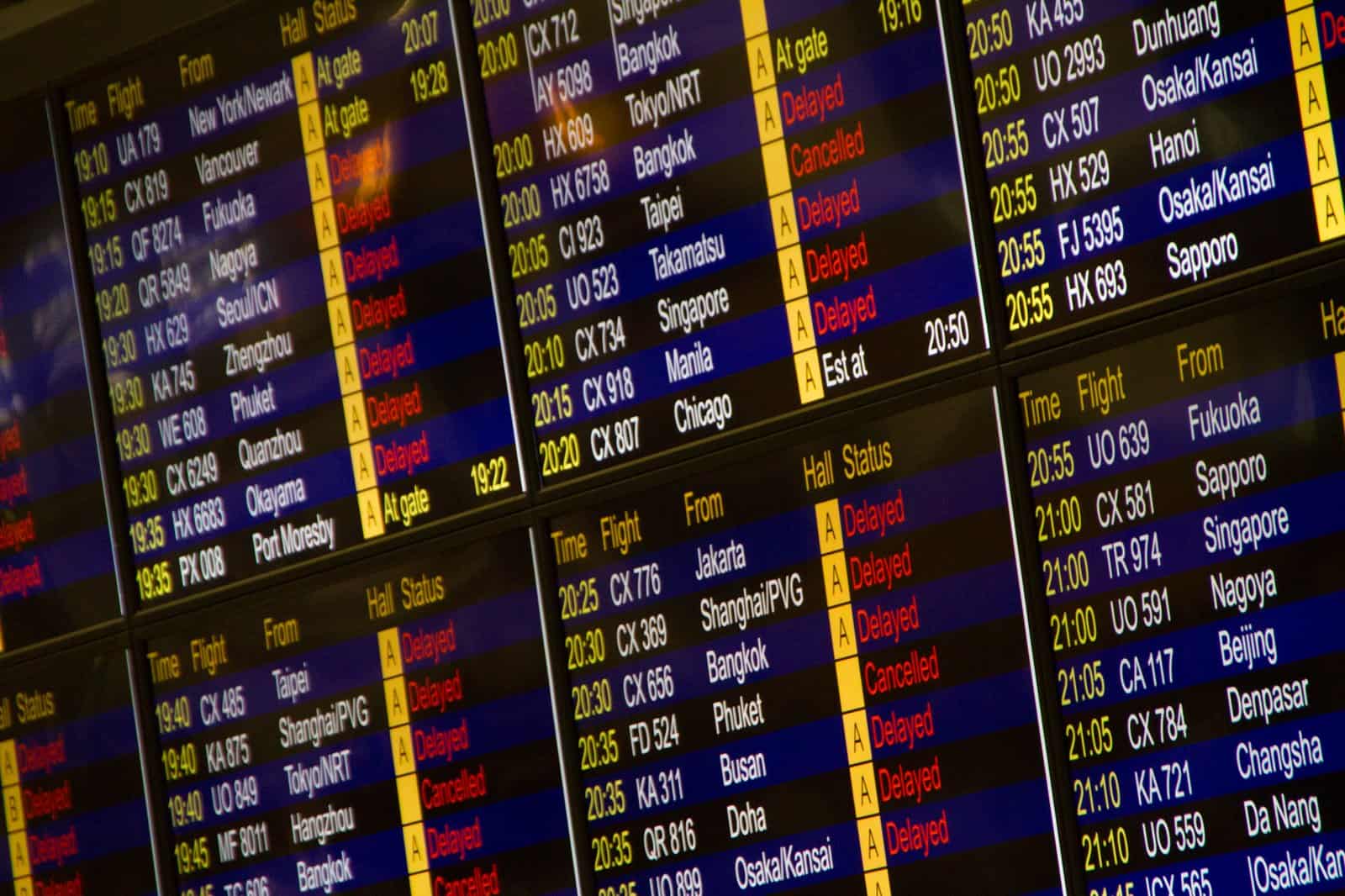
The three-letter codes you see on tickets and bag tags are assigned by the International Air Transport Association, an airline trade group. In the US, the Federal Aviation Administration also issues location identifiers, and for most commercial airports the two match. Pilots and air traffic controllers use a four-letter ICAO version, which in the lower 48 states simply adds a K to the front. That’s why Kansas City shows up as KMCI on aviation charts.
A few rules shaped the letters you see today:
- US airport codes can’t start with N, which is reserved for US aircraft registration numbers.
- They also can’t start with K or W, which are reserved for radio and TV station call signs.
- Once a code is in use, it’s rarely changed, because it’s built into navigation charts, airline reservation systems, and baggage routing worldwide.
- A code can’t be reused while another airport holds it, so the obvious choice is often already taken.
Kansas City International’s own website spells out the N, K, and W rule, and it’s the reason a lot of Midwest cities ended up with codes that seem to skip the first letter of their name. Add decades of renaming, and you get the list below.
The 9 Midwest Airport Codes and Where They Came From
1. ORD: Chicago O’Hare International Airport
ORD has nothing to do with O’Hare’s name, because O’Hare wasn’t its first name. During World War II, the site northwest of Chicago was a Douglas Aircraft plant building C-54 Skymaster transports, on farmland known as Orchard Place. After the war, the airfield became Orchard Field Airport, and it was assigned the code ORD.
In 1949, the Chicago City Council renamed it in honor of Lieutenant Commander Edward “Butch” O’Hare, a Navy fighter pilot and Medal of Honor recipient who was shot down in the Pacific in 1943. Commercial service began in 1955. The new name stuck, and so did the old code. Today ORD is one of the best-known airport codes in the world, and almost nobody connects it to an orchard.
2. MDW: Chicago Midway International Airport
Many people assume Midway got its name because it sits midway between something, or because Chicago is in the middle of the country. Neither is true. The airport opened in the 1920s as Chicago Municipal Airport on the city’s Southwest Side. In July 1949, the city renamed it Midway to honor the Battle of Midway, the 1942 Pacific naval battle that turned the war against Japan.
MDW follows directly from the new name, so it’s one of the more logical codes on this list. The surprise is the history. Midway was once called the busiest square mile in the world, and both of Chicago’s main airport names come from World War II, renamed the same year.
3. MCI: Kansas City International Airport
Kansas Citians call their airport KCI, and the city has even asked about switching. It can’t. The airfield opened in the 1950s as Mid-Continent International Airport, serving largely as an overhaul base for Trans World Airlines, and it received the code MCI. At the time, the downtown Kansas City Municipal Airport was still the city’s main passenger airport.
When commercial service moved north to the new terminals in 1972, the airport took the Kansas City International name, but MCI was already registered on navigation charts. KCI couldn’t work anyway: US codes can’t start with K, and KCI is already assigned to Kon Airport in East Timor. So every bag tag still reads MCI, while locals keep saying KCI.
4. ICT: Wichita Dwight D. Eisenhower National Airport
Wichita’s code is a clever workaround. Because US codes can’t start with W, the airport couldn’t use anything like WIC or WCH. The naming convention of the era used later letters from the city’s name instead, and Wichita became ICT, pulled from inside the word.
The code has outlived two airport names. The airport was Wichita Mid-Continent Airport from 1973 until 2014, when the city renamed it for Dwight D. Eisenhower, the Kansas-raised general and 34th president. ICT never changed, and it’s become a local nickname for the city itself. You’ll see it on T-shirts and business names across Wichita.
5. CVG: Cincinnati/Northern Kentucky International Airport
CVG stands for Covington, Kentucky, the closest city to the airport when it opened. The airport sits in Boone County, Kentucky, near the community of Hebron, across the Ohio River from Cincinnati. If you fly into Cincinnati, you land in Kentucky.
The reason is a bit of regional politics. In the early 1940s, Northern Kentucky leaders, including Congressman Brent Spence, saw an opening after the Great Flood of 1937 swamped Cincinnati’s riverside Lunken Airport. Kenton County agreed to buy roughly 900 acres in Boone County, federal wartime money paid for development, and the Army Air Corps used the field before handing it back. The first commercial passenger flight landed on January 10, 1947. According to WCPO’s history of the airport, the more obvious code, CIN, was already taken by a small Iowa airport.
6. DTW: Detroit Metropolitan Wayne County Airport
The W in DTW stands for Wayne County, which built the airport and still gives it its formal name. Wayne County Airport opened in Romulus on September 4, 1930. The county renamed it Detroit-Wayne Major Airport in 1947, and in 1958 it took its current name, Detroit Metropolitan Wayne County Airport.
The code had to be different because Detroit already had an airport closer to downtown. Detroit City Airport, now Coleman A. Young International Airport, used DET. DTW combines Detroit and Wayne, matching the Detroit-Wayne name the field carried after 1947, and it became the city’s main airline airport as traffic moved there through the 1950s and 1960s.
7. MBS: MBS International Airport
This one works backward. Most airports get a code from their name. MBS International Airport got its name from its code. The letters stand for Midland, Bay City, and Saginaw, the three Michigan communities that bought the land for an airport in 1942 and still own it through a nine-member commission, three members from each.
For decades the airport was called Tri-City Airport. There were too many Tri-City airports in the country, so in 1994 it was renamed MBS International Airport to end the confusion. It sits in Freeland, roughly in the middle of the three cities, on land the federal government used during World War II as an Army air base and prisoner-of-war camp. Pilots still talk to Saginaw Tower.
8. MLI: Quad Cities International Airport
The airport is named for the Quad Cities, but its code points to just one of them. MLI stands for Moline, Illinois, the city just north of the airport. Many of the travelers who use it live across the Mississippi River in Davenport and Bettendorf, Iowa, which is why the code can throw first-time visitors.
The site has a long aviation history. It began as Franing Field, a pasture chosen as a stop for an early coast-to-coast Army flight in 1919. Charles Lindbergh landed there in the Spirit of St. Louis in 1927 in front of an estimated 10,000 people. The airport was Moline Municipal before Rock Island County voters created an airport authority in 1947, and it switched from Quad City to Quad Cities International in 2021. The Moline code never moved.
9. CAK: Akron-Canton Airport
Read CAK and you might expect an airport called Canton-Akron. That was the original plan. When Summit and Stark counties agreed to build a shared airport in the 1940s, it was named Canton-Akron Memorial Airport. Local rivalry over the name, including a push from nearby Massillon to be included, led to a series of changes, and the airport was dedicated in 1946 as Akron-Canton.
The code still reads Canton first. The airport sits in the city of Green, in southern Summit County, about 11 miles from Akron and 10 miles from Canton, with a small piece of each runway in Stark County. American and United moved their flights there from Akron’s municipal airport in 1948.
How to Use Midwest Airport Codes When You Book
Knowing where a code comes from is fun. Knowing what it means for your trip is more useful. A few habits keep these codes from tripping you up:
- Search by code, not city name, when you know the airport you want. Typing “Cincinnati” and seeing CVG is your reminder that you’ll be landing in Kentucky.
- Use CHI if you’re open to either Chicago airport. Booking sites accept CHI as a metro code that covers both ORD and MDW.
- Check your bag tag before it disappears down the belt. A tag that says MCI, not KCI, is correct for Kansas City, and ICT is right for Wichita.
- Don’t confuse DTW with DET. Airline flights to Detroit use DTW. DET is the smaller city airport mostly used by private and general aviation planes.
- When you rent a car or book a ride, use the airport’s street address. MBS is in Freeland, CAK is in Green, and MLI is south of Moline, not in Davenport.
It’s also worth knowing that codes almost never change after an airport is renamed. Wichita got a new name in 2014 and stayed ICT. Grand Rapids’ airport was renamed for Gerald R. Ford in 1999 and is still GRR. If a city announces a new airport name, the letters on your ticket will almost certainly stay the same.
The Codes Outlast the Names
Taken together, these nine codes tell a short history of flying in the Midwest. World War II shows up again and again: a bomber plant at Orchard Place, a battle in the Pacific, an Army airfield in Kentucky, a POW camp in Michigan. Local rivalries show up too, from Northern Kentucky outmaneuvering Cincinnati to Akron and Canton arguing over whose name came first.
The names on the terminals keep changing. Mid-Continent became Kansas City International. Tri-City became MBS. Orchard Field became O’Hare. The three letters stay behind as a record of what each airport used to be. The next time you see ORD on a departure board, you’re looking at an orchard that hasn’t been there in more than 75 years.