Experienced Travelers Do One Thing Differently at Hotel Check-In That Most People Never Figure Out
We may earn money or products from the companies mentioned in this post. This means if you click on the link and purchase the item, I will receive a small commission at no extra cost to you ... you're just helping re-supply our family's travel fund.
Most people treat hotel check-in as a transaction: hand over a card, get a key, go to the room. Frequent travelers treat it as the single highest-leverage two minutes of the entire stay, because the front desk agent has more discretionary power over your room assignment, upgrade eligibility, and problem-solving goodwill than almost any other person you’ll interact with on the trip. The difference in outcomes between someone who works that interaction well and someone who doesn’t is often the difference between a room facing a parking garage and a room facing the water, for the identical rate.
The Two-Minute Window That Actually Matters
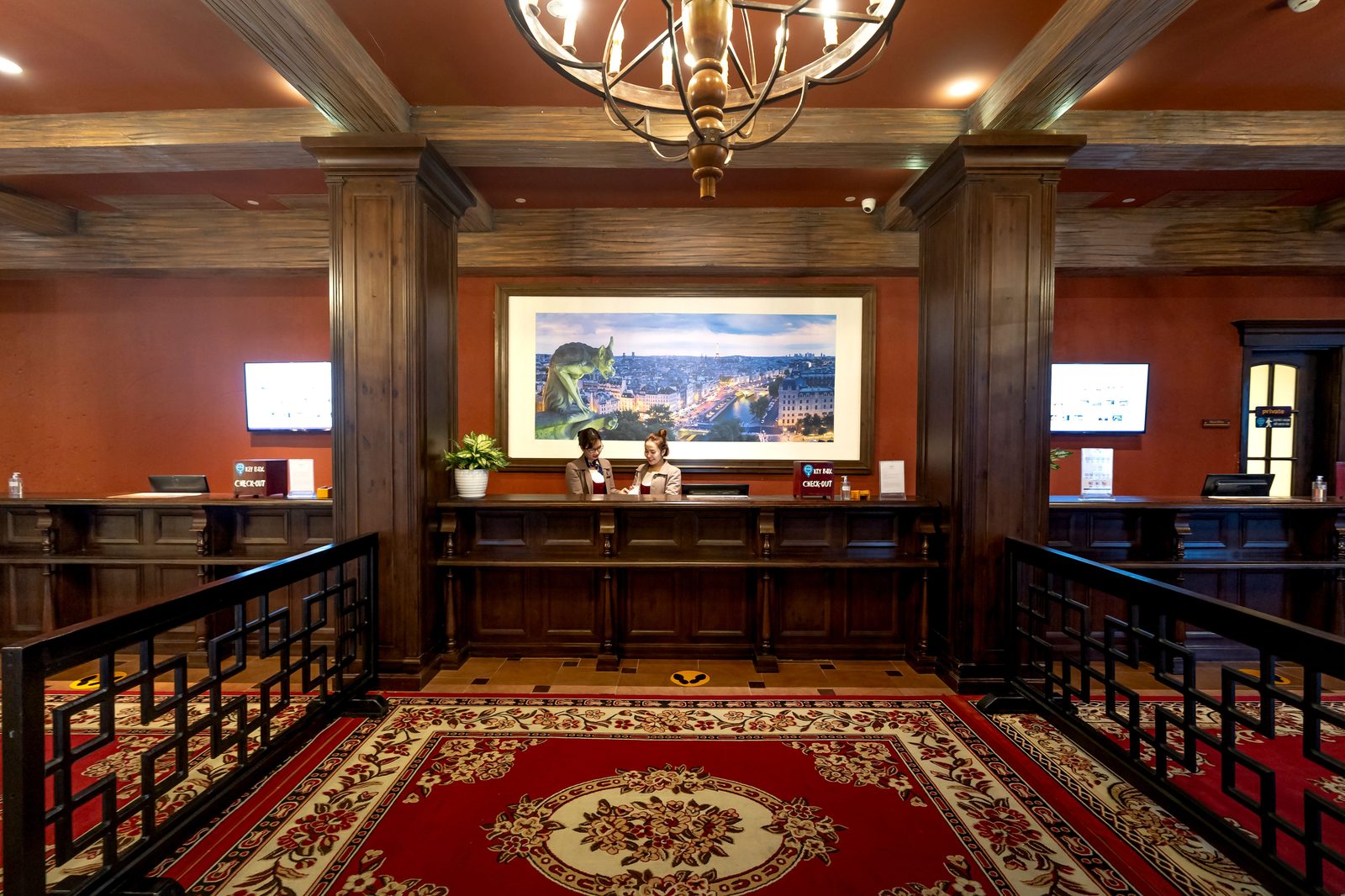
Experienced travelers arrive at the desk and, before anything else, use the agent’s name off their name tag and ask a genuine, specific question, not “any upgrades available?” but something like “is there a quieter room away from the elevator, since I’ll be working in the morning?” That framing does two things: it gives the agent a legitimate operational reason to move you rather than a request for a favor, and it signals you’re a low-maintenance guest worth taking care of. Front desk staff have significant unpublished discretion over room assignments even when a hotel is nearly full, because not every room in a given category is equal, and someone has to decide who gets the renovated room versus the one still waiting on maintenance.
The other habit that separates frequent travelers from occasional ones is timing. Arriving right at the stated check-in time, when the front desk is slammed with a wave of same-time arrivals, is the worst possible moment to ask for anything. Arriving an hour or two after the official check-in time, once the initial rush has cleared, gives the agent room to actually look at the floor plan and think about your request instead of just processing you as fast as possible.
Loyalty Status Still Beats Almost Everything Else
Even a mid-tier loyalty status, not the top elite level, changes how an agent treats a guest, because the hotel’s internal systems flag status members automatically and many brands tie small perks or upgrade priority directly to tier. Frequent travelers join the loyalty program of whatever chain they’re staying with even for a single stay, because the cost is zero and the potential upside, a free room upgrade or late checkout, is real.
What Actually Moves the Needle
- Booking directly through the hotel’s own site or app rather than a third-party aggregator, since direct bookings are easier for staff to modify or upgrade
- Mentioning a specific occasion, an anniversary, a long travel day, briefly and honestly, which gives staff a reason to go slightly out of their way
- Being pleasant to the person ahead of you in line, since front desk staff notice and remember guests who make their day harder or easier
The check-in strategy also depends heavily on which kind of property a traveler is staying at, and treating a 40-room boutique hotel the same way as a 400-room airport convention hotel is a mistake in the opposite direction from the one most travelers make. Smaller, independently operated or boutique properties tend to have front desk staff with far more room-level knowledge and discretion, because they’re intimately familiar with every unit in a building that size, while large chain properties operate on tighter systemic rules with less individual override power, meaning the polite, specific-question approach works better at the boutique property than trying the same script at a 500-room convention hotel where the agent is working from a rigid inventory system with limited flexibility.
Digital check-in, increasingly common across major chains, has changed this dynamic without eliminating it. Mobile key and digital check-in speed up the transaction but remove the human interaction that made upgrade requests possible in the first place, which is why frequent travelers who still value the upgrade game will often skip the mobile check-in prompt entirely and walk up to the desk instead, deliberately trading convenience for the chance at a better outcome. It’s a small, almost counterintuitive habit, using the slower option on purpose, that shows up repeatedly in hospitality industry commentary about how elite-status travelers actually behave versus how casual travelers assume they behave.
Complaint handling follows a related logic that experienced travelers understand instinctively: raising a problem, a noisy room, a maintenance issue, calmly and specifically at the front desk in person produces far better resolutions than emailing customer service after the fact or posting about it online. Hotels have far more flexibility to resolve an issue in real time, a room change, a credit applied to the folio, a free breakfast, than they do to retroactively fix a stay that’s already over, and staff who feel a guest handled a complaint reasonably are considerably more likely to go out of their way on the resolution.
Timing the check-in itself matters more than most travelers realize. Arriving during a hotel’s slower afternoon lull, typically mid-afternoon well after the standard checkout rush and before the evening arrival wave, gives front desk staff more time and mental bandwidth to consider a room change or upgrade request than arriving during a chaotic 4 p.m. rush when a line of tired travelers is forming behind you, a small scheduling detail that experienced business travelers often build into their arrival planning without ever having to be told to do it.
Elite status with a hotel chain changes this calculation meaningfully, since most major chains explicitly instruct front desk staff to prioritize upgrade availability for top-tier loyalty members first, which means the polite, specific-ask approach described here works best as a supplement to actual status, not a replacement for it, and travelers serious about consistently getting better rooms are usually better served concentrating their stays with one or two loyalty programs rather than spreading bookings across unaffiliated properties in search of the lowest nightly rate each time.
None of this is a guaranteed hack, and no amount of charm overrides a genuinely sold-out hotel. But the pattern holds up across enough traveler accounts and hospitality-industry commentary to be more than anecdote: check-in is a human negotiation disguised as a formality, and the travelers who get the better rooms, the free upgrades, and the problem-free stays tend to be the ones who treat the front desk agent as a person with actual discretion, not a vending machine that dispenses keycards.