St. George, Utah Gets 1 Million Visitors a Year to Parks They’ve Never Heard Of
We may earn money or products from the companies mentioned in this post. This means if you click on the link and purchase the item, I will receive a small commission at no extra cost to you ... you're just helping re-supply our family's travel fund.
St. George, Utah has grown from a small Mormon agricultural community to a city of 100,000+ people driven primarily by retirees seeking the warmest winter temperatures in Utah and proximity to Zion National Park. Most of the visitors who come to the St. George area come for Zion, and they drive through or overnight in St. George as a logistics hub rather than a destination. The result: a collection of state parks, national monument landscapes, and geological formations within 30 minutes of downtown St. George that receive a small fraction of Zion’s visitors despite offering experiences that are, in many ways, comparable or superior.
What St. George Has That Most Zion Visitors Miss
Snow Canyon State Park
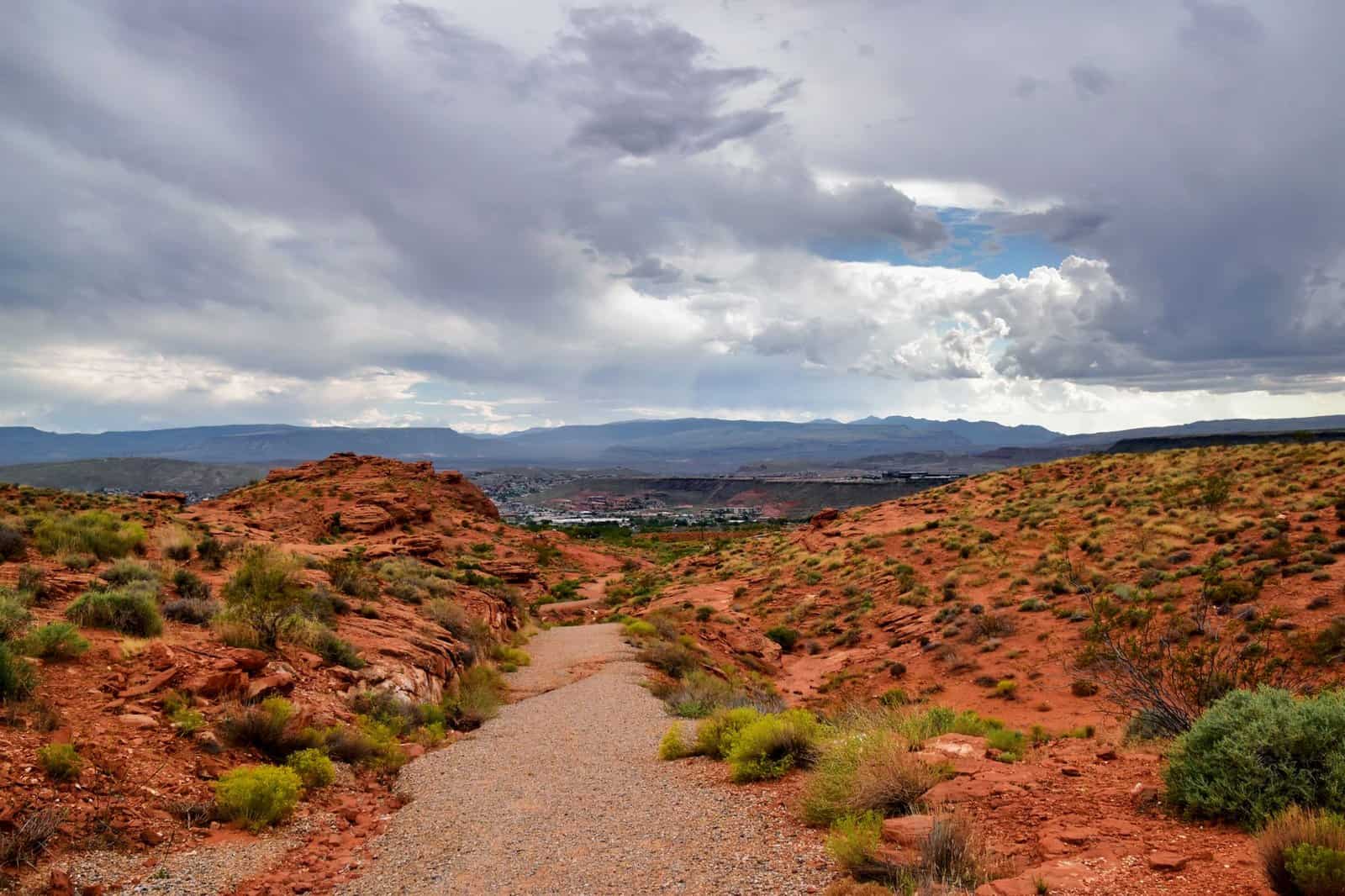
Snow Canyon State Park is 11 miles from downtown St. George and has Navajo sandstone formations, lava tubes, sand dunes, and canyon walls in red and white that are geologically related to Zion’s formations. On a weekday, you can hike the most popular trails with fewer than 50 other people. On the same weekday, Zion’s Angels Landing trailhead requires a permit that sold out months ago. Snow Canyon’s admission is $20 per vehicle. It’s one of the most undervisited state parks in Utah precisely because it exists in Zion’s shadow.
Red Cliffs National Conservation Area
The Red Cliffs Recreation Area northeast of St. George manages a portion of the Grand Staircase that includes dinosaur tracks, petroglyphs, and the same red-pink sandstone terrain that characterizes the Greater Zion region. The Red Cliffs Discovery Center is a significant natural history resource that connects the area’s geology, paleontology, and Native American history in ways the national park interpretation doesn’t. Visitation is low enough that parking is almost never an issue.
The Pine Valley Mountain Wilderness
30 miles north of St. George, the Pine Valley Mountains rise to 10,365 feet above the red desert — a pine-forested island in the sky above the Mojave Desert. The wilderness area has trail systems, a reservoir, and temperature relief in summer that makes it a local retreat during St. George’s brutal July and August heat (downtown St. George averages 104°F in July; Pine Valley is 30°F cooler). Almost no out-of-state visitors ever go there.
St. George as a Retirement Destination
St. George’s primary growth driver is retirement migration from colder states, and the infrastructure reflects this: excellent medical facilities, active adult communities, golf courses, and a service economy calibrated to older residents with disposable income. The climate genuinely justifies the appeal — January averages 54°F high temperatures, dramatically warmer than anywhere else in Utah. Summer heat is the trade-off: 100°F+ days for 2–3 months are the annual reality that most retirement marketing underemphasizes.
St. George is worth treating as a destination in its own right, not just a Zion staging area. Snow Canyon alone justifies an afternoon. The combination of Snow Canyon, Red Cliffs, and the Pine Valley Mountains gives visitors two days of landscape experience at a fraction of Zion’s cost and crowd level. The people who discover this typically wish they had stayed longer in St. George and shorter in Zion’s parking queue.