Eureka Springs, Arkansas Has 2,100 People and One of the Most Architecturally Preserved Victorian Downtowns in America
We may earn money or products from the companies mentioned in this post. This means if you click on the link and purchase the item, I will receive a small commission at no extra cost to you ... you're just helping re-supply our family's travel fund.
Eureka Springs, Arkansas was a Victorian-era resort town built around natural springs that were believed to have medicinal properties. In the late 19th century, it attracted 10,000 visitors per year to its elaborate hotels, bathhouses, and hillside accommodations — all built in the Queen Anne and Eastlake Victorian style, terraced into steep Ozark hillsides in ways that make the town look unlike any other American town its size. Then the springs’ reputation faded, Eureka Springs stayed small, and the buildings that would have been demolished and replaced in a larger city remained in place. Today the town has 2,100 permanent residents and an architectural stock that would anchor a tourism campaign in a major metropolitan state. Instead it sits in the Ozark Mountains of northwest Arkansas, mostly visited by people from Fayetteville, Tulsa, and Kansas City.
What Eureka Springs Actually Is
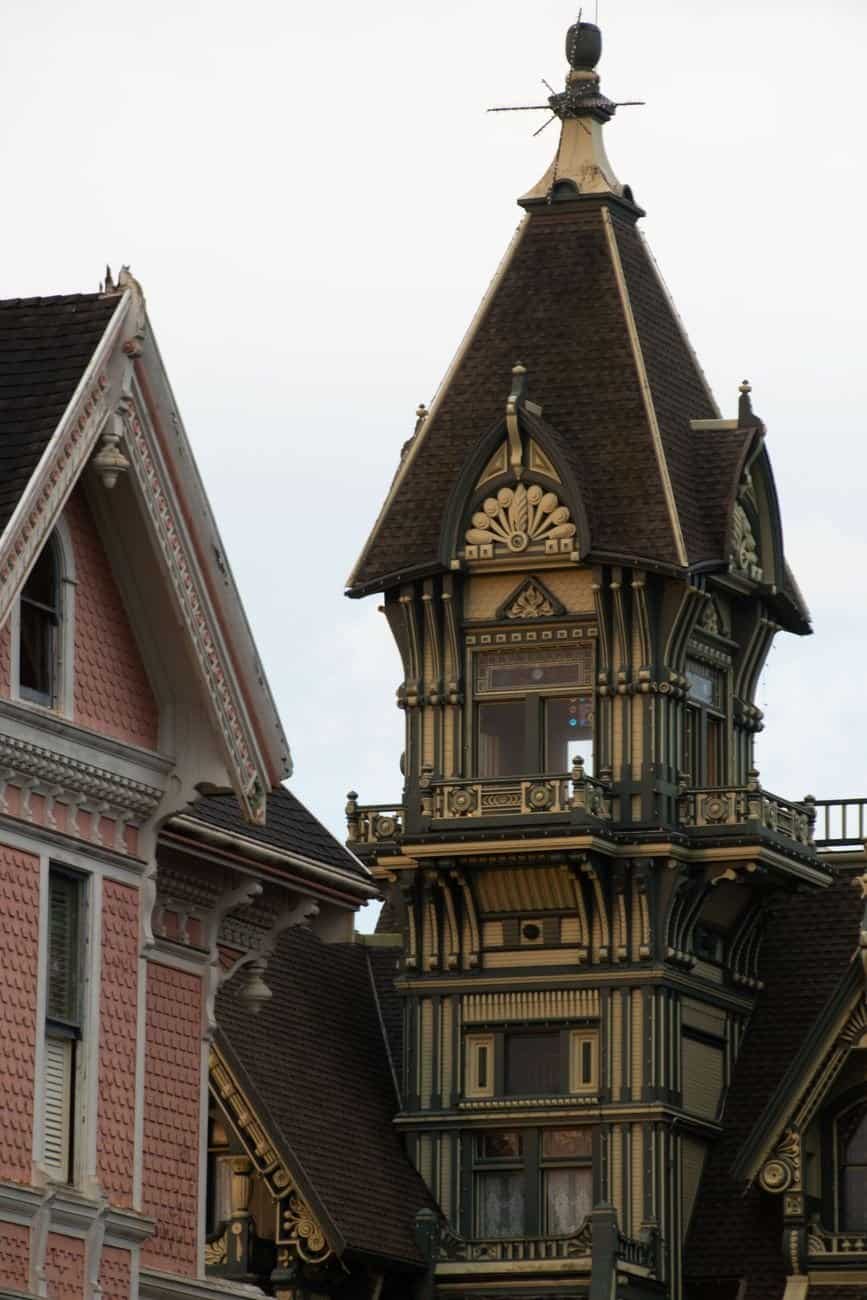
The entire downtown of Eureka Springs — Spring Street, Main Street, and the surrounding neighborhoods — is on the National Register of Historic Places as a historic district. There are no stoplights in the historic downtown because the terrain doesn’t allow for conventional intersections. Streets dead-end into hillsides, continue as staircases, or curve around natural rock formations. The Crescent Hotel, built in 1886 at the top of the ridge above town, is one of the most dramatically sited hotel buildings in the Ozarks and has a famously theatrical history as a failed cancer hospital in the 1930s that the current owners have turned into a ghost tour attraction.
What to Do in Eureka Springs
- Walk every street: The architecture tour is self-directed and the terrain creates constant surprise — there is no bad angle in this town
- The Basin Park Hotel rooftop: Built into the hillside so that different floors are at street level on different streets — the rooftop bar is at the same level as the street one block uphill
- Turpentine Creek Wildlife Refuge: 10 miles south, a large cat sanctuary with tigers, lions, and leopards in Arkansas of all places — legitimate wildlife conservation operation with a compelling backstory
- The local music scene: Eureka Springs has an arts and music tradition that produces a surprisingly active live music calendar for a town of 2,100
Eureka Springs is a two-hour drive from Fayetteville, three hours from Kansas City, and four hours from St. Louis. It’s on the way to nothing in particular and requires a deliberate detour. The people who make that detour consistently describe it as one of the more surprising places they’ve been in the American interior — a well-preserved Victorian resort town in the Ozarks that time and geography conspired to preserve. That it remains relatively unknown is either a problem or its greatest feature, depending on your perspective.