Baton Rouge Has LSU, the State Capitol, and a River That Makes Everything Feel Bigger Than It Is
We may earn money or products from the companies mentioned in this post. This means if you click on the link and purchase the item, I will receive a small commission at no extra cost to you ... you're just helping re-supply our family's travel fund.
Baton Rouge has a branding problem: it’s Louisiana’s capital city, its second-largest city, and the home of one of the largest state universities in the South — and it lives entirely in New Orleans’ shadow in the national imagination. Most travelers who enter Louisiana from the west on I-10 drive straight through Baton Rouge, 80 miles northwest of New Orleans, without stopping. The travelers who do stop find a city with a more complex identity than its reputation suggests.
What Baton Rouge Has That New Orleans Doesn’t
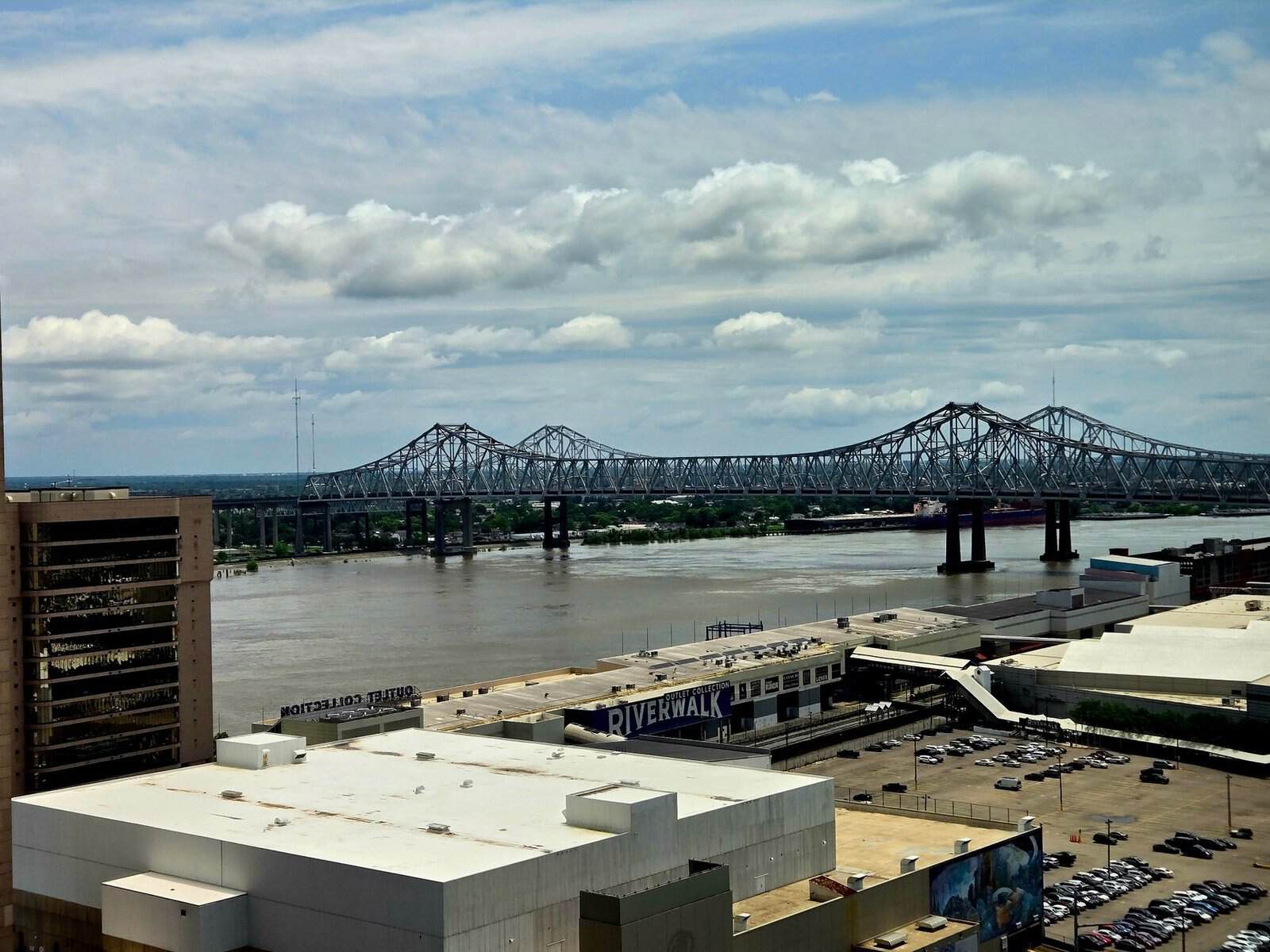
The Louisiana State Capitol is the tallest state capitol building in the United States at 450 feet — a 1932 Art Deco skyscraper built by Huey Long as a deliberate architectural statement of Louisiana’s power and ambition. Huey Long was assassinated in the building in 1935, and the bullet holes in the marble corridors have been preserved. The observation deck at the 27th floor provides the best view of the Mississippi River available anywhere in Louisiana — at Baton Rouge, the river is running fast and wide and looking nothing like the managed waterway it appears to be from Natchez or Vicksburg.
LSU and the Rural Life Museum
Louisiana State University’s campus is one of the more beautiful in the South, with Italian Renaissance architecture in the academic buildings and live oaks throughout. The LSU Rural Life Museum — on the university grounds — is one of the finest folk life museums in the South, with over 40 structures documenting the lives of the enslaved people, Cajun farmers, and rural workers who built Louisiana’s agricultural economy. It’s not a comfortable museum; it’s an honest one. The adjacent Burden Gardens are free to walk and provide a peaceful respite.
Baton Rouge’s food scene is specific to South Louisiana in ways that differ from New Orleans. The LSU area has been producing new restaurant concepts for years. The Old South Baton Rouge neighborhood has Cajun and Creole restaurants that aren’t calibrated for tourist expectations. If you’re driving between Houston and New Orleans and want to stop for something more than gas, Baton Rouge gives you a state capitol, an excellent museum, a major university campus, and a river view that reminds you the Mississippi is not a metaphor — it’s a force of nature that determined where every city on it was built and why.