Beyond Knoxville, Tennessee’s Tri-Cities Are Growing—Here’s What 3 Towns Are Betting On to Stand Out
We may earn money or products from the companies mentioned in this post. This means if you click on the link and purchase the item, I will receive a small commission at no extra cost to you ... you're just helping re-supply our family's travel fund.
Drive about 100 miles northeast of Knoxville on Interstate 81 and you reach the corner of Tennessee where the state meets Virginia and North Carolina. This is the Tennessee Tri-Cities: Johnson City, Kingsport, and Bristol. Together they form a metro of several hundred thousand people in the mountains, and each is trying a different strategy to stand out.
Johnson City is leaning on health care and a university. Kingsport is leaning on trails and a manufacturing legacy. Bristol is leaning on music, racing, and a famous main street that straddles two states. Here are the three towns, what each is betting on, and what visitors will notice.
3 Tennessee Tri-Cities Towns and What Each Is Betting On
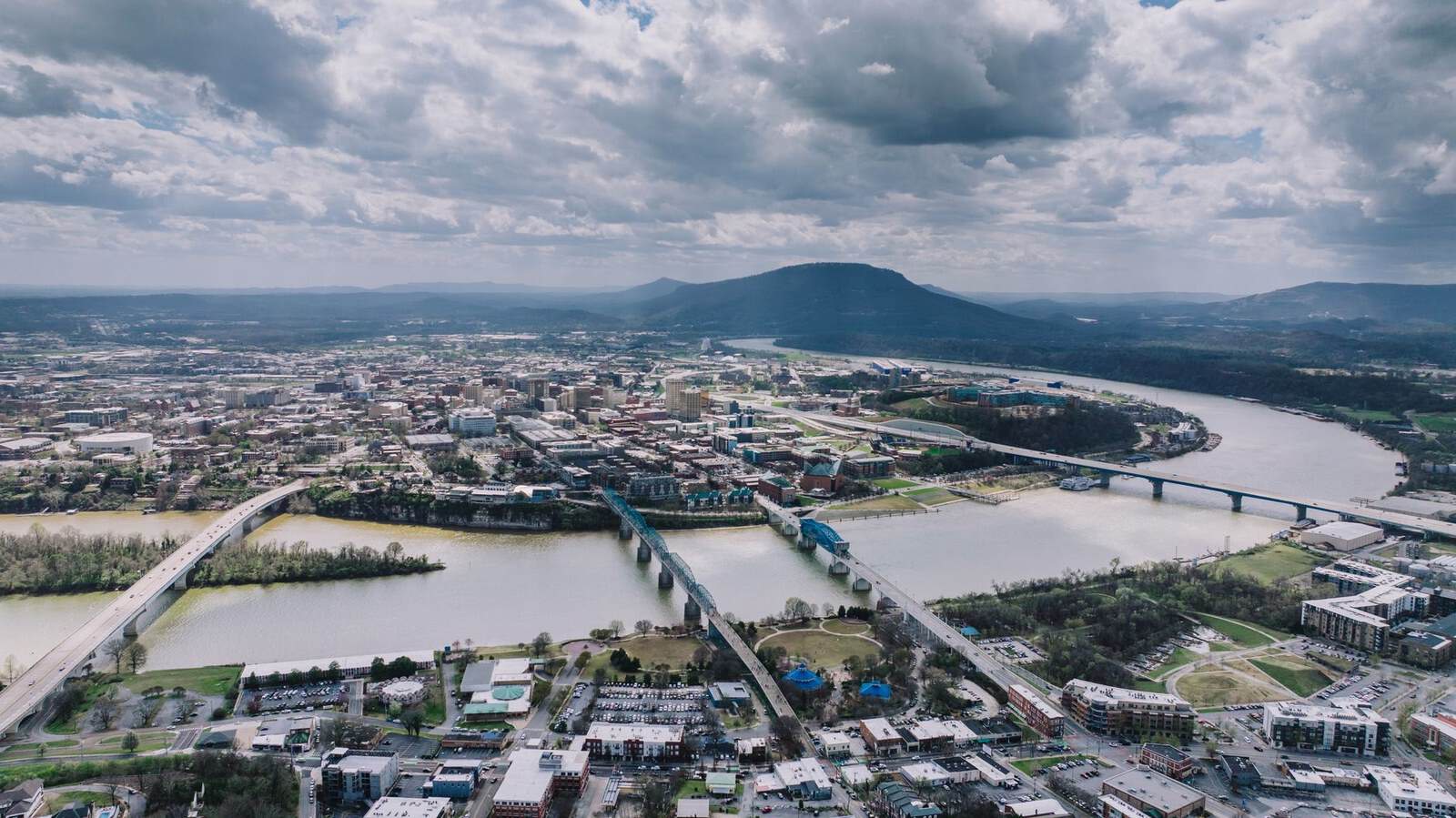
The Tri-Cities sit in Northeast Tennessee, anchored by the Appalachian foothills and the Holston and Watauga river valleys. The region has long relied on manufacturing, railroads, and agriculture. Today the three main towns are choosing different paths to grow, and the contrast makes the area interesting to visit.
1. Johnson City: Health Care, a University, and a Downtown Comeback
Johnson City is the largest of the three and a regional hub for medicine and education. East Tennessee State University anchors the city, and its Quillen College of Medicine and health sciences programs feed a large health care economy. The Ballad Health system, formed in 2018 from the merger of two regional systems, is a major employer and has its headquarters in Johnson City.
The bet is that a university and a medical cluster will bring jobs, students, and young professionals, and that those people want a walkable downtown. Revitalization around Main Street, Buffalo Street, and the Tipton Street area has brought breweries, restaurants, and small shops. The Tweetsie Trail, a converted railroad corridor, connects Johnson City to Elizabethton for walking and biking, and Founders Park hosts markets and events.
Visitors will find a college-town feel without the crowds of a big city. A good day might include breakfast downtown, a walk or ride on the Tweetsie Trail, and an afternoon at the Hands On! Regional Museum, which is geared toward families. Evenings revolve around local breweries and live music, and ETSU games and concerts add to the calendar.
What to watch: housing costs have risen as more people move in, and the city is working through the usual growing pains, including traffic around the medical corridor and demand for rentals near campus.
2. Kingsport: Trails, Outdoor Recreation, and an Industrial Base
Kingsport has a different identity. It began in the early twentieth century as a planned industrial city, and its largest employer is Eastman Chemical Company, whose sprawling campus sits along the Holston River. That manufacturing base remains central. But Kingsport is betting that outdoor recreation and quality of life will help it draw new residents and visitors.
The city’s Greenbelt, a paved trail that follows the Holston River, is a signature amenity, and more trail systems tie into parks and neighborhoods. Bays Mountain Park & Planetarium, a large city-owned nature preserve with a lake, wildlife habitats, and a planetarium, draws families and hikers. The Kingsport Carousel and an active downtown calendar add to the draw. The city also promotes mountain biking and paddling on nearby rivers and lakes.
Visitors will find a tidy, family-friendly city with a strong sense of civic pride. A visit might include a morning on Bays Mountain, lunch downtown near Broad Street, and an afternoon on the Greenbelt. The nearby Netherland Inn historic site recalls the city’s early role on the Wilderness Road and the Holston River’s boat trade.
What to watch: Kingsport’s challenge is to balance its industrial economy with a push to attract new employers and young workers. The city has worked on downtown redevelopment and remote-worker-friendly branding.
3. Bristol: Music, Racing, and a Town Split by a State Line
Bristol is the Tri-Cities’ tourism play. The city straddles the Tennessee-Virginia line, and State Street runs along the boundary, with a sign marking the border. In 1927, the Bristol Sessions, a series of recordings made by Ralph Peer, helped launch commercial country music, and Congress has called Bristol the Birthplace of Country Music. The Birthplace of Country Music Museum, part of the Smithsonian’s affiliations program, tells that story and anchors the downtown.
The other draw is Bristol Motor Speedway, a high-banked short track that hosts NASCAR races and draws tens of thousands of fans. The racing weekends fill hotels and restaurants for miles, and the speedway also hosts other events through the year. On the Virginia side, a casino resort has opened as part of Virginia’s gaming expansion, adding another reason to visit.
Visitors will find a walkable downtown with murals, restaurants, and music venues. The Rhythm & Roots Reunion, an annual music festival, brings acts to the streets, and the Paramount Center for the Arts hosts shows in a restored theater. Race weekends are crowded and rooms cost more, so check the calendar.
What to watch: Bristol’s bet on tourism relies on events. The challenge is to turn a few big weekends into year-round visits, and to ensure benefits reach both sides of the state line.
How the Three Bets Compare
Each town is working on the same problem: how to grow without losing what made it appealing. The strategies differ in important ways.
- Johnson City is betting on knowledge and services, with a university and a hospital system as engines.
- Kingsport is betting on a mix of manufacturing and outdoor quality of life.
- Bristol is betting on culture and events, using music and racing to bring visitors.
All three face similar pressures. Housing costs are rising, workers are in short supply in some industries, and each town wants to keep young people from leaving for Knoxville, Nashville, or Charlotte. The region also contends with the challenges common to Appalachia, including health disparities and uneven economic gains.
Eating and Drinking Your Way Through the Region
Food is one of the easiest ways to see how each town thinks of itself. Johnson City’s downtown leans on craft beer, coffee, and chef-run restaurants that cater to students and medical staff. Kingsport favors family restaurants and local diners, plus a growing brewery scene near downtown. Bristol serves classic Southern comfort food and barbecue, and it adds a few music-themed bars where you can listen to bluegrass or country while you eat.
Across the region, expect dishes like pinto beans and cornbread, country ham, biscuits, and fried chicken. Mountain-style cooking is part of the Appalachian identity, and many menus include local sorghum, apples, and trout. Prices are generally lower than in Nashville or Asheville, with a casual dinner often costing $12 to $25 per person.
Where to Stay
Lodging follows the same pattern. Johnson City has chain hotels near the university and medical corridor, along with a few boutique options downtown. Kingsport has a small mix of hotels and historic inns, and Bristol has chain hotels near the speedway and a few downtown options. Rates are usually moderate, often $90 to $160 a night, but race weekends in Bristol can push prices much higher and fill rooms across the region. If you plan to visit during a big event, book early or stay in Johnson City or Kingsport and drive in.
The Challenges Underneath the Growth
Visiting a place in transition means noticing what is not finished. The Tri-Cities are growing, but they are doing so against some headwinds. Wages in several sectors remain below national averages, and the region has struggled with health outcomes tied to rural poverty and the opioid crisis, which Ballad Health and local governments have been working to address. Small downtowns have benefited from restaurants and festivals, but some neighborhoods outside the center have seen less investment.
These problems are part of the context for the bets each town is making. A university and hospital system are meant to provide high-paying jobs. Trails and parks are meant to attract workers who can live anywhere. Music and racing are meant to bring spending from visitors. None of these is a guarantee, but together they show a region with a plan.
Why Look Beyond Knoxville
Knoxville is Tennessee’s gateway to the Smokies and has a strong economy of its own. But the Tri-Cities offer a different scale and price. Housing and dining tend to be more affordable, trails are less crowded, and small-town hospitality is easy to find. The area also sits close to major outdoor destinations, including Roan Mountain State Park and the Appalachian Trail corridor, Cherokee National Forest, and South Holston Lake.
The region is also easy to explore by car. Johnson City, Kingsport, and Bristol are each within about 30 minutes of one another, so a visitor can base in one and see the others in a day. The Tri-Cities Airport near Blountville offers regional flights, though many visitors drive in from Knoxville, Asheville, or Roanoke.
A Three-Day Tri-Cities Plan
You can see all three towns in a long weekend.
- Day one: Johnson City. Morning on the Tweetsie Trail, lunch downtown, afternoon at the museum, and evening at a brewery.
- Day two: Kingsport. Morning at Bays Mountain, lunch downtown, an afternoon on the Greenbelt, and dinner near the river.
- Day three: Bristol. Morning at the Birthplace of Country Music Museum, a walk along State Street, lunch downtown, and an evening show if one is scheduled.
Add a day trip to Roan Mountain or Cherokee National Forest for more time outdoors. Check museum hours and race and festival dates in advance, since they affect both crowds and prices.
What the Bets Mean for Visitors
For visitors, the bets show up in the details. In Johnson City, you will find more coffee shops and craft beer. In Kingsport, you will see well-kept trails and parks. In Bristol, you will find music on the street and a real sense of history. Each town is investing in what it can offer travelers, and each is trying to stand out in a region many people drive past on their way somewhere else.
The Tennessee Tri-Cities may not have the name recognition of Knoxville or Asheville, and that is part of the appeal. Growth is real, but the pace is still manageable, and visitors can see a region figuring out its future in real time.