Bryce Canyon’s Rim Sits Above 8,000 Feet. 8 Ways Snow Changes Your Trip
We may earn money or products from the companies mentioned in this post. This means if you click on the link and purchase the item, I will receive a small commission at no extra cost to you ... you're just helping re-supply our family's travel fund.
Bryce Canyon National Park sits much higher than most of Utah’s famous parks. Its rim ranges from about 8,000 feet to more than 9,000 feet, and according to Visit Utah, the park averages nearly 100 inches of snow a year. That elevation is why Bryce Canyon in winter looks and feels so different from nearby Zion or Capitol Reef.
Snow on the orange and pink hoodoos is one of the most striking sights in the Southwest. But it also changes how you visit, from which trails are open to how you dress and drive. Visit Utah notes that winter temperatures have dropped as low as minus 26 degrees Fahrenheit, and subzero temperatures can occur in any winter month. December through February are typically the coldest, snowiest months.
Here are eight ways snow changes a Bryce Canyon trip, and how to plan around each.
What to expect at Bryce Canyon in winter
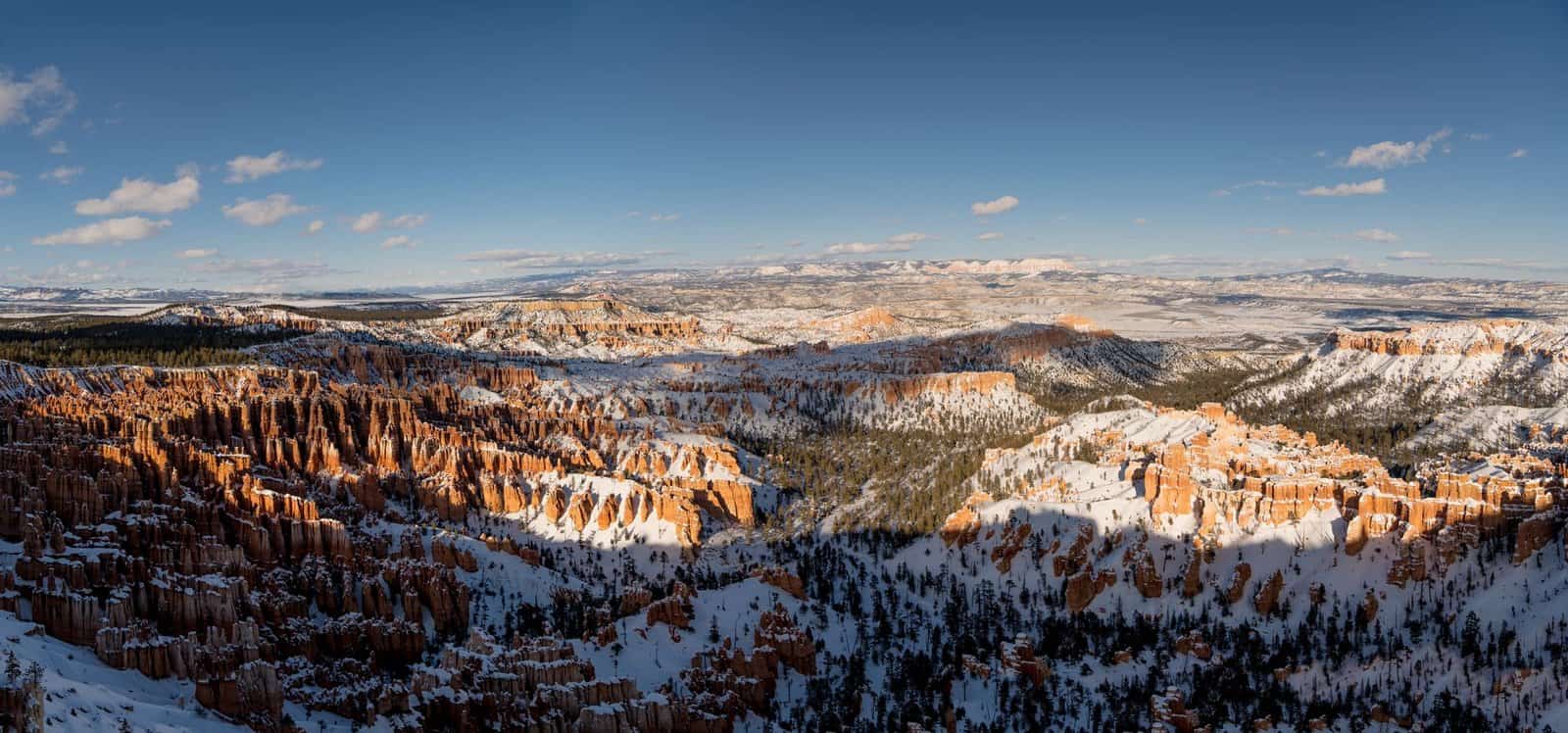
Bryce Canyon is not a single canyon but a series of natural amphitheaters carved into the edge of the Paunsaugunt Plateau. The amphitheaters are filled with hoodoos, tall spires of rock shaped by frost and rain. In winter, freeze-thaw cycles are part of what carves the hoodoos, so you are seeing the park during the season that shapes it most.
1. Some trail sections close for the season
The National Park Service closes two trail sections for the entire winter season: the Wall Street side of the Navajo Loop Trail and the Rim Trail between Inspiration Point and Bryce Point. Ice and rockfall risk make these sections dangerous in winter.
The Two Bridges side of the Navajo Loop stays open for down-and-back hiking or for combinations with the Queen’s Garden or Peekaboo trails. That means you can still hike into the amphitheater, just not on the famous Wall Street switchbacks between narrow rock walls.
2. Trails get icy, so traction devices matter
Even open trails can be slick with packed snow and ice, especially on steep switchbacks below the rim. Microspikes or other traction devices that strap onto your boots make a huge difference. Many visitors who slip on Bryce trails in winter were wearing regular hiking shoes.
Trekking poles help too. Ask at the visitor center about current trail conditions before heading down.
3. Cold is serious
Normal winter daytime highs at Bryce are slightly above freezing, but cold snaps can be severe. Wind on the rim can make temperatures feel much colder. At this elevation, the sun is intense, but it does not warm you much in winter.
Dress in layers with a warm, windproof outer layer. Bring a hat, gloves, and a scarf or neck gaiter. Keep extra layers in your car. If you are hiking below the rim, remember that the climb back up will warm you, so dress to avoid overheating and then getting chilled.
4. Roads and viewpoints can close temporarily
The main park road is plowed in winter, but heavy snowstorms can cause temporary closures until crews clear it. Some viewpoints or side roads may close for periods after storms. Fairyland Point Road is typically closed to cars in winter and used for snowshoeing and skiing.
Check the park’s current conditions page and road status before you go. Utah’s statewide road conditions are available through the Utah Department of Transportation.
5. The summer shuttle stops running
Bryce Canyon’s shuttle system typically runs only in the warmer months. In winter, you drive your own vehicle to viewpoints along the main road. Parking is usually easier in winter because of lighter crowds, but lots may be partially snow-covered.
Make sure your vehicle has good tires or four-wheel drive, and drive slowly on the plowed but sometimes icy park road.
6. Snowshoeing and skiing become options
Snow opens up new ways to explore. The Rim Trail, apart from the closed section between Inspiration Point and Bryce Point, is popular for snowshoeing, and some routes on the plateau above the rim, including Fairyland Road and Paria Ski Loop, are used by cross-country skiers when snow is deep enough.
Ranger-led snowshoe hikes are sometimes offered when snow conditions allow, and the park has offered loaner snowshoes for those hikes. Check the park’s schedule for current programs. Outside the park, the area around Bryce Canyon City and Ruby’s Inn has groomed ski trails in some winters.
7. Crowds thin out dramatically
Bryce Canyon gets the bulk of its visitors from spring through fall. In winter, the park is much quieter. You may have viewpoints like Sunrise Point, Sunset Point, Inspiration Point, and Bryce Point almost to yourself, especially early in the morning.
That quiet also makes winter a great time for photography. The low winter sun lights the hoodoos with warm color, and snow adds contrast.
8. The Winter Festival adds events
Every year, Visit Utah reports, the Bryce Canyon Winter Festival offers a family weekend of activities, typically held over Presidents’ Day weekend in February. The festival includes ski clinics, snowshoe hikes, geology talks, yoga, art classes, archery clinics, crafts, and photography workshops.
If you want structured activities and a lively atmosphere, plan your trip around the festival. If you want solitude, avoid that weekend.
Best winter hikes and viewpoints
With some sections closed, focus on these winter options:
- Queen’s Garden Trail: One of the gentlest trails into the amphitheater, starting at Sunrise Point. Often combined with the Two Bridges side of the Navajo Loop.
- Navajo Loop, Two Bridges side: A steep descent from Sunset Point past narrow formations. Hike down and back in winter.
- Rim Trail, open sections: Walk between Sunrise and Sunset points or between Sunset and Inspiration points for easy views.
- Bryce Point and Inspiration Point: Two of the most dramatic viewpoints, accessible by car when the road is open.
- Rainbow Point: At the end of the park road, at more than 9,000 feet. Check whether the road is open all the way.
Start hikes in late morning after the sun has softened icy trails, and finish before late afternoon when temperatures drop.
Night skies in winter
Bryce Canyon is known for dark skies. In winter, long nights give you plenty of time to stargaze. On clear, moonless nights, you can see the Milky Way and thousands of stars. Dress very warmly, since nighttime temperatures can be far below freezing.
The park sometimes offers astronomy programs, though they are more common in summer. Check the current schedule.
Lodging and camping
The Lodge at Bryce Canyon, inside the park, typically closes for the winter, so most winter visitors stay outside the park. Bryce Canyon City, just outside the entrance, has hotels and services that stay open in winter. Tropic and Panguitch have more options. Book ahead for holiday weeks and the Winter Festival weekend.
North Campground typically stays open in winter for camping, with limited services. Winter camping at this elevation is very cold, so bring gear rated for extreme temperatures.
Getting there
Bryce Canyon is about four hours from Salt Lake City and about four hours from Las Vegas. Winter driving routes cross high terrain. Scenic Byway 12 and U.S. 89 can see snow and ice. Check road conditions before you leave, carry emergency supplies, and allow extra time.
A sample winter day
Arrive at Sunrise Point just after sunrise to watch light hit the snowy hoodoos. Walk the Rim Trail to Sunset Point. Warm up with breakfast, then hike Queen’s Garden and the Two Bridges side of the Navajo Loop in late morning. Drive to Inspiration Point and Bryce Point after lunch. Finish the day at Rainbow Point if the road is open, then return to Bryce Canyon City for dinner. If the sky is clear, step outside after dark to see the stars.
Driving in from Zion or Capitol Reef
Many winter visitors combine Bryce with Zion, about two hours southwest, or Capitol Reef, about two and a half hours northeast via Scenic Byway 12. The change in elevation is dramatic. Zion’s canyon floor sits around 4,000 feet, so you can leave mild weather in the morning and arrive at Bryce to find deep snow. Watch the forecast for both parks, and avoid driving the high stretches of Byway 12 near Boulder during or right after a storm.
What to pack
A short winter packing list for Bryce:
- Microspikes or other traction devices.
- Trekking poles.
- Insulated, waterproof boots.
- Base layers, a warm mid-layer, and a windproof shell.
- Warm hat, gloves, and a neck gaiter.
- Sunglasses and sunscreen for high-elevation glare.
- A thermos with a hot drink.
- Emergency supplies in your car, including blankets, water, and food.
Altitude matters too. If you are coming from low elevation, take it easy on the first day, drink plenty of water, and watch for signs of altitude sickness like headache or nausea.
The bottom line
Bryce Canyon’s rim sits above 8,000 feet, which means real winter. Snow closes some trail sections, makes others icy, brings extreme cold, causes temporary road closures, ends shuttle service, opens up snowshoeing and skiing, thins the crowds, and brings the Winter Festival in February. Plan for those eight changes, bring traction and warm layers, and you will see one of the most beautiful parks in the country at its most dramatic.