A $400 Million Costco Deal Turned Western Iowa Into a Chicken Farm. The Towns Involved Never Got a Real Vote
We may earn money or products from the companies mentioned in this post. This means if you click on the link and purchase the item, I will receive a small commission at no extra cost to you ... you're just helping re-supply our family's travel fund.
In 2019, Costco opened a $450 million poultry complex in Fremont, Nebraska, just across the state line from western Iowa, built specifically to guarantee a steady supply of $4.99 rotisserie chickens. To feed that plant, the company needed roughly 120 new broiler barns within a 100-mile radius, and three Iowa counties fell inside that radius. What followed was a rapid, largely private buildout of industrial poultry barns across small Iowa towns that most Costco shoppers have never heard of, including Logan, Pisgah, and communities scattered through Harrison and Monona counties.
How the Deal Actually Works
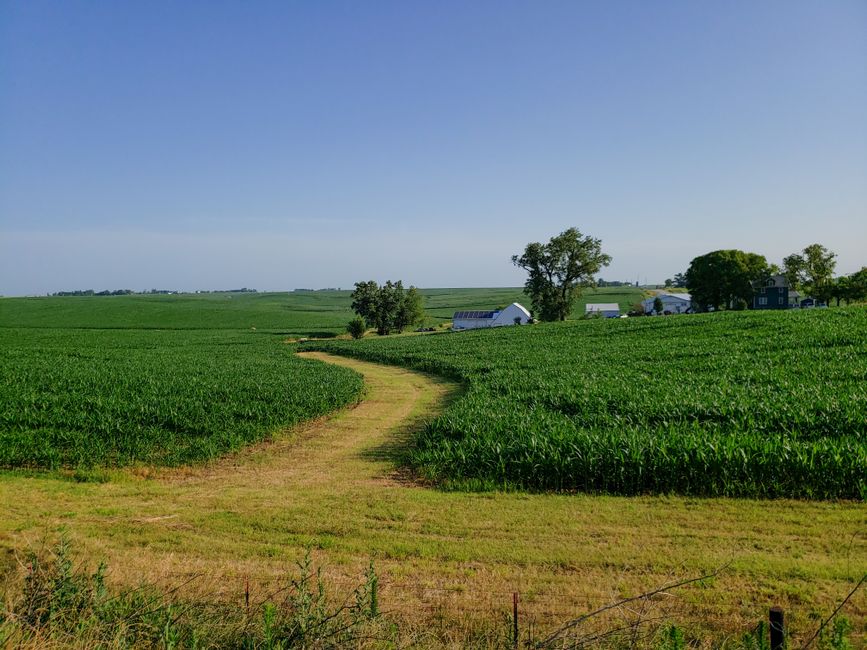
Costco does not own the barns. Instead, it contracts with local farmers who take on the debt to build them, typically financing structures that each house up to 50,000 birds, in exchange for guaranteed purchase agreements from Costco’s supply chain. One farmer near Logan, a town of about 1,400 people, built four barns housing roughly 42,000 birds each, according to reporting from the Global Change Resolution project. Costco gets a locked-in, low-cost supply chain. The farmer takes on a construction loan often running into the millions. The town gets the truck traffic, the smell, and the water runoff, with no direct financial stake in the arrangement.
What Changed for These Towns
- A wave of new barn construction concentrated in Harrison, Monona, and neighboring counties starting around 2019 and continuing for several years
- Increased heavy truck traffic on rural roads not originally engineered for the volume
- Local advocacy groups, including Food and Water Watch, published reports arguing the arrangement shifts environmental and financial risk onto rural communities while Costco captures the pricing benefit
- Family-run operations like Cobb Hollow near Pisgah, Iowa now produce millions of eggs a year as part of the supply chain, drawing local pride even as broader community sentiment on the buildout remains mixed
The Public Never Got a Real Say
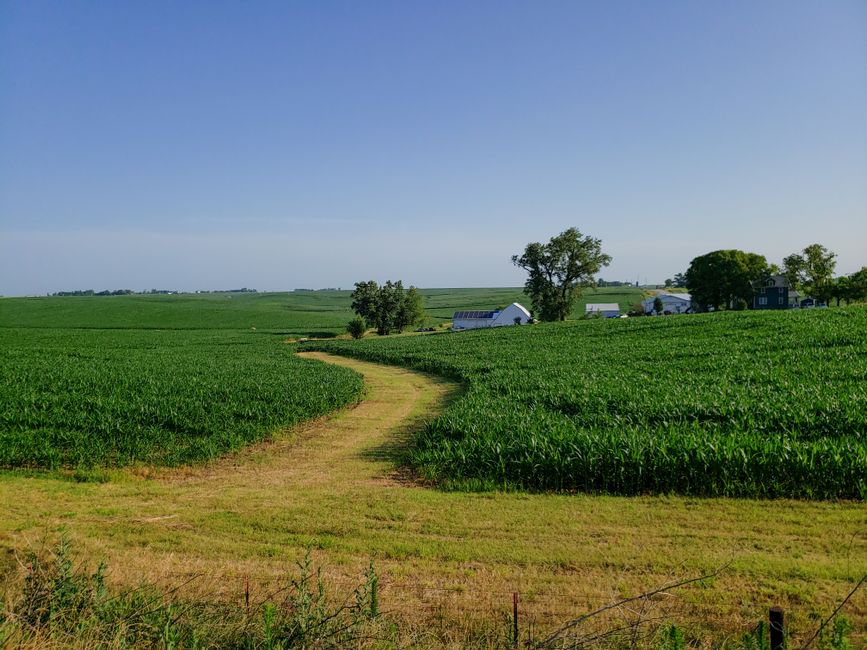
Unlike the sharper zoning fights that erupted in Nebraska’s Lancaster County, where county board members ultimately rejected a proposed operation after residents testified about unknown environmental risks, most of the Iowa barn additions moved forward through standard agricultural permitting processes that don’t require the kind of public hearing a large industrial facility inside city limits would trigger. Agricultural land use in Iowa is governed differently than commercial development, meaning a resident objecting to a new 50,000-bird barn next door has far less procedural leverage than they would fighting, say, a new warehouse or factory.
Why This Matters Beyond Iowa
- The Costco chicken model has been copied by other national retailers looking to vertically integrate protein supply chains
- It illustrates how a single corporate decision made in Washington state can reshape land use policy outcomes in rural counties thousands of miles away
- Farmers who built the barns are now financially dependent on Costco’s continued demand, creating a lock-in that limits their future flexibility
The Rotisserie Chicken Tourists Never Think About
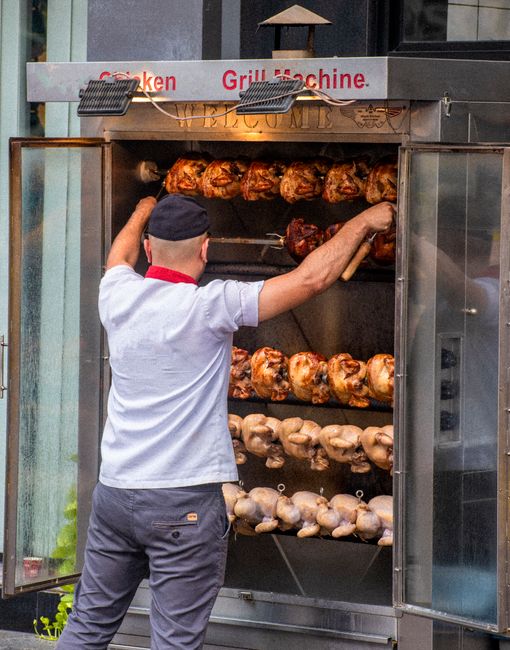
Every $4.99 rotisserie chicken sold nationally is a small, invisible transaction with towns like Logan and Pisgah baked into the price. For travelers passing through western Iowa on Interstate 29, the barns are visible from the highway if you know to look, low metal buildings clustered near otherwise unremarkable farmland. Almost nobody does look, because almost nobody knows the connection exists. The chicken is cheap because somebody two states away absorbed the parts of the cost that don’t show up on a receipt.
The Towns Themselves, Beyond the Barns
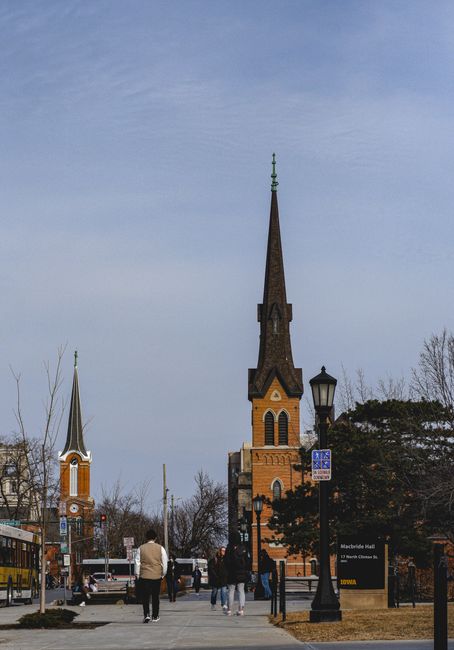
Logan and Pisgah are not defined solely by the poultry buildout, even if that’s the detail most likely to draw outside attention now. Logan sits along the Boyer River in the Loess Hills, an unusual geological formation of wind-deposited soil found in only a handful of places worldwide, and the surrounding Loess Hills Scenic Byway draws a modest but dedicated following of hikers and cyclists who have no connection to the poultry industry at all. Pisgah, smaller still, is anchored by the kind of single Methodist church social hall that still serves as the actual center of community life, the same hall where farmers gathered for a 2025 event honoring Cobb Hollow’s contribution to the regional egg supply chain.
What’s changed for towns like these isn’t visible in a single dramatic before-and-after photo. It shows up in things like modestly increased local tax revenue from new agricultural construction, a slow trickle of contractor and logistics jobs tied to barn maintenance and feed delivery, and a generational shift where some younger residents who might have left for Omaha or Des Moines instead found a reason to stay and take over a family farming operation that now has a guaranteed buyer. Whether that counts as a net positive for the town depends heavily on which resident you ask, and how close their property sits to the nearest barn.
What This Looks Like If You’re Driving Through
- The Loess Hills Scenic Byway offers legitimately unusual terrain for the Midwest, worth a detour even without any interest in the poultry story
- Small-town cafes in Logan and nearby communities still function as the actual information hub for regional agricultural news, more so than any website
- Traffic on rural county roads can include unusually large feed trucks, a detail that surprises drivers unfamiliar with the area’s recent industrial shift
- Most of the barns themselves are not visible from main highways, tucked back on private agricultural land away from public roads
The broader pattern extends well past Iowa and past chicken. Vertically integrated supply chains increasingly let large retailers dictate land use decisions in rural communities without ever appearing on a local ballot or a single public meeting. Costco did not force any Iowa farmer to build a barn. It simply made the offer attractive enough, and the local permitting environment permissive enough, that the outcome was effectively decided before most residents realized a decision was being made at all.
For Iowa itself, the deal represents a familiar trade the state has made repeatedly with large agricultural processors over the decades: short-term construction jobs and modest long-term employment in exchange for infrastructure strain, odor complaints, and water quality risks that fall disproportionately on the smallest, least politically powerful towns in the state.