Boise Grew Nearly 25% in a Decade—and Bay Area Transplants Say They’d Never Go Back. They Also Admit What the City Lost
We may earn money or products from the companies mentioned in this post. This means if you click on the link and purchase the item, I will receive a small commission at no extra cost to you ... you're just helping re-supply our family's travel fund.
Ada County, home to Boise, grew by roughly 24% between 2010 and 2020, one of the fastest growth rates of any metro area in the country, and a significant share of that growth traced back to California, particularly the Bay Area. The pattern accelerated hard during the pandemic, when remote work untethered tech workers from San Francisco rents and Boise’s median home price was still, for a few brief years, less than half of the Bay Area’s median.
People who made the move consistently describe the same calculation: a house with a yard for what a one-bedroom apartment cost in San Jose, a 20-minute commute instead of 90 minutes each way, and access to the Boise foothills for hiking and mountain biking that rivaled anything in Northern California without the traffic or the permit fights.
What Boise Actually Gained
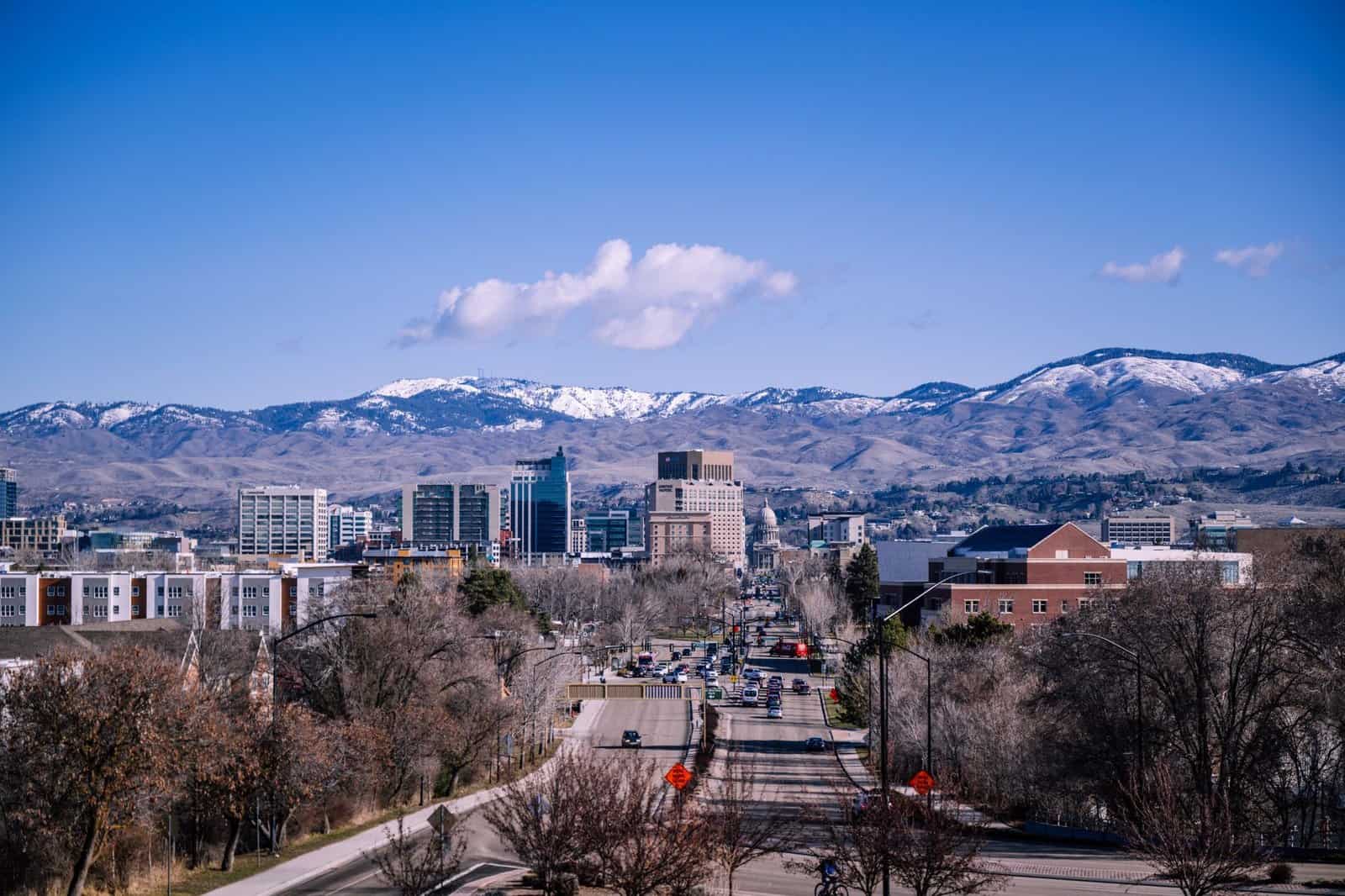
The influx brought capital and diversified an economy that had leaned heavily on agriculture, Micron Technology, and government jobs tied to being the state capital for most of the twentieth century. Boise’s restaurant and brewery scene expanded noticeably through the 2010s, and the downtown core, particularly along 8th Street, added the kind of density and nightlife that previously would have required a drive to Salt Lake City or Portland to find on a Friday night.
Boise State University’s football program and the blue turf at Albertsons Stadium gave the city a level of national visibility disproportionate to its actual size, and that visibility, combined with consistently high rankings on best places to live lists throughout the 2010s, created a feedback loop — more press coverage brought more movers, which in turn brought more press coverage the following year.
What Boise Lost in the Process
Home prices in Ada County roughly doubled between 2016 and 2022, pricing out a meaningful share of the teachers, service workers, and multi-generational Idaho families who had built the city’s actual civic infrastructure over the preceding decades. Idaho’s income levels didn’t rise anywhere near as fast as home prices did, creating a gap that longtime residents describe as the single biggest change to the city’s character — a place that used to be genuinely affordable for anyone willing to work became a place where a full-time job no longer guarantees you can buy in.
Traffic, once a nonexistent problem in Boise, became a real complaint, with commute times on Interstate 84 and the connector roads into the foothills stretching in ways longtime residents say never happened before 2015. The foothills themselves — the open space trail system that drew so many transplants in the first place — have seen crowding on popular trails like Table Rock and the Ridge to Rivers trail network that noticeably changes the experience the newcomers originally came looking for.
Why the Transplants Say They Won’t Go Back Anyway
Even accounting for Boise’s rising costs, transplants from the Bay Area consistently point out that Idaho’s overall cost of living remains meaningfully lower than California’s, state income tax is lower, and there’s no state capital gains treatment as punishing as California’s for anyone who sold a home to fund the move in the first place. The quality-of-life math — actual outdoor access minutes from downtown, versus hours of driving in California traffic — still tips in Boise’s favor for most people who made the switch permanently.
What’s changed is the tone of the conversation among newer arrivals. Five years ago, transplants talked about Boise as a discovery they’d made. Now the conversation is more defensive, aware that they’re implicated in the affordability problem locals complain about constantly, and aware that the version of Boise that drew them in 2016 doesn’t quite exist anymore for the next wave of movers arriving today.
What Local Government Has Tried to Do About It
Boise’s city government has pursued a mix of zoning reforms aimed at increasing housing density, including allowing more accessory dwelling units and multifamily construction in areas previously zoned exclusively for single-family homes, though these changes have moved slower than the pace of population growth they’re meant to address. Regional planning documents now explicitly discuss the Bay Area migration pattern as a factor city leaders have to plan around rather than treat as a temporary anomaly that will reverse on its own.
Idaho’s legislature, more conservative than Boise’s city government on most issues, has occasionally clashed with the city over how aggressively to pursue these housing reforms, leaving Boise’s approach to its own growth caught between local ambition and state-level limits on what municipal governments are allowed to mandate.
Local real estate agents report that the composition of buyers has shifted again in the last couple of years, with pure Bay Area relocations slowing somewhat as remote work policies tightened back up at many large tech employers, replaced by a mix of retirees from across the West and younger buyers who grew up in Idaho and are now competing directly against the price levels the earlier wave of transplants helped establish in the market.
Longtime Boise residents who never left often describe a strange kind of whiplash watching the city’s transformation unfold in real time — restaurants they grew up going to have closed, replaced by concepts clearly aimed at a wealthier and more design-conscious clientele, while the foothills trailheads they used to have mostly to themselves on a weekday now require arriving before sunrise to find parking during peak season, a small but constant reminder of just how much the city’s basic daily rhythms have shifted in a relatively short period of time.
Boise Public Schools and the broader Treasure Valley school system have had to adjust rapidly to enrollment growth in some districts while managing capacity concerns in others, a planning challenge that mirrors the same uneven growth pattern showing up in housing and traffic, and one that local school board meetings now discuss with the same urgency once reserved purely for state funding formulas. Water rights across the Treasure Valley, historically governed by agricultural-era agreements, are now the subject of renewed attention as residential development competes with farmland for the same limited supply drawn from the Boise River and underlying aquifers.