One Baltimore, Three Very Different Experiences—What Fells Point, Hampden, and Federal Hill Reveal to Visitors
We may earn money or products from the companies mentioned in this post. This means if you click on the link and purchase the item, I will receive a small commission at no extra cost to you ... you're just helping re-supply our family's travel fund.
Baltimore’s roughly 200 officially recognized neighborhoods make it one of the most granularly subdivided cities in America relative to its overall population of just under 600,000 residents, a legacy of the row-house urban form that shaped the city block by block starting in the nineteenth century. That fragmentation means Baltimore’s identity shifts dramatically within just a few blocks, in ways that visitors relying on a single guidebook impression of the city routinely miss.
Fells Point, Hampden, and Federal Hill in particular have become the three neighborhoods most visitors actually experience, and each one represents a distinctly different version of Baltimore’s post-industrial reinvention, from historic waterfront cobblestones to quirky retail corridors to a rowhouse district that gentrified faster than almost anywhere else in the city.
Fells Point’s Working Waterfront Turned Tourist Anchor
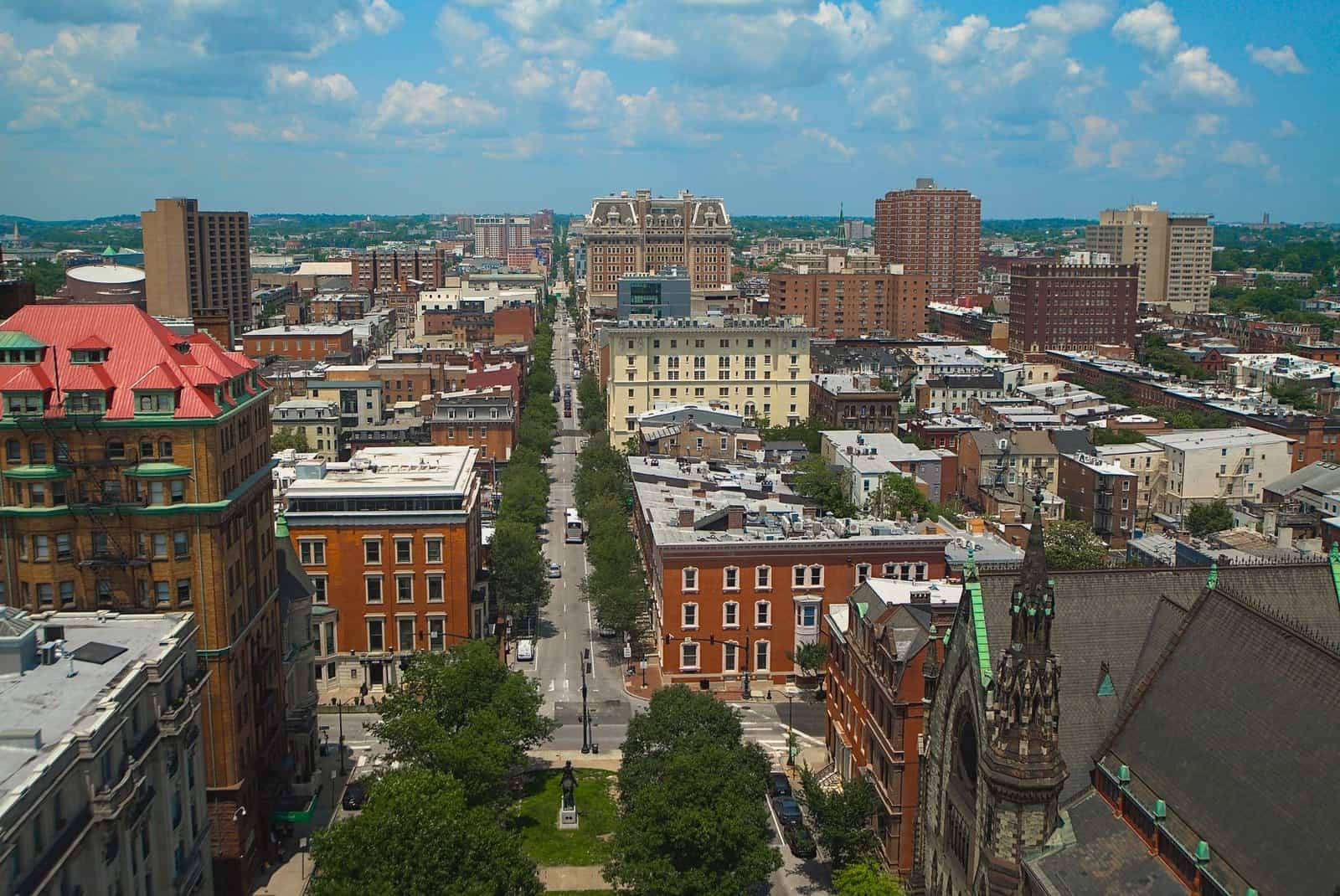
Fells Point predates Baltimore itself as a settlement, having been a shipbuilding center in the eighteenth century where much of the U.S. Navy’s early fleet, including the original USS Constellation, was constructed, and the neighborhood’s cobblestone streets and dense concentration of historic bars and rowhouses still reflect that maritime working-class origin more directly than almost any other part of the city.
The neighborhood’s transformation into a nightlife and tourism hub over the past several decades has brought real economic benefits alongside real friction, as longtime residents have watched historic dive bars turn over into more upscale establishments catering to a college-age crowd drawn from nearby Johns Hopkins and Loyola University Maryland.
Hampden’s Deliberately Offbeat Identity
Hampden built its current identity around The Avenue, a stretch of 36th Street lined with vintage shops, independent boutiques, and a self-consciously quirky aesthetic that culminates each December in Miracle on 34th Street, a residential block famous for an over-the-top, city-block-wide Christmas lights display that draws visitors from across the region.
The neighborhood’s working-class mill-town roots, it grew up around textile mills along the Jones Falls in the nineteenth century, remain visible in its rowhouse architecture even as the retail corridor has shifted decisively toward a younger, more design-conscious demographic over the past fifteen years.
Federal Hill’s Rapid, Contested Gentrification
Federal Hill has gentrified faster and more completely than almost any other Baltimore neighborhood over the past two decades, driven by its dense stock of restorable nineteenth-century rowhouses and a hilltop park offering one of the city’s best skyline views directly across the Inner Harbor toward downtown.
The neighborhood’s transformation into a destination for young professionals and a concentrated bar and restaurant scene along Light Street has priced out a substantial share of the working-class families who lived there a generation ago, a pattern that has made Federal Hill something of a citywide symbol in ongoing local debates about gentrification and housing affordability.
What This Fragmentation Means for a First Visit
First-time visitors who confine themselves entirely to the Inner Harbor tourist zone miss the neighborhood-level texture that defines how Baltimoreans actually experience their own city, since the Harbor itself, while a legitimate draw for its aquarium and waterfront promenade, was substantially built as a redevelopment project in the 1980s and reflects little of the older residential neighborhoods surrounding it.
Local tourism officials have increasingly promoted neighborhood-based itineraries rather than a single downtown-centric visit, encouraging visitors to pick two or three specific neighborhoods to explore on foot rather than attempting to see a city this granularly subdivided in a single rushed day.
- Roughly 200 officially recognized neighborhoods across a city of under 600,000 residents
- Fells Point’s colonial-era shipbuilding history still visible in its cobblestone streets
- Hampden’s quirky retail corridor and famous holiday lights display
- Federal Hill’s rapid gentrification and skyline views over the Inner Harbor
Mount Vernon and the City’s Cultural Anchor Neighborhood
Mount Vernon, centered on a cluster of green squares surrounding the Washington Monument, the first major monument in the country dedicated to George Washington, has long served as Baltimore’s cultural core, home to the Walters Art Museum, the Peabody Institute, and a concentration of historic architecture that reflects the neighborhood’s nineteenth-century status as home to the city’s wealthiest families.
The neighborhood’s ongoing revival has centered on restoring its historic rowhouses and mansions while supporting a growing restaurant and nightlife scene, positioning Mount Vernon as a walkable link between the Inner Harbor tourist zone and the more residential neighborhoods to the north.
How Locals Actually Navigate a City This Fragmented
Longtime Baltimore residents often identify as strongly with their specific neighborhood as with the city as a whole, a hyper-local identity that shapes everything from where people shop and socialize to how they vote in city elections, since neighborhood associations in Baltimore wield genuine influence over zoning and development decisions in ways that surprise visitors from cities with less granular neighborhood governance structures.
This fragmentation has also shaped how crime statistics and safety perceptions get discussed in the city, since averaging safety data across all 200 neighborhoods produces a citywide figure that obscures enormous block-by-block variation, a nuance that local residents understand intuitively but that often gets lost in national media coverage of Baltimore that treats the city as a single undifferentiated entity.
Visitors who take the time to talk with residents in any single neighborhood often come away with a far more specific and more positive impression of the city than the citywide statistics and national headlines about Baltimore would predict, a gap locals attribute directly to how much daily life varies from one square mile to the next.
City planning officials have begun using this neighborhood-level data more deliberately in recent budget cycles, directing targeted infrastructure investment toward specific blocks rather than applying a uniform citywide approach that historically underserved the neighborhoods that needed help most.
That granular approach to city investment marks a deliberate departure from decades of more uniform, citywide policy that many residents and researchers argue failed to address Baltimore’s most persistent and geographically concentrated challenges.