A Real Week in the Everglades Costs Less Than a Day at Most Theme Parks. Almost Nobody Actually Plans One.
We may earn money or products from the companies mentioned in this post. This means if you click on the link and purchase the item, I will receive a small commission at no extra cost to you ... you're just helping re-supply our family's travel fund.
The Everglades National Park, spanning 1.5 million acres of subtropical wetland across South Florida, draws roughly one million visitors annually, a modest figure compared to the tens of millions who visit Florida’s theme parks each year, and the overwhelming majority of those Everglades visitors spend only a few hours at the park’s main visitor centers rather than the multi-day experience needed to actually see the ecosystem’s genuine range, from sawgrass prairie to mangrove coastline to cypress dome forest.
A genuine week-long Everglades trip, combining ranger-led programs, backcountry camping, and paddling through the park’s extensive waterways, typically costs a small fraction of what a comparable week at Orlando’s theme parks runs, yet the park’s camping and backcountry permit system remains lightly used relative to its capacity, a gap that reflects how little most Florida visitors know about what the park actually offers beyond a brief airboat tour.
What Most Visitors Actually See Versus What’s There
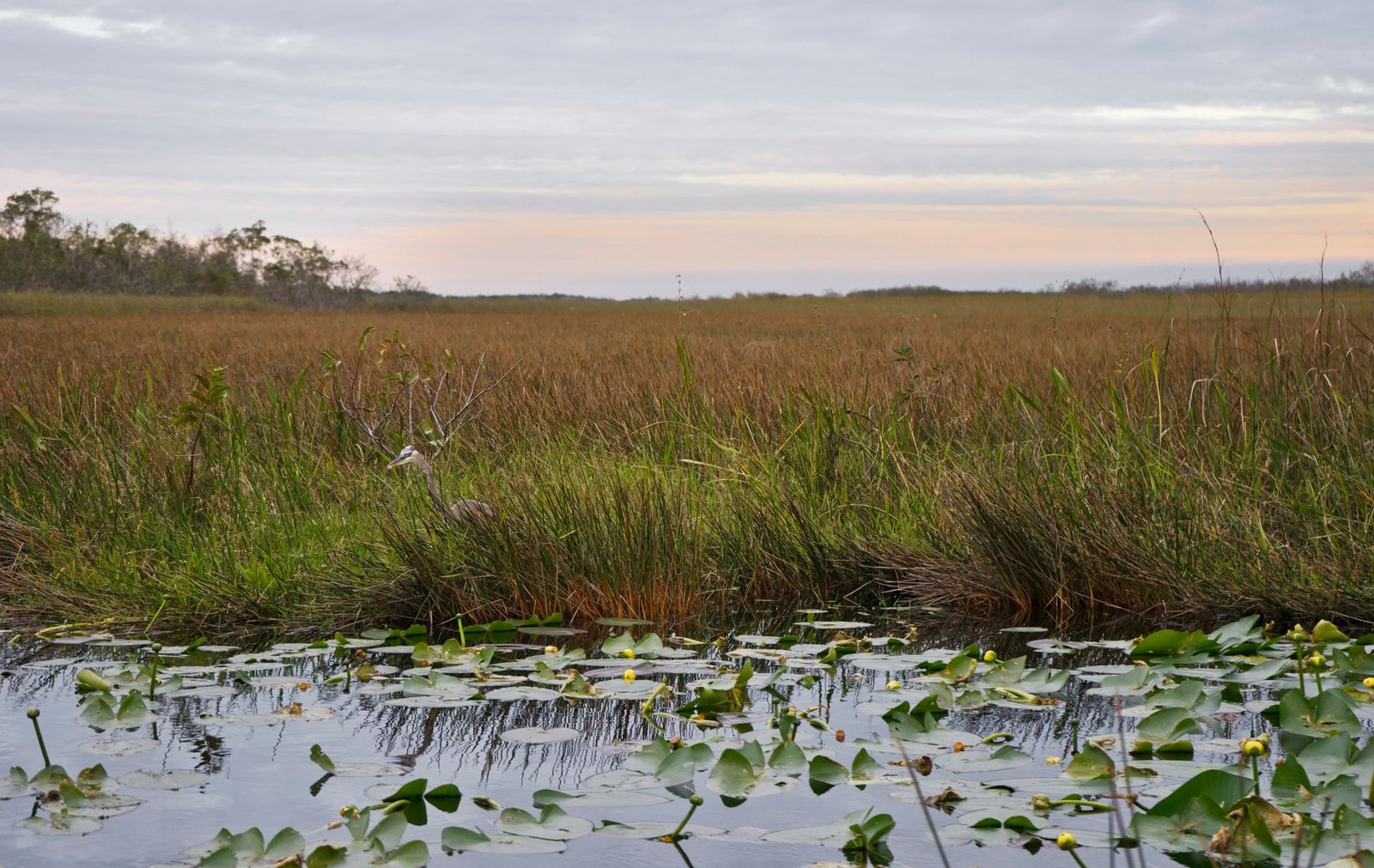
The vast majority of Everglades visitors experience the park through brief stops at the Ernest Coe or Shark Valley visitor centers, walking a short boardwalk trail to see alligators from a safe, paved distance before continuing on to other South Florida attractions, an experience that captures almost none of the park’s actual ecological range or scale.
The park’s Ten Thousand Islands region along the Gulf Coast, accessible primarily by kayak or canoe through the Wilderness Waterway, offers a completely different experience from the roadside alligator-viewing most visitors default to, involving multi-day paddling trips through mangrove tunnels and coastal camping on elevated wooden platforms called chickees that most first-time visitors never learn exist.
Shark Valley’s 15-mile paved loop trail, popular for its tram tours and bicycle rentals, represents only a tiny fraction of the park’s total area, and rangers who work throughout the park consistently note that visitors rarely ask about the backcountry options that would show them a version of the Everglades entirely distinct from the heavily trafficked main road corridor.
The Real Cost of a Multi-Day Trip
A week-long Everglades trip combining a few nights of frontcountry camping at established campgrounds like Flamingo, a guided or self-guided paddling excursion, and park entrance fees typically costs a small fraction of a comparable week at a major Florida theme park, where park tickets alone can exceed $150 per person per day before accounting for lodging, food, and transportation.
- Everglades National Park entrance fees remain modest compared to nearly any other major national park or Florida attraction
- Backcountry camping permits require advance reservation but cost only a small nightly fee per person
- Flamingo campground, at the park’s southern end, offers both frontcountry camping and access to Florida Bay paddling routes
- Ranger-led programs, including guided walks and talks, are included free with park admission and run regularly during peak season
Why So Few Visitors Actually Do This
The Everglades’ reputation for heat, humidity, mosquitoes, and alligators discourages many potential visitors from considering an extended stay, and South Florida’s broader tourism infrastructure, heavily oriented toward Miami’s beaches and Orlando’s theme parks, does little to actively promote the park as a viable multi-day destination in its own right rather than a brief day-trip add-on to a broader Florida vacation.
Logistics also play a role, since backcountry paddling trips require either genuine wilderness camping experience and equipment or a guided outfitter, an additional planning step and expense that deters visitors who might otherwise be interested but lack the specific skills or gear needed for multi-day wilderness travel through a genuinely remote wetland environment.
What the Ecosystem Actually Offers Beyond the Alligators
The Everglades supports one of the most significant wading bird populations in North America, along with the endangered Florida panther, West Indian manatees in its coastal waters, and a unique combination of tropical and temperate plant species found nowhere else in the continental United States, an ecological diversity that the brief roadside visitor experience barely hints at.
The park’s role as a water filtration and flood control system for South Florida also makes it ecologically significant well beyond its tourism value, functioning as the endpoint of a massive water management system that determines water quality and availability for millions of South Florida residents, a functional importance almost entirely invisible to visitors focused on wildlife viewing alone.
What This Means for Planning an Actual Trip
Visitors willing to research the park’s backcountry camping and paddling options, rather than defaulting to the standard brief visitor center stop, can experience a genuinely different national park at a fraction of the cost of Florida’s more heavily marketed attractions, provided they’re willing to plan several months ahead for backcountry permits and accept a physically demanding trip rather than a passive sightseeing experience.
For anyone planning a longer Florida trip who has already done the theme parks or the beaches on previous visits, dedicating even three or four days specifically to the Everglades, rather than a single rushed afternoon, reveals a park that most Florida visitors, including many lifelong Florida residents, have genuinely never experienced beyond its most heavily trafficked and least representative corner.
What This Means Looking Ahead
The trends described here are likely to continue evolving over the coming years, and the specific dynamics at play, economic, demographic, or environmental, will keep shaping how a genuine multi-day Everglades visit develops going forward, making it worth continued attention from anyone with a genuine interest in the place or subject rather than a one-time curiosity.
For now, understanding the fuller context behind a genuine multi-day Everglades visit gives a more accurate picture than the surface-level version most casual observers encounter, and that accuracy matters increasingly as more people make real decisions, about where to live, where to visit, or how to spend their money, based on incomplete or outdated impressions.