Knoxville, Tennessee Keeps Landing on Best Places to Live Lists. The University of Tennessee Explains Almost All of It.
We may earn money or products from the companies mentioned in this post. This means if you click on the link and purchase the item, I will receive a small commission at no extra cost to you ... you're just helping re-supply our family's travel fund.
Knoxville, Tennessee has appeared on national best-places-to-live rankings with increasing frequency over the past decade, cited for affordability, outdoor access to the Great Smoky Mountains, and a revitalized downtown, and while all of those factors are real, the University of Tennessee’s presence as the anchor institution for the entire region explains far more of Knoxville’s trajectory than any ranking methodology tends to credit directly. The university brings roughly 30,000 students, a major research budget, and a Division I athletics program whose football Saturdays function as the single largest recurring economic event the city experiences all year.
Understanding Knoxville without accounting for UT’s gravitational pull on everything from housing demand to restaurant openings to municipal politics means missing the actual engine behind most of what these rankings are measuring, even when the ranking’s stated criteria never mention the university by name.
How the University Reshaped Downtown
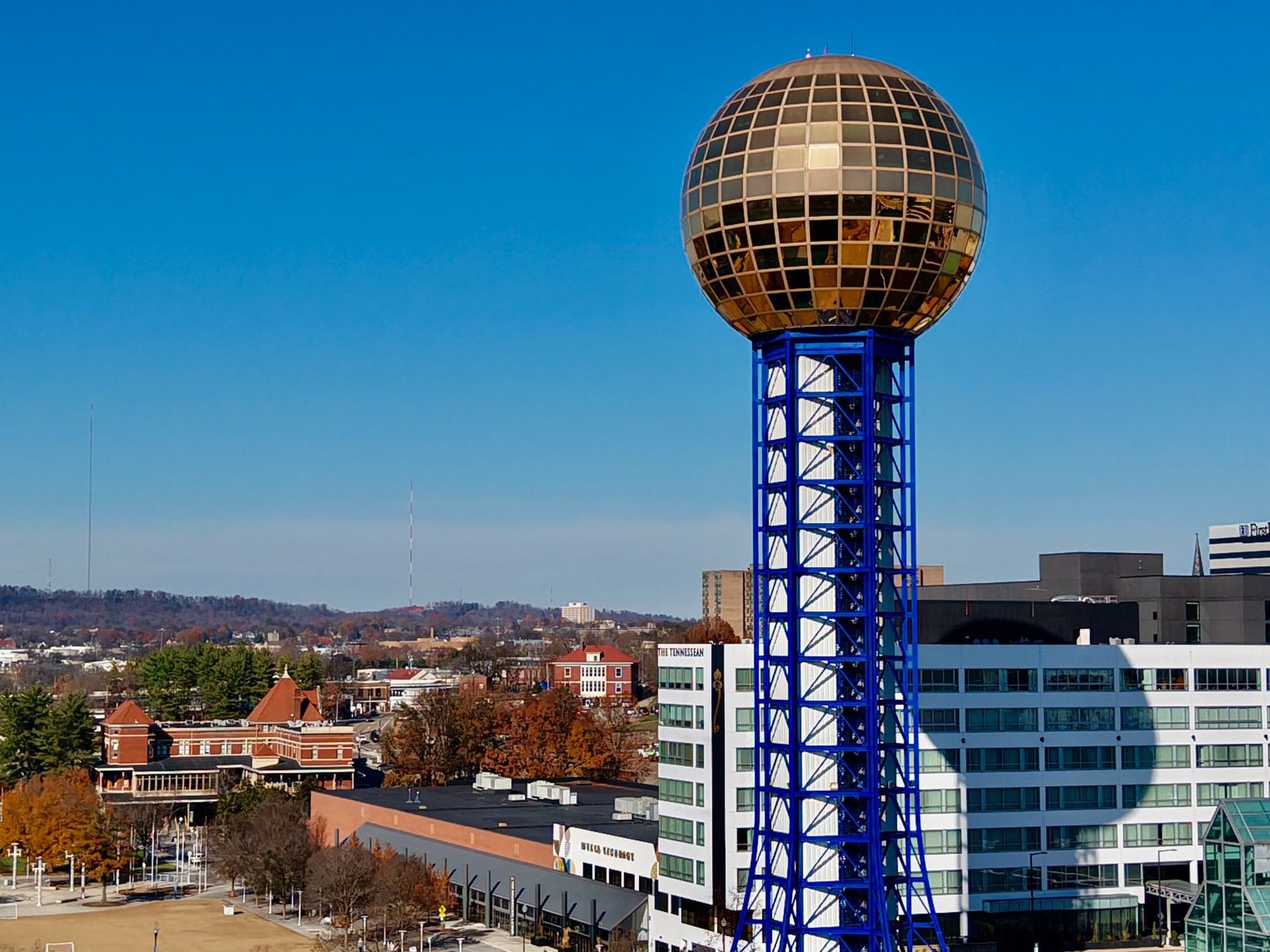
Knoxville’s downtown core sat largely underused through the 1980s and 1990s, a common story among mid-sized Southern cities that lost retail and residential activity to suburban sprawl, until a deliberate redevelopment push in the 2000s, supported partly by UT’s proximity and the steady demand for housing and entertainment options from students, faculty, and staff, began filling in the historic Market Square and Gay Street corridors with restaurants, breweries, and residential conversions of older commercial buildings.
UT’s own campus expansion, including a series of new academic buildings and dormitories built over the past fifteen years, physically extended the university’s footprint closer to downtown, shortening the walk between campus and the entertainment district and making the two areas function increasingly as a single continuous zone rather than separate parts of the city.
Knoxville’s food and brewery scene, frequently cited in the same best-places-to-live coverage that praises the city’s affordability, draws a customer base heavily weighted toward the university community, students, graduate students, faculty, and the substantial number of UT alumni who stay in Knoxville after graduation rather than leaving for larger cities, a retention pattern that has strengthened noticeably over the past decade.
Football Saturdays as an Economic Event
UT football games at Neyland Stadium, which seats over 100,000 people, transform Knoxville’s economy for a single day in ways few other American cities experience with such regularity, filling every downtown hotel, restaurant, and bar to capacity and generating economic impact estimates that local tourism officials cite as comparable to hosting a mid-sized convention, except it happens six or seven times every fall.
- Neyland Stadium’s capacity exceeds 100,000, making it one of the largest stadiums in the Western Hemisphere
- UT athletics generates substantial licensing and media revenue that flows into the broader university budget and regional economic activity
- Hotel occupancy in downtown Knoxville regularly reaches full capacity on home football weekends, with rates rising to match
- UT’s medical center and research programs draw federal and private funding that supports thousands of jobs unrelated to athletics or undergraduate education
The Affordability That Rankings Actually Measure
Knoxville’s cost of living remains genuinely lower than most cities that appear alongside it on best-places-to-live lists, with median home prices as of 2025 still meaningfully below the national average despite steady increases over the past several years. That affordability stems partly from Knoxville never experiencing the kind of speculative growth boom that transformed nearby Asheville or, further afield, Nashville, into considerably more expensive markets over the same period.
UT’s steady, non-cyclical presence as an employer and demand generator has helped keep Knoxville’s housing market growing at a more moderate, sustainable pace than boom towns driven primarily by tourism or tech relocation, a pattern that has made the city attractive specifically to buyers who watched other Southern cities become unaffordable and wanted to get in before Knoxville followed the same trajectory.
What the Rankings Tend to Leave Out
Best-places-to-live methodologies typically weight factors like cost of living, job growth, and amenities without directly crediting the specific institutional anchor driving those metrics, which means Knoxville gets praised for outcomes, walkability, restaurant density, steady population growth, that trace back overwhelmingly to UT’s presence rather than some more generalizable municipal policy success that other cities could easily replicate.
This matters for anyone using these rankings to evaluate other potential relocation destinations, since a city’s ranking-friendly statistics often depend on a specific anchor institution or industry that doesn’t necessarily transfer as a lesson to a city without a comparable anchor of its own.
What Knoxville Looks Like Beyond the Ranking Data
Knoxville’s location roughly 45 minutes from the Great Smoky Mountains National Park entrance at Gatlinburg gives it outdoor recreation access that few university towns of comparable size can match, and that proximity has become an increasingly important draw for both UT recruitment of faculty and staff and for remote workers who chose Knoxville specifically for the combination of urban amenities and mountain access within a short drive.
For a visitor or potential transplant, understanding Knoxville accurately means recognizing it less as a generically well-run mid-sized Southern city and more as a university town whose institutional anchor happens to be unusually large relative to the city’s total size, a ratio that shapes nearly everything the best-places-to-live rankings ultimately end up measuring.
The Research Funding Side Nobody Sees on Campus Tours
UT’s Oak Ridge National Laboratory partnership, formalized through the UT-Battelle joint venture that manages the lab for the Department of Energy, brings a level of federal research funding and scientific employment to the Knoxville region that most college towns of comparable size never approach, drawing physicists, engineers, and computing researchers who add an entirely different demographic and spending pattern to the local economy than undergraduate life alone would produce.
This research relationship also feeds directly into UT’s own graduate programs, particularly in nuclear engineering and computational science, giving the university a research profile and federal grant portfolio that punches above its public perception as primarily a football and undergraduate school, and adding yet another layer of institutional gravity that best-places-to-live rankings rarely mention by name even as they measure its downstream effects in the background.
None of this appears on a typical campus visit or in the marketing materials aimed at prospective students, but it forms a real part of why Knoxville’s regional economy has diversified beyond the boom-and-bust cycles that affect college towns dependent purely on tuition revenue and athletics ticket sales.