Duluth, Minnesota’s Canal Park Was a Grain and Ore Shipping Zone for a Century. It’s Now the City’s Tourist Front Door.
We may earn money or products from the companies mentioned in this post. This means if you click on the link and purchase the item, I will receive a small commission at no extra cost to you ... you're just helping re-supply our family's travel fund.
Duluth, Minnesota’s Canal Park district, now filled with breweries, the Great Lakes Aquarium, and a waterfront boardwalk that draws visitors from across the Upper Midwest, spent most of the 20th century as working industrial waterfront serving the Duluth-Superior harbor’s role as one of the busiest bulk shipping ports in the country, handling iron ore, grain, and coal destined for steel mills and grain elevators across the Great Lakes region.
That industrial history is still visible everywhere in Canal Park, from the Aerial Lift Bridge, which still raises to let massive lake freighters pass into the harbor, to the preserved rail infrastructure that once moved ore from Minnesota’s Iron Range down to the docks, giving Duluth’s waterfront tourism district a genuine working-harbor character that most redeveloped American industrial waterfronts have lost entirely.
How Duluth Became a Great Lakes Shipping Giant
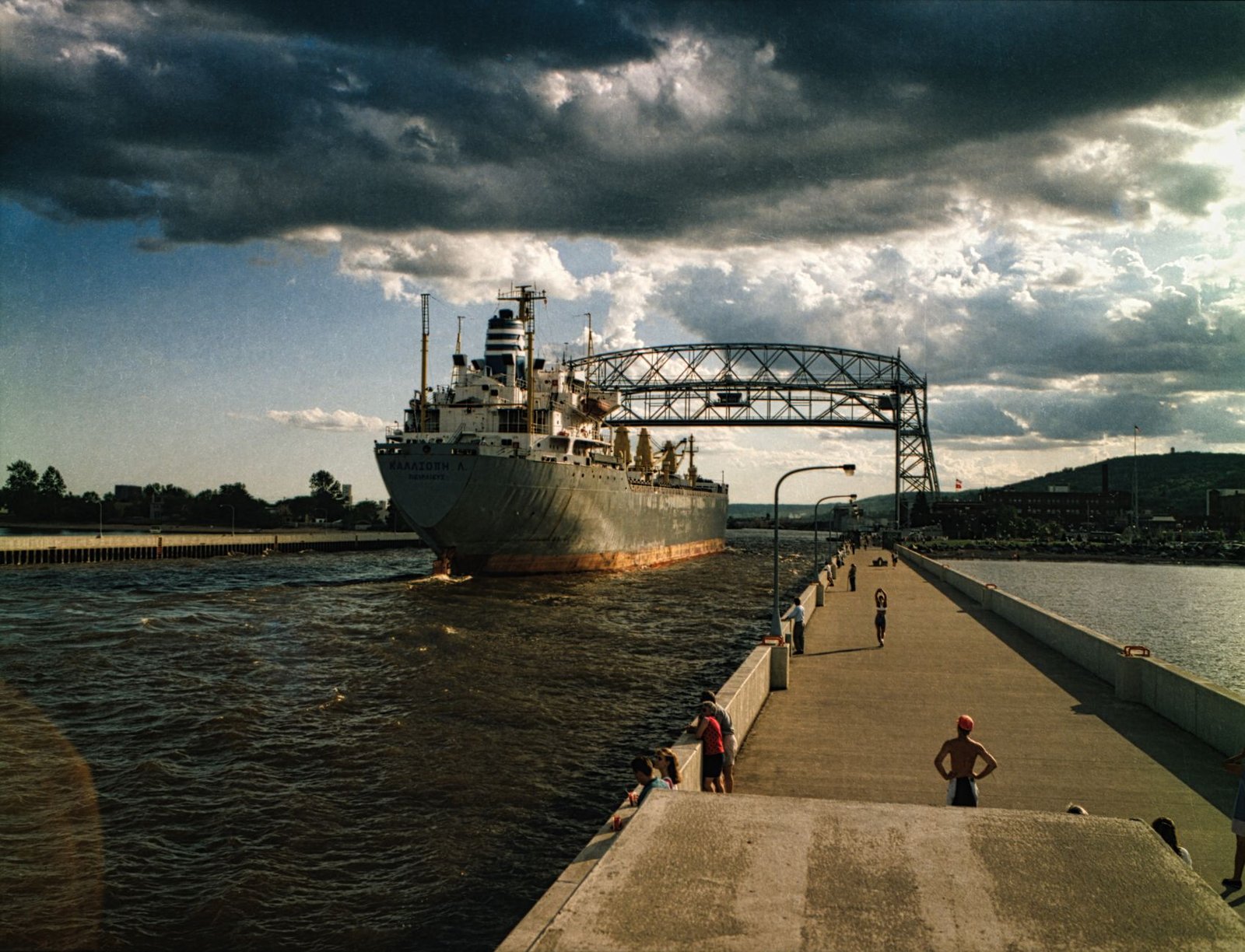
Duluth’s position at the western tip of Lake Superior made it a natural transshipment point for Minnesota’s Iron Range ore mines starting in the late 1800s, and the city’s harbor grew into one of the busiest ports in the entire country by tonnage, handling iron ore bound for steel mills in Pittsburgh and Cleveland alongside massive volumes of wheat and other grain from the northern plains.
The Aerial Lift Bridge, completed in its current form in 1930 after an earlier ferry-style bridge proved too slow for growing traffic, became Duluth’s signature landmark specifically because it had to accommodate a genuinely enormous volume of ship traffic passing between Lake Superior and the harbor’s protected inner waters, a functional necessity that became an iconic piece of civic infrastructure almost by accident.
Duluth’s shipping volume peaked through much of the mid-20th century before declining somewhat as American steel production contracted and shipping patterns shifted, but the Duluth-Superior harbor remains a genuinely significant Great Lakes shipping hub today, still handling substantial iron ore, grain, and coal tonnage even as the surrounding Canal Park district transitioned toward tourism.
The Deliberate Redevelopment That Followed Industrial Decline
Canal Park’s transition from purely industrial waterfront to tourist district accelerated through the 1980s and 1990s as city officials and private developers recognized the area’s tourism potential, converting former warehouses and industrial buildings into hotels, restaurants, and retail space while preserving key industrial landmarks like the Aerial Lift Bridge as active tourist attractions rather than removing them.
- The Aerial Lift Bridge still raises regularly for freighter traffic, and watching it operate remains one of Canal Park’s most popular visitor activities
- The Great Lakes Aquarium, opened in 2000, anchors the district’s family tourism appeal alongside the working harbor views
- Duluth’s harbor remains among the busiest Great Lakes ports by tonnage even after decades of broader Great Lakes shipping decline
- The Lakewalk, a paved waterfront trail extending several miles along Duluth’s Lake Superior shoreline, connects Canal Park to other waterfront neighborhoods
What Makes Duluth’s Waterfront Different From Other Rust Belt Revivals
Unlike many former industrial American waterfronts that redeveloped by essentially erasing their industrial past in favor of a generic upscale waterfront aesthetic, Duluth’s Canal Park redevelopment deliberately preserved and even highlighted the area’s working-harbor identity, keeping the Aerial Lift Bridge fully operational and maintaining sightlines to active shipping activity rather than screening it off from the tourist district.
This approach has given Duluth a specific, differentiated tourism identity built around the genuine spectacle of massive lake freighters, some over 1,000 feet long, passing directly through the heart of the tourist district, a visual experience that draws dedicated ship-watching enthusiasts alongside more casual visitors who simply find the scale of the vessels impressive.
The Iron Range Connection Most Visitors Miss
Duluth’s entire shipping economy historically depended on its connection to Minnesota’s Iron Range, a mining region roughly 70 miles north that produced a substantial share of the iron ore that fueled American steel production through much of the 20th century, a relationship visible today in preserved rail infrastructure but rarely explained clearly to visitors who experience Canal Park primarily as a scenic waterfront rather than the terminus of a massive regional industrial supply chain.
Mining museums and heritage sites throughout the Iron Range region offer a more complete picture of this connection for visitors willing to extend their trip beyond Duluth itself, though most Canal Park visitors never make that additional journey, experiencing only the shipping destination without the mining origin that made Duluth’s harbor economically significant in the first place.
What a Visit to Canal Park Actually Involves Now
A typical Canal Park visit combines walking the Lakewalk boardwalk, watching for freighter traffic and the Aerial Lift Bridge’s operation, visiting the Great Lakes Aquarium, and eating at one of the district’s numerous breweries and restaurants housed in converted industrial buildings, a mix of activities that gives visitors a genuine sense of Duluth’s industrial history without requiring any specialized maritime or industrial history interest.
For visitors specifically interested in the industrial history underlying the scenic waterfront experience, Duluth’s Lake Superior Maritime Visitor Center, located directly at the Canal Park entrance, provides detailed exhibits explaining the harbor’s shipping history and continued economic significance, a resource that most casual visitors walk past without stopping but that rewards anyone curious about what’s actually happening beyond the tourist-facing surface of the district.
Why the Working Harbor Still Matters Economically
Beyond its tourism value, the Duluth-Superior harbor continues to matter substantially to the broader regional and national economy, handling significant volumes of grain exports and iron ore that still feed domestic steel production, meaning the massive freighters visitors watch pass through the Aerial Lift Bridge are engaged in genuinely consequential commercial activity rather than serving merely as a photogenic backdrop for the tourist district that has grown up around them.
This continued economic relevance distinguishes Duluth from waterfront tourist districts built entirely on the memory of vanished industry, giving Canal Park a slightly unusual dual identity as both a fully realized tourism destination and an active node in a supply chain that most visitors enjoying a beer at a waterfront brewery never think about in those terms.